Use these 2 treasures from the river for orchids, and you can grow more big white roots
Hello everyone, I am very glad that you can open this article in the midst of your busy schedule, and I hope today's article from the editor can bring you surprise and joy. If you are satisfied with the article, please follow the editor and share the article with others! The editor wishes every reader a good mood today!
When growing orchids, the important thing is to first grow the roots well. This has already become a consensus among flower lovers, and if you want to grow orchid roots well, then the potting medium as the foundation is naturally the first object of attention. Many flower lovers also use things like tree bark and stones to grow orchids. Some are very useful, while others lead to root rot in less than half a year. However, today when talking about growing roots, using these 2 treasures from the river in the potting medium not only keeps the roots from rotting, but can also grow big white roots.
The first type: coarse sand
Coarse sand is a very common kind of sand in rivers. The particle diameter is generally about 0.5 cm, and its texture is not as rough as small stones. It is actually somewhat finer. Mixing this kind of coarse sand into the potting medium can effectively improve the drainage and air permeability of the potting medium, and can prevent root rot caused by water accumulation at the bottom of the orchid pot. Moreover, coarse sand has a relatively wide source and can also be reused, so it is very economical and cost-effective.
For the use of coarse sand, the first step is to collect enough coarse sand. Generally, it can be found in sand piles at construction sites. The second step is sieving. The diameter of the sieved coarse sand should be about 0.5 cm. After sieving, it cannot be used immediately. First, dilute carbendazim with water at 1500 times and soak it for 30 minutes for disinfection. After taking it out, dry it and then mix it into the potting medium for use. Generally, the amount added is not too much, and it is best not to exceed 30 percent.
The second type: pebbles
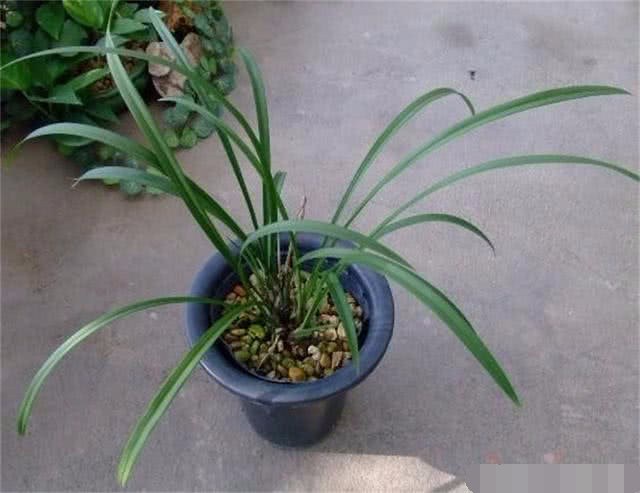
Pebbles have a smooth and hard texture and are not prone to breeding harmful bacteria. Mixed into the potting medium or used as a drainage layer at the bottom of the pot, they can give the potting medium very good drainage and air permeability. Therefore, many flower lovers also like to use them to grow orchids, and many flower lovers say that orchid roots grown with pebbles are whiter and cleaner, and the pseudobulbs are also a bit larger, and the buds are also a bit larger.
For the use of pebbles, these points also need attention. First, collect the pebbles. The pebbles should not be too large. Generally, small pebbles with a diameter of 2-3 cm are fine. Then wash these small pebbles. After washing them clean, soak them in a carbendazim solution for 30 minutes, take them out, expose them to the sun and dry them. After they have dried and cooled, they can be mixed into the potting medium or used as a drainage layer at the bottom of the pot. The above coarse sand and pebbles really have a good effect when used to grow orchids, and the drainage and air permeability are very good.
However, because the water drainage is relatively good, water and fertilizer management needs to be more diligent. For watering, also follow the rule of not watering until dry, and when watering, water thoroughly, and stop once it penetrates. For fertilizer, you can mix in some organic liquid fertilizer specially used for orchids when watering. Watering and fertilizing can be done at the same time. The fertilizer effect of organic liquid fertilizer is also similar to that of decomposed fertilizer, milder and more comprehensive, but it is easier to use and more suitable for orchid lovers in the city to care for orchids. However, it should be applied as a thin fertilizer frequently, once every half a month. In this way, the shortage of pebbles in terms of fertility can be made up for.
So when growing orchids, if you want to grow the roots well, try these "3 treasures" from the river. As long as water and fertilizer are then managed properly, you can quickly grow more big white roots.
That is all for today's article. I hope everyone can like it. If you have different opinions or ideas, please leave a comment below! The editor will read them carefully. I hope everyone can like it. If you have different opinions or ideas, please leave a comment below! Please follow the editor, and the editor will present wonderful articles.