How to Grow Jasmine Into a Flowering Tree: 6 Tips Summarized From an Old Gentleman's 30 Years of Experience
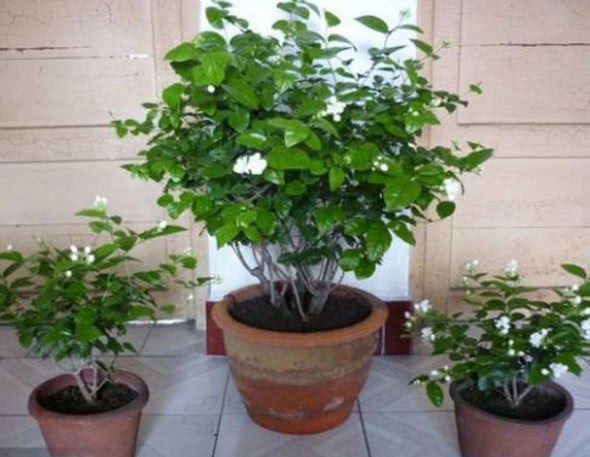
Jasmine has emerald-green leaves, pure white flowers, and a delicate, quiet fragrance. People love to keep one or several jasmine plants at home, not only for the pleasing sight but also for the refreshing scent. But even though everyone is growing jasmine the same way, many friends end up with jasmine that either has sparse, yellowing leaves, or leaves that are oddly large and sparse, and some bloom very little or not at all, cannot survive the winter, or come back even more shapeless the next year after winter. Some people buy new plants every year, while others have grown their jasmine into a flowering tree. Below are some tips from the master grower @Moonlit Bamboo in the Secluded Garden, who has grown jasmine for 30 years and turned it into a flowering tree. Little Exquisite Life is learning together with you.
1. Watering
Watering is always the most discussed topic in the process of growing flowers at home, and jasmine is no exception. When to water, how to water, and what kind of water to use all involve a certain level of skill. This is not something you can learn overnight; it comes from constant careful practice and accumulated experience.
If jasmine is watered too much, the roots rot easily, and root rot causes wilting and withering. But the rot is inside the potting soil and cannot be seen from the outside. If you lack experience, it is very easy to assume it is underwatering or poor nutrition, and then you keep watering heavily and adding fertilizer, which ends up killing the jasmine. "Dry jasmine, wet chrysanthemum" is the valuable experience summed up by the old masters from ancient times to the present; giving jasmine a little less water does no harm.
So how exactly should you water jasmine?
1. Water when dry, let dry between waterings. The degree of dryness is when the potting soilis dry without turning white on the surface, and the degree of moisture is when the potting soilis moist without turning to mud。
2. On sunny days, you can tell whether the pot is short of water by looking at the jasmine leaves. When the topmost leaves wilt, tap the flowerpot with your hand. If the pot gives a crisp sound, it means the potting soil is on the dry side; if the sound is dull, it means the potting soil still contains water. Of course, as mentioned at the beginning, sometimes wilted jasmine leaves may mean its root system has a problem, and at that point the more you water, the more it wilts.
3. The larger the plant shape, the greater the water consumption; the smaller the plant shape, the lower the water consumption.
4. Before potting jasmine, place a few broken tile pieces at the bottom of the pot to help with drainage and air permeability of the potting soil.
5. In summer, watering is generally best in the morning; do not water at noon, and in the evening you can decide based on the situation.
6. In autumn, reduce the amount of watering and try to keep the potting soil on the drier side, as long as the branches and leaves do not wilt, to promote lignification of the jasmine branches, which helps it survive the winter.
2. Fertilizing
For a plant to survive, three elements are essential: soil, sunlight, and water. For a plant that has survived to become robust with abundant flowers and leaves, three elements that provide nutrients are essential: nitrogen, phosphorus, and potassium, and jasmine is no exception. When the nitrogen, phosphorus, and potassium in jasmine fertilizer are properly matched, it will not only have abundant flowers and leaves but also strong vitality, and its resistance to severe cold and heat will increase greatly.
If fertilizing is improper, jasmine leaves will either grow wrinkled, or grow large with sparse nodes, or only grow leaves with very few flowers. So how should you fertilize jasmine?
In spring, do not "fertilize indiscriminately" potted jasmine; the best period for fertilizing jasmine is only after May 1st. When flower buds are forming on the new branches of jasmine, you can take the opportunity of the potting soil being dry to apply a thin liquid fertilizer in the evening, then water once the next morning to help the jasmine absorb the nutrients. This step is very important.
Composted animal manure is best for jasmine, but most households today cannot meet the conditions for that, so it is not very realistic; next best is composted cake fertilizer water, generally made by crushing and soaking bean cake, sesame cake, kitchen scraps, etc., composting them, and diluting with water before use, or by soaking eggshells in water, composting, and diluting with water before use; if conditions really do not allow, then after flower buds sprout, apply chemical granular fertilizer containing phosphorus and potassium. Be sure touse as little nitrogen-containing granular fertilizer as possible, otherwise it will only grow leaves and bloom little.
The method for applying granular fertilizer is to slightly turn over the potting soil at the edge of the pot, put in the granular fertilizer, cover it back with potting soil, and then water. The amount of fertilizer is generally 15 granules for a flowerpot about 15 cm in diameter. After use, note the date and apply regularly according to the fertilizer instructions.
From after the Dragon Boat Festival until the Mid-Autumn Festival, the period of high temperature and high heat is the peak flowering season for jasmine. Professional flower growers have a saying: "first fu flower tide, second fu flower tide, third fu flower tide," meaning that jasmine blooms like surging tides during this peak flowering period. During this time, once new flower buds are found forming, fertilizer water needs to be applied in time. As the buds enlarge, increase the frequency of fertilizer water, but be careful to apply thin fertilizer frequently. When the buds are about to open, stop fertilizing.
When the potting soil is too alkaline, jasmine leaves turn yellow, which indicates it is time to supplement acidic elements. Flower sellers generally promote the use of ferrous sulfate, but this can be counterproductive. In fact, rice-rinsing water from home is a very good material for supplementing acidic elements. Put the rice-rinsing water in a bottle to ferment fully, then when using it, take a small amount and dilute with clean water to water the flowers. It is both economical and safe.
In autumn, fertilizing needs to stop, because as the weather turns cooler and colder, jasmine gradually enters dormancy. At this time it not only cannot absorb the nutrients from the fertilizer, but the fertilizer will instead burn the roots and cause root rot.
3. Pruning
Pruning jasmine is a very important step. Timely and proper pruning of jasmine not only avoids wasting the plant's own nutrients, but also promotes the sprouting of new branches and flower buds and keeps the plant shape attractive. Moreover, the pruned branches can be used for cuttings to propagate new jasmine potted plants.
In spring, after Qingming, choose the direction in which the jasmine will extend based on the new buds it sprouts, and carry out shaping and structural pruning.
After jasmine blooms, promptly cut off the spent flowers and prune according to the plant shape you like. This depends on personal preference; for example, some friends like a tall, sturdy shape, while others like a short, spreading shape. For a tall, sturdy shape, you can keep the central main stem as the focus and prune the side branches; for a short, spreading shape, you can prune the main stem so the side branches extend outward. As for exactly how many nodes to cut or keep on each branch, there is no need to make a rigid rule for all cases.
In autumn, do not prune the branches and leaves anymore, because at this time the branches and leaves are needed to store nutrients for jasmine to survive the winter. However, leggy new shoots at this time need to be removed promptly.
During the period from Qingming to Guyu, you also need topromptly remove all the old overwintered leaves from the jasmine branches. These old leaves have already completed their mission of protecting the jasmine through winter. Keeping them not only blocks light from the new branches but also competes for nutrients with the new branches, so they can simply be removed. During this period there is also a very important task: promptly from the first or second node of the branchremove the tips that have no flower buds, to prevent them from becoming leggy branches, which both affects the plant shape and consumes nutrients.
The flower buds that jasmine forms in April are called "following-the-mother flowers." These buds are not normal flower buds; they sprout earlier, are fewer in number, and are not very fragrant. These "following-the-mother flowers" also need to be pruned off cleanly. Generally, when jasmine's new leaves are not green, it is because these "following-the-mother flowers" are absorbing a large amount of the jasmine's nutrients. So do not begrudge just a few buds in front of you and neglect the peak flowering season later.
4. Repotting
Many friends think that after winter is the most suitable time to repot jasmine, but based on experience summarized over many years,the time after the first flush of jasmine blooms is actually the best time to repot. This is because after blooming, jasmine happens to have a recovery period during which it sprouts new shoots again, and at this time the temperature is also relatively high and stable, so roots injured during repotting recover easily.
After repotting, do not fertilize immediately, because during repotting the roots are always inadvertently injured more or less, and fertilizing at this time easily causes root rot. Generally, after 2-3 weeks of repotting, normal water and fertilizer management can resume.
A newly potted jasmine should not be placed immediately in direct sunlight. It needs to rest for 3-5 days in a ventilated place with scattered light, and only after the roots have recovered some absorption function can it slowly receive light until back to normal.
If conditions permit, the best potting soil for jasmine is dried "lotus pond mud"; next best is old vegetable garden soil. The soil quality should both retain moisture and drain well, and should be dry without turning white on the surface and moist without turning to mud.
5. Light
Jasmine loves light greatly, but most buildings today cannot provide full sun, so jasmine placed on a balcony flower rack needs its pot turned at least once a week to prevent the plant from growing lopsided. If conditions permit, jasmine should receive as much light as possible.
6. Temperature
Whether roots sprout in jasmine cuttings mainly depends on temperature. Below 30°C, jasmine roots, branches, and leaves all grow relatively slowly, and it is even harder for flower buds to sprout. If you take jasmine cuttings after autumn, it is very difficult for them to root. Increasing light as much as possible may still offer some hope for new roots to sprout.
The above is Little Exquisite Life's compilation of @Moonlit Bamboo in the Secluded Garden's more than 30 years of experience caring for jasmine. It can be said that every aspect is fairly detailed, and I hope it is helpful to everyone!