How should tree stump bonsai be placed? These methods must be mastered
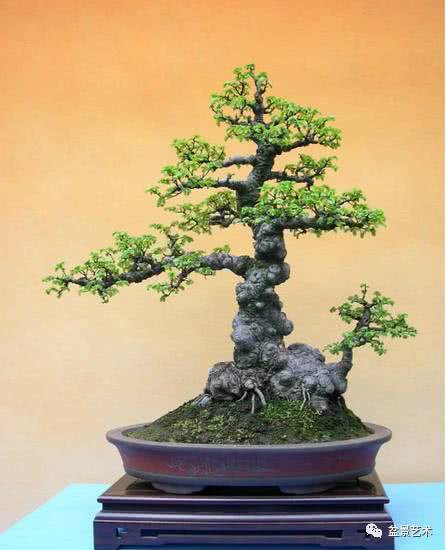
The placement of tree stump bonsai is very particular. Many bonsai enthusiasts have given detailed introductions on the distance between pots, air circulation, lighting, and other aspects, which will not be repeated here. This article intends to give a brief discussion on the placement of several different varieties of potted stumps.
First, Chinese elm (Ulmus parvifolia) potted stumps must not be placed together with grape potted stumps. If the two are placed together, the acidic substances secreted by grape leaves will be transmitted to the elm stumps through rain, watering, and other means, causing a layer of bacteria like coal ash to form on the leaves, branches, and trunks of the elm stumps. Over time, the elm stumps will experience leaf drop, dead branches, trunk shrinkage, and even death of the stump. On the other hand, the secretions from elm leaves will also affect the growth of grape stumps, causing grapes to remain green and unripe with an astringent taste. By the same reasoning, elm stumps should also not be placed under grape trellises. Those bonsai enthusiasts who want to use grape trellises to provide shade for tree stump bonsai should take note.
Second, grape potted stumps must not be placed under poplar or Chinese toon trees. The substances secreted by poplar and Chinese toon trees will directly affect the growth of grape potted stumps, leading to sparse fruit, small fruit, and rotten fruit on the grape potted stumps, and may even cause the potted stumps to wither and die.
Third, apple potted stumps should not be placed near celery fields. The odor released by celery will affect the growth of apple potted stumps, reducing the fruit-setting rate of apples or causing small fruit, and the fruit color will be off, thereby affecting the ornamental effect of the potted stumps.
Fourth, fruit-viewing bonsai of the peach and pear tree types should not be placed in areas where tobacco is grown, nor should tobacco leaves be hung to dry or placed in areas where peach and pear stump bonsai are kept. Otherwise, the peach and pear stumps will die or grow poorly due to the fumigation of tobacco odor.