Potted raspberries keep fruiting continuously, and they don't mind the cold of winter
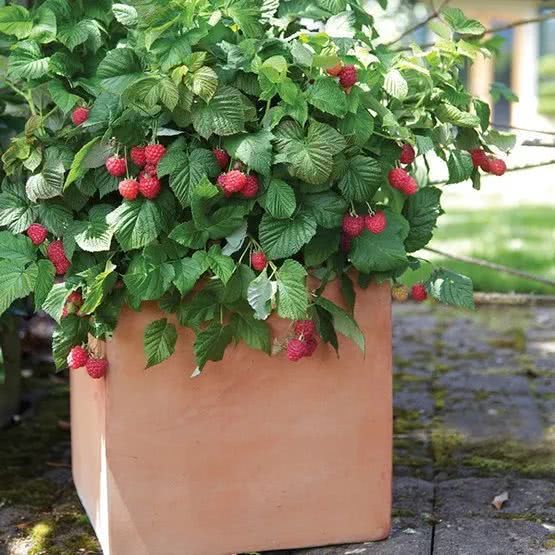
Raspberry, also called thorny bramble, is a shrub fruit that is very easy to grow. You can plant it in the yard, and it can also be kept as a potted plant. It is a perennial plant that sprouts new shoots every year after the warmth of spring arrives, and you can also set up a support for it to climb and grow on,
Raspberry is a very good berry plant. Its berries are rich in vitamins A, C and E, high in fiber, and also contain various minerals and antioxidants.
However, note that raspberry is also a shrub fruit that easily attracts pests, so during care you need to pay attention to regular pest and disease control. Once its berries ripen, harvest them promptly; its fruit ripens in summer and autumn.
Raspberries come in different varieties; they are generally red berries, and there are also varieties with golden-yellow, deep purple and black berries. It is a self-pollinating variety, so you only need to plant one to harvest fruit.
When planting raspberries, you must set up a support so they can grow well, which helps them produce more branches and keep forming flowers and fruit. It is best to use a grid-shaped wire mesh or fence to form a support, as this is best for raspberry growth. When the raspberry canes reach a certain height, tie them to the support with thin string.
You can choose to plant raspberries in the yard or on the balcony after the warmth of spring. After one or two years of growth, you can harvest sweet berries every summer and autumn. However, note that some varieties may only fruit in the first two or three years, after which the amount of fruit gradually decreases.
To grow raspberries, keep them in a sunny position with more than 6-8 hours of direct light each day.
For the growing soil, choose loose, airy, humus-rich soil with good drainage. You can appropriately add decomposed organic fertilizer and river sand to the soil; perlite can be used instead of river sand.
If you choose to propagate by sowing seeds, you can only start cultivation after the frost has completely ended. It is best to propagate by stem cuttings, as this way the raspberries you cultivate can flower and fruit as soon as possible.
If you want to promote normal flowering and fruiting in raspberries, you must choose slightly acidic soil. The pH of the growing soil should remain between 5.5 and 6.5. You can add some organic compost and organic manure, and appropriately add some river sand or perlite to keep the soil well drained.
While caring for raspberries, be sure to prevent weeds from growing around them. Remove weeds promptly when you find them, to avoid them taking up too many nutrients.
You can spread a layer of mulch on the soil surface, which helps retain moisture and temperature and also prevents weeds from growing.
The growing location should stay ventilated and well lit; avoid keeping it in an enclosed space. On a balcony, there must be sufficient light every day so it can grow robustly. During the growing season, water regularly; when the soil about five centimeters below the surface is dry, water thoroughly once.
Once raspberry berries ripen, harvest them promptly, otherwise they easily drop. Also, prevent birds from eating them; you can cover them with some bird netting.
Raspberries can be pruned appropriately in late winter and early spring, which promotes new shoots and helps produce more berries the following year. Any branches with diseased leaves or disease, and withered branches, should be cut off promptly to avoid fungal diseases.