This little wild fruit is often treated as a weed, but once dried it is a precious Chinese herbal medicine worth 80 yuan per jin
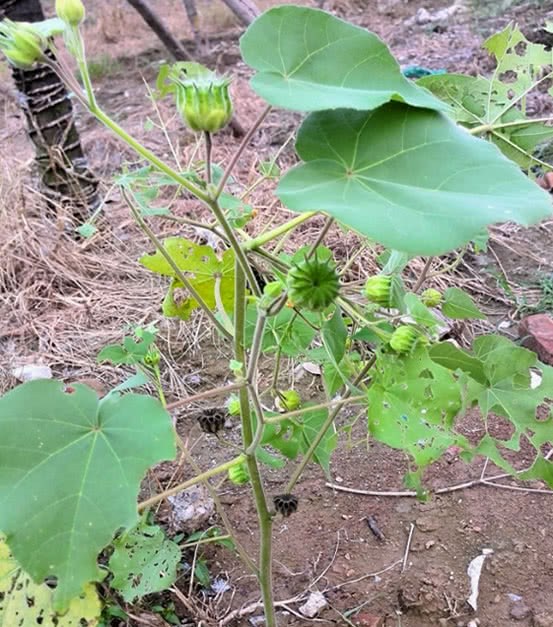
This plant grows far too abundantly in the countryside. We call it tongma; its scientific name is Abutilon theophrasti (velvetleaf). It often grows in mountain gullies, by riversides, along roadsides and other places. If there is a patch of wasteland, it can grow in great numbers. If it gets in the way of crops' growth, most of the time it is pulled up as a weed.
When I was little, we country kids had few snacks to eat, and the seeds of this Abutilon theophrasti could even become our little treat. Before its green pods turned black, we would pick them and peel them open; inside were tender little white seeds that tasted a bit fragrant.
The stalk of Abutilon theophrasti had another use: it could yield "hemp" fiber. In the past, my grandfather would often gather some Abutilon theophrasti and soak the stalks in water. After a few days, the skin of the stalks could be peeled off and twisted into all kinds of hemp ropes, such as backpack straps and well ropes, and could also be used to weave straw sandals and so on. In any case, it was especially sturdy.
Abutilon theophrasti, once removed like a weed, can actually be used as medicine in its entirety. It is a precious Chinese medicinal herb, and the whole plant can be sold for money. Especially its seemingly unremarkable "wild fruit": the seeds inside are called qingmazi (Abutilon seeds). Now, once dried, they can sell for about 80 yuan per jin. They have the effects of clearing heat and draining dampness, and of removing toxins, and can treat conditions such as otitis media and dysentery. It can truly be said to be a treasure from head to toe.
Abutilon theophrasti is an annual herbaceous plant. Starting each July, it produces small yellow flowers, and the flowering period can last until October. Its flowers are pleasing to look at and beautiful too. Then it flowers and fruits at the same time, and when the fruits ripen in November, the little white seeds inside turn black.
In my memory, Abutilon theophrasti was basically always wild, but in fact there is now quite a lot of cultivated Abutilon theophrasti as well. Abutilon theophrasti is a short-day economic crop. It is relatively easy to grow, has low requirements for the growing environment, and has strong adaptability. Whether in waterlogged wet land or dry land, it can grow well, so growing it is very promising.