Jasmine has its tricks for overwintering: do the three do's and three don'ts well, and next year it will bloom in a burst of flowers
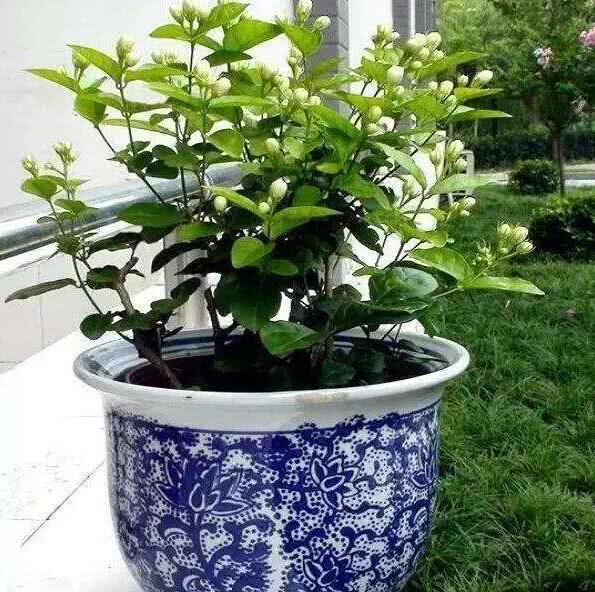
The weather is gradually getting colder, and the flowering season of jasmine has already passed, but care cannot be neglected. Whether care in autumn and winter is done properly directly affects the growth and flowering of the coming year. Therefore, Xiaoye has summarized here the key points for autumn and winter care of jasmine, to help jasmine overwinter safely.
Caring for jasmine in autumn and winter: do the "three do's and three don'ts" well
Three do's
Watering must be controlled well. After the temperature drops below 25°C, jasmine should gradually have its watering reduced. In autumn and winter the sunlight is not as strong, and root vitality is weaker, so the watering interval should be appropriately extended, with somewhat drier care, so that the new semi-lignified branches can become lignified as soon as possible before the cold winter arrives, which can greatly improve cold resistance.
Give sufficient sunlight. Only in sunlight can jasmine carry out photosynthesis, play a role in purifying the air, and also help jasmine absorb nutrients, making the branches, leaves, and flowers more vivid and beautiful and increasing jasmine's ornamental value. Especially in winter, jasmine needs full-day sun, which not only benefits its growth but also helps it overwinter.
Use plastic bags for warmth
If you want jasmine to overwinter safely, keeping it warm is very important. The method is very simple: cover the potted plant with a plastic bag, and leave a few small holes in the plastic bag so the jasmine can breathe. This can also help jasmine overwinter safely.
Three don'ts
Do not fertilize. Before early autumn, jasmine can be given a little light fertilizer; homemade fertilizer is also fine, and a general-purpose microbial fertilizer for flowers is even better, as it helps it overwinter. But after White Dew, the root vitality of jasmine weakens a great deal, and at this point fertilization should stop. If fertilizer is given, it cannot be absorbed and can very easily cause fertilizer burn, ultimately leading to root rot from fertilizer.
Do not rush to move it indoors. Do not rush to move it indoors as soon as the temperature drops. Let jasmine slowly adapt to temperature changes. When daily temperatures are relatively stable, there is no need to rush to move it indoors at 10°C; just provide wind-sheltered care. In this way, when winter arrives, it will at least have gone through a process of adapting to low temperatures.
After jasmine is moved indoors, a temperature of 10 to 15°C is suitable, and remember to ventilate and exchange the air regularly. Only in this way can it overwinter healthily and have lush branches and leaves next year.
Do not prune. Pruning is fine before the temperature drops to 20°C, but in late autumn and during winter, jasmine is in a dormant period. At this time it absorbs limited nutrients, and the little nutrition it needs is maintained only by nutrients stored in the branches, so do not cut off too many branches, as this is not good for overwintering.
The above are the key points for autumn and winter care of jasmine introduced to you by Xiaoye. Have you learned them? Follow them, and next year it is sure to bloom in a burst of flowers.