The heart-leaf philodendron has a strong spreading habit; plant one pot and it can climb all over your home. Here are the care methods for you.
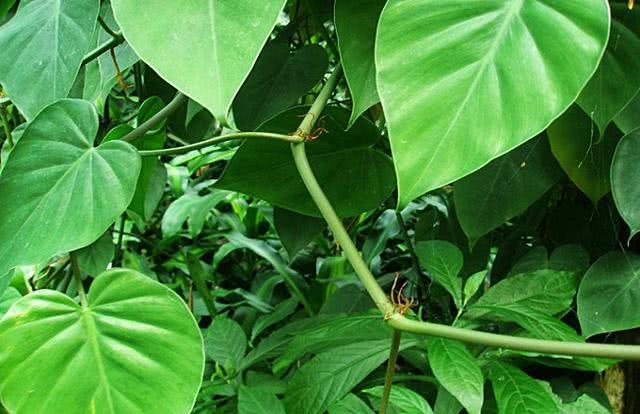
Do you know the heart-leaf philodendron? Don't assume it's a Boston ivy just because it has a strong spreading habit. Although it is a climbing green plant, it is not a relative of Boston ivy. This green plant gets its name from the shape of its leaves; the heart-shaped leaves are very elegant and carry a certain charm when admired, but caring for it is not so simple. It requires its owner to put in a certain amount of effort to look after it. Below we have prepared a few points about caring for it.
1. Sunlight requirements
The heart-leaf philodendron, which can grow robustly even in a semi-shaded environment, actually does not have very high sunlight requirements. Although it has no demands on sunlight intensity, it does have demands on duration; the time spent receiving sunlight each day is best kept at more than four hours. It can grow in an outdoor environment for a long time and obtain more light. In winter, however, it is still best not to leave it outdoors all day, because the temperature drop at night may freeze and damage the leaves. Wouldn't it be heartbreaking if those beautiful heart-shaped leaves were damaged by the cold? Friends in the north should remember to help it stay warm.
2. Humidity requirements
In different seasons, the environmental humidity is different, so humidity control should be adjusted flexibly according to the specific seasonal conditions. For example, in summer, water evaporates very quickly and water shortage is likely to occur, so more water should be added, and the surrounding environment should also be sprayed more to maintain the humidity in the environment. In winter, although the environment is relatively dry, the green plant's water evaporation is not fast, so watering can be reduced somewhat, but spraying to maintain moisture should still continue. Whether in winter or summer, watering has its particularities; the most important point is not to water at noon, because the temperature at noon is the highest, and watering at this time can easily damage the green plant's stomata and hinder its growth.
3. Defense against pests and diseases
The common pests of the heart-leaf philodendron are the fairly widespread scale insects and red spider mites. There are also many ways to eliminate these two pests, so clearing them is not very laborious. But diseases may be more troublesome, generally leaf spot disease.
4. Points to note for propagation
Stem-tip cuttings are a common propagation method for the heart-leaf philodendron, but collecting the material can be somewhat difficult, because its stem is very short and its leaves are dense. If you want to propagate in large quantities, you must make it produce a large number of new shoots. The specific operation is as follows: select a healthy stem, cut off the stem tip with one or two aerial roots, then insert it directly into prepared sandy soil. In addition, attention should be paid to watering to maintain moisture. Once it has taken root, it can be potted up.
Then prune off all the leaves it previously carried. After pruning the terminal bud, new shoots will grow from the leaves at the lower end. If it is plum rain weather, within less than a week you can see new shoots sprouting on the leaf stalks. After caring for it for a while longer, you can cut off part of the shoot stems and pot them up for planting. After potting, it must be placed in a shady and humid environment for management.
The above are management methods for how to make the heart-leaf philodendron grow luxuriantly. Overall, propagating the heart-leaf philodendron takes some effort, so friends must be especially patient. A plant so suitable for decorating the living room, study, and balcony, how could you miss it?