A detailed explanation of 5 problems beginners often encounter in succulent plant care
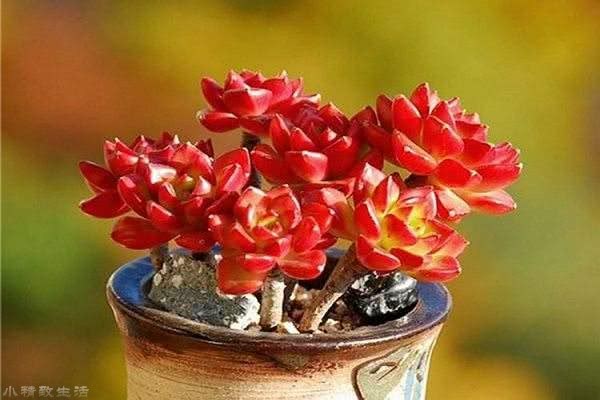
Many beginner friends encounter a lot of problems when they first fall into the succulent rabbit hole, such as how to mix soil for succulent plants, how to water succulent plants, how to prevent succulent plants from growing leggy, and so on. Today, Xiaojingzhi Life has sorted out some problems often encountered in the process of caring for succulent plants, hoping to be helpful to beginner friends, and also welcoming corrections from the experts.
In the process of caring for succulent plants there are several major elements: sunlight, air, watering and soil mixing. Next, let us learn together how to use these 4 major elements reasonably.
1. Soil mixing
The ratio of potting soil for succulent plants varies according to the variety of the succulent, the climate of each place, the growth stage and even the preferences of succulent enthusiasts. It can be said to be diverse, but generally speaking, the basic soil mixing medium for succulent plants is peat soil + granules + other media.
Peat soil has a remarkable effect on rooting speed. For leaf-propagated seedlings, beheaded seedlings, or succulents newly bought home that need to root, the proportion of peat soil in the soil mix can be appropriately increased. However, although peat soil speeds up rooting, if the proportion is too large, the root system will become very weak and not sturdy.
The more granules there are, the slower the rooting speed, but after mixing in granular soil, the root system will become very strong. Therefore, adult succulent plants in the normal growth period can have a larger proportion of granular soil. Granular soils include akadama, kanuma soil, maifan stone and so on, and each has its own characteristics, so everyone can decide according to their own preferences.
Other media such as perlite can maintain the breathability of the potting soil, and coconut coir can retain moisture and hold water, and so on. Everyone can also decide according to the actual situation.
If you really do not want to mix soil yourself, then of course there are many ready-made soil mixes on Taobao. Finding one that suits you and taking it home to use directly is not impossible either.
Newly bought succulent plants generally need to be removed from the soil and repotted, because it is impossible to be sure whether the soil mix from before purchase contains insect eggs or pathogens. So after getting the succulent, a process of removing the soil, trimming the roots, washing the roots and potting up is needed.
As for the process of potting up succulent plants, everyone can search for articles previously published by Xiaojingzhi Life, which include articles specifically introducing detailed potting steps.
2. Sunlight
All things grow relying on the sun. Sunlight is a double-edged sword for succulent plants. Sufficient light will make succulent plants brightly colored with a compact plant shape, which is what we usually call showing their best state. But in the hot summer, be sure not to expose them to strong sunlight, and it is necessary to properly shade the succulents.
An outdoor growing environment with 360° light is the best environment for succulent plants, followed by a balcony, and then a bay window. If kept indoors for a long time, it is very unfavorable to the growth of succulents, and insufficient light can easily make succulent plants grow leggy. If you want to keep them next to a computer on an office desk, then it is better to give up growing succulents. In short, you must find every way possible to give succulent plants as much light as possible.
3. Air
Here air should be discussed from 3 aspects: air mobility, air temperature, and air humidity.
Air mobility means the degree of ventilation in the growing environment of succulent plants. Good ventilation is a necessary condition for the growth of succulent plants. If the environment where the succulents are located has poor ventilation, it is very easy for pests and diseases to occur and may even cause the succulents to die. And ventilation can be said to be directly related to air humidity. Under the same climatic conditions, the better the ventilation, the lower the air humidity, and the more favorable it is to the growth of succulent plants.
Temperature is also a key factor in the growth of succulent plants. Succulent plants are generally divided into summer-growing types, winter-growing types and intermediate types. Some succulents will go dormant in the hot summer, and some will go dormant in winter, so you must figure out the growth habits of the succulents.
In addition, a relatively large temperature difference will easily make succulents become brightly colored. This is one of the reasons why succulent plants easily show their best state in autumn and spring.
But no matter what, high temperature + high humidity is the environment succulent plants fear most, and such an environment must be avoided.
4. Watering
Watering is the most discussed topic. When to water, how to water, what kind of water to use... As for the method of watering, it is also related to region, climate, variety of the succulent, and even the soil mix and pot size. Therefore, simply determining the watering cycle by time is not scientific.
Here is a little method for determining when succulent plants need watering, which is to look at the leaves of the succulent. If the bottom ring of leaves becomes soft and wrinkled, this is a signal that the succulent is short of water, and at this time you can give the succulent a thorough watering.
As for the time period for watering, in summer never water at noon when the sun is direct; choose to water online on a clear and windy day. In winter you can water at noon.
As for what kind of water to use for watering, some people say rainwater is the best. If you have the conditions to collect rainwater, you can use rainwater. If not, tap water that has been left standing for 24 hours is also good. As for those waters with strange substances added, try not to use them.
5. Pests and diseases
Pests and diseases are also a problem that cannot be ignored in succulent plants. Generally speaking, whether it is disease or pest damage, the most important thing is prevention, and treatment comes second. As said before, poor ventilation and excessively high air humidity easily cause pests and diseases, so the growing environment of succulents must be ventilated. In addition, when repotting succulents, you can soak the roots with a carbendazim solution when washing the roots, and when mixing the soil you can mix in some small white pills and other insecticides. These are all measures to prevent pests and diseases. And after pests and diseases occur, medication or physical treatment and so on should be used according to the situation. Previous articles by Xiaojingzhi Life also have special introductions to pest and disease prevention and control.
The above is some basic knowledge about succulent plant care compiled by Xiaojingzhi Life for beginner friends. We hope it is helpful to everyone. As long as we learn more and practice more, we will all become experts.