Common indoor plant watering tips, so you never have to fear overwatering and killing your plants again
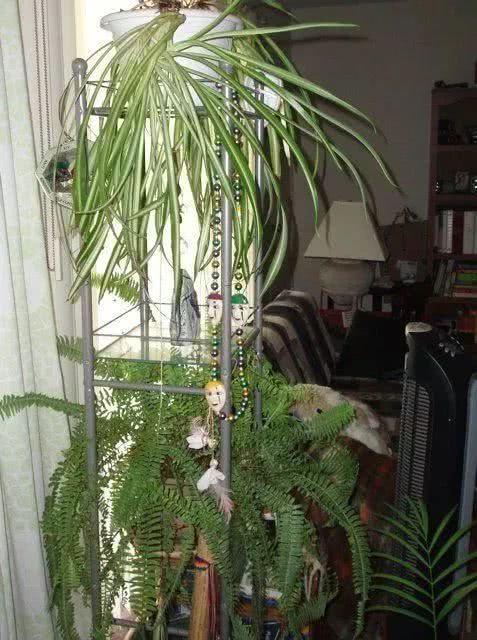
When indoor potted plants are cared for properly, they grow very vigorously and can maintain a very gorgeous state. Placing plants in a house energizes the whole space, makes people feel more relaxed, and helps enhance the quality of life, but many friends do not know how to water potted plants.
1. Watering water-loving plants
For some plants that love moisture very much, you should often mist around them, keep the soil moist, and water frequently, so that these plants can stay in good growing condition.
Many people are very fond of maidenhair fern (Adiantum), because it looks very delicate and elegant, but it is very prone to yellowing leaves and withering.
When maidenhair fern is kept indoors, it needs a warm and humid environment year-round, and the location should stay ventilated, avoiding placement in a closed, stuffy space; in addition, be careful to maintain relatively high air humidity, with indoor relative humidity kept above 50%.
In winter, maidenhair fern not only needs to stay warm, but also should be kept away from air conditioners or heaters; you can often mist water around it, or place some pebbles on a tray, add some clean water, and then set the potted maidenhair fern on top.
Among moisture-loving plants, maidenhair fern is the most representative; others such as pothos (Epipremnum aureum), coleus (Coleus), nerve plant (Fittonia), ornamental prayer plants (Maranta, Calathea), parlor palm (Chamaedorea elegans) and Swiss cheese plant (Monstera deliciosa) are also fairly moisture-loving, and during the growing season they should be misted around frequently.
2. Drought-tolerant plants
When some plants are kept indoors, you must avoid frequent watering; they need very little moisture, but indoor light is not sufficient, so their water consumption is even lower.
They generally need to be watered only once every two weeks or more; frequent watering easily causes root rot, and their humidity requirements are not high.
When caring for these plants, be careful to keep the leaf surface clean; you can wipe the leaves regularly, using a moist soft cloth, to avoid too much dust accumulating on the leaves, otherwise it will affect the plants' photosynthesis.
When watering these plants, do not pour water into the center of the leaf rosette; water directly into the potting soil, and each time water thoroughly until water drips from the drainage holes at the bottom of the pot.
The most common of these plants are money tree (Pachira aquatica), dragon tree (Dracaena), ZZ plant (Zamioculcas zamiifolia), aloe (Aloe) and desert rose (Adenium obesum), etc.
These plants all fear the cold, so in winter be careful to protect them from cold, keeping the minimum care temperature above 7 degrees; in winter, in addition to keeping them warm, you should also control water appropriately.
3. Watering succulents
Potted succulents are becoming more and more popular now; they are not very suitable for growing indoors, so you can place them on a windowsill or balcony with plenty of sunlight, and the care environment should stay ventilated and bright, with more than 4 to 8 hours of light each day.
When caring for potted succulents, be careful to control watering; they need very little moisture. In spring and autumn, you can wait until the potting soil is completely dry and then water thoroughly; in summer when temperatures are too high and in winter when temperatures are relatively low, you should control watering, and may even wait until the soil has been dry for several days before appropriately replenishing moisture.
In addition, when watering succulents, also be careful to avoid watering at night, and when watering do not pour water onto the leaves or into the center of the rosette; water accumulating on succulent leaves easily causes fungal infections.
For the soil used to grow succulents, choose a loose, breathable, well-draining sandy soil, and avoid water accumulating in the potting soil.
4. Potted flowering plants
When caring for flowering plants indoors, also pay attention to watering and the care environment; flowering plants need more light, so they can be placed on an east- or south-facing balcony, maintaining more than 6 hours of light each day, and the care location should stay ventilated and bright.
When growing potted flowering plants, be careful to water regularly and avoid watering too frequently. If the soil stays wet for a long time, it will not only affect flowering but also easily cause root and stem rot. If you want the plants to bloom, you can master the watering technique of letting the potting soil dry out and then watering thoroughly; in addition, be careful to control water appropriately during the flowering period, and before flower buds form, you can regularly supplement with some monopotassium phosphate solution.