How do you care for flowers so they burst into a full pot? An old flower grower shares practical tips
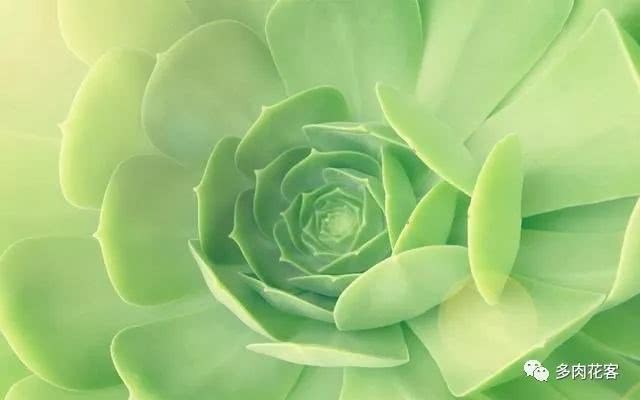
As the saying goes, keep fish diligently and flowers lazily; most flowers and plants are drowned, rarely do they die of drought! When you see other people's beautiful succulents, don't you envy them? Actually, you can do it too. Read these points carefully, and growing succulents will no longer be hard~
In summer some succulents enter dormancy. If care and management are improper, leaves easily become water-soaked and rot. There are two situations for succulent leaf rot: one is too much water, the other is lack of air circulation. Too much water generally causes root rot, which then spreads upward. If the soil is not breathable, the whole succulent will die.
At this point what we need to do is remove the leaves that have already rotted or withered. Finally, one more warning for all succulent friends: when watering, never pour water into the center of the succulent's leaves. If the accumulated water can drain away in time, that is fine, but once the accumulated water does not evaporate in time, the succulent will start rotting from that center and spread outward in all directions. By then, the succulent you worked so hard to grow for so long will slowly wither until it dies, and there will be no way to save it.
In addition, the reason succulents grow plump is that they must be fertilized! If you grow succulents, choose a fertilizer with a high potassium proportion. It is best to use a fertilizer with N-P-K = 9:14:19. So for succulents, how often is the most appropriate watering? In cool seasons (October to March), water once every 1-2 weeks; do not water on rainy days or when sunlight is too strong. In hot and stuffy seasons (April to September), water once a month, but water thoroughly depending on the situation; skip watering during the plum rain season and occasionally mist with water.
In summer, many succulents enter dormancy or semi-dormancy. At this time, with too much water the roots cannot absorb it, and over time root rot easily occurs. If it is too dry, you can give just a little water on a relatively cool evening, just enough to moisten the surface of the potting soil, to ensure that the potting soil is fairly dry before the sun comes out the next day, and at night the plant can also absorb water better! In summer, if the potting soil is moist and encounters high temperatures, the potting soil becomes a big steamer, suffocating the succulent to death, and the hot, humid environment also easily breeds pathogens and makes black rot more likely!
If even this cannot keep the succulent alive, then what else should you pay attention to? Some varieties of succulents are rather small, so when repotting you cannot use too large a pot; it is not only unattractive but also bad for the succulent's growth. We generally repot about every 2 years. Besides pruning the rotten and weak roots, we should also add some leaf mold to increase the soil's fertility.
Many succulent friends become movers for their succulents in summer, putting them in an air-conditioned room during the day and moving them outside for open-air growing at night. Succulents themselves live in tropical, harsh places, and as long as they stay in such an environment, they will gradually adapt to it. No matter what type of succulent plant it is, in the hot summer it must be kept ventilated. Bedrooms at home all have windows opened for ventilation, let alone succulents.
If the air is hot, stuffy and humid, and the air cannot form convection, then there is no way to cool the succulent, the water cannot evaporate out, and the water you pour will very easily cause the succulent's roots to rot, so giving the succulent a ventilated environment is crucial. In addition, summer sunlight is rather harsh, so when placing succulents you must be careful: if there is direct sunlight, it will very easily cause sunburn and affect the succulent's growth, so at this time it is best to shade the succulent and avoid direct sunlight.
Actually, for succulent friends, keeping a pot of succulents alive and well brings a great sense of accomplishment, something friends who do not grow succulents cannot feel. The editor previously published an article about succulents, and I hope today's article will solve all the problems for all succulent friends. If you still want to know any flower-growing experience, just leave a message for the editor, and the editor will tell you the old flower grower's experience. If all you succulent friends feel the editor's article can solve your problems, please follow the editor and forward the article to tell more succulent friends. The editor thanks all you succulent friends here.