Grow orchids in sphagnum moss in a plastic bag: grape cuttings covered in thick white roots, and an orchid sprouts 10 new shoots overnight
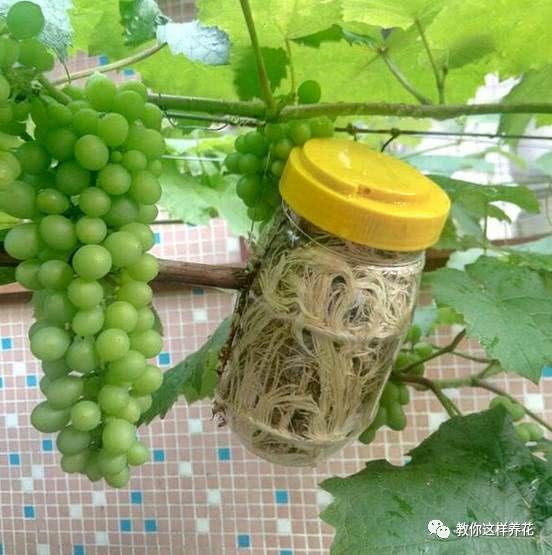
In autumn orchids are growing vigorously, yet many gardeners' orchids just sit there doing nothing! There is a small thing at the base of an orchid called the old pseudobulb, and many people do not know what it is. In fact, it can be a treasure for orchid growers. Put it in a plastic bag, add something and let it sweat for a while, and it will sprout like crazy! In fact, sphagnum moss is not only good for sweating old pseudobulbs; it is also great for air layering and growing flowers. Let's take a look!
“
Growing flowers with sphagnum moss
-Air layering grapes with sphagnum moss-
Air layering is a very effective propagation method, with a survival rate of almost 100%. Usually nutrient soil is used as the medium, and many people also use sphagnum moss with very good results. Moisten the sphagnum moss with water; it is best when you squeeze the medium in your hand and no water drips out.
First make a ring of bark removed from the branch, wrap the moistened medium around the girdled part, and tie it tightly with a cling film or plastic bag. Air layering with sphagnum moss has the advantages of a light medium, suitability for layering small branches, and being fairly suitable for express shipping, while roots also grow relatively fast.
After a few weeks, once the roots have filled the medium, cut it off 2~3 cm below the girdled part.
Propagating Osmanthus fragrans by sphagnum moss air layering
-Sweating orchid pseudobulbs to sprout-
In autumn many gardeners repot their plants. When repotting, never throw away the old pseudobulbs. Sweat them with sphagnum moss or river sand, and they will grow into new orchids. Very good.
Gently peel off fresh, plump old orchid pseudobulbs, soak them in potassium permanganate or carbendazim for half an hour to disinfect, then air-dry and set aside.
Wrap the old pseudobulbs with sphagnum moss, spray the moss with water to moisten it, put it in a zip-lock bag, and place it somewhere warm. Be careful not to make it too wet, otherwise it may rot. Every few days, open the bag to let air in. In about 15 days the old pseudobulbs will sprout. After they sprout, poke a few holes in the bag to help the old pseudobulbs breathe.
When the new shoots open their leaf mouths and grow new roots, they can be transplanted. Generally, bury the pseudobulb 1~2 cm deep in the growing medium. During the sweating process, be careful not to open it up and check too often, as this easily damages the roots.
Besides sphagnum moss, you can also use wood shavings and river sand to sweat roots.
-Propagating Clivia miniata by cuttings with sphagnum moss-
Sphagnum moss holds water well, making it fairly suitable for rooting cuttings of fleshy-rooted plants such as Clivia miniata.
Take a Clivia miniata with rotten roots as an example: cut off the rotten root parts, soak in carbendazim for about 20 minutes, and air-dry in a spot with bright, indirect light and good ventilation.
Moisten the dry sphagnum moss, wrap it around the roots of the Clivia miniata, and put them together into a flower pot.
Place it in a cool, ventilated spot. When you touch the sphagnum moss and find it dry, spray it with water. In about 1 month the Clivia miniata will root.
-Growing Phalaenopsis with sphagnum moss-
Sphagnum moss holds water and breathes fairly well. Phalaenopsis likes a moist growing environment but also needs ventilation, so sphagnum moss is a very good growing medium.
First soak the sphagnum moss in water, pick out the impurities in the Phalaenopsis, and squeeze out the water. For an old Phalaenopsis, first take it out of the pot, stop watering a few days in advance, clear away the original sphagnum moss, and be careful not to rush; work slowly to reduce root damage. Cut off the rotten and dry roots of the Phalaenopsis, place sphagnum moss between the roots, and do not pack it too tightly. First put a little sphagnum moss in the bottom of the pot, then put the Phalaenopsis with the moss filled in around it into the pot. For some gaps, you can use tweezers to fill them. Fill with sphagnum moss to about 1-2 cm below the pot rim.
After filling, do not water at first. Keep it in a spot with bright, indirect light for a week, then once the sphagnum moss has dried out completely, water thoroughly, and after that you can care for it normally.
During use, if the sphagnum moss turns green, then it can no longer be used, as it has mostly rotted. It needs to be replaced in time. Ordinary sphagnum moss can be used for about one year, and after one year it needs to be replaced in time.
Sphagnum moss is a great thing for growing flowers
Do you know all these little tips?
Share it with gardeners who need it too!