The true butterfly flower resembles a swarm of butterflies dancing, beautiful and pure like an angel
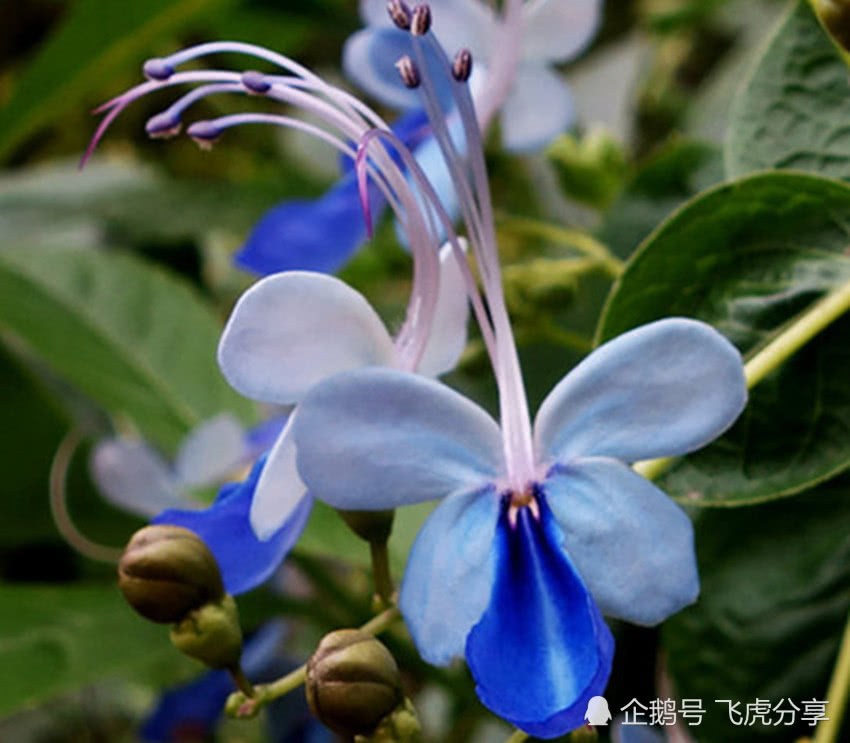
Many flower lovers have seen flowers that look like butterflies, but flowers that truly look exactly like butterflies are indeed rare. Today, the editor will take everyone to learn about what a true butterfly flower is.
The flower we are introducing to you today is called the blue butterfly. When the blue butterfly blooms, it closely resembles a swarm of butterflies dancing, with elegant floral postures, and it gets the name blue butterfly because its shape resembles a butterfly. This flower has beautiful purple blooms like a butterfly. When in full bloom, the flowers are like butterflies dancing gracefully, with very elegant floral postures. It is as pure as an angel, so beautiful and noble, as dazzling as starlight in the dark night. It blooms in spring and summer, with inflorescences extending from the branch tips, opening one after another, and the flowering period is quite long.
The blue butterfly is a perennial evergreen flowering shrub, an excellent garden and potted flower, and can be used for flower beds, flower paths, and cut flowers. It can be grown on balconies, windowsills, roof gardens, or in courtyards. It gets its name because its flower shape resembles a butterfly, with wings and antennae remarkably true to life, green with purple. There are 4 slender, curved filaments extending straight forward, purple or white. Just like a butterfly's antennae. Moreover, its aqua-blue flower color is quite rare among flowers, so it attracted the attention of flower lovers as soon as it came on the market. The refreshing flower color can bring a cooling, refreshing feeling in the hot summer.
For cultivating the blue butterfly, loam or sandy loam soil is best, and drainage must be good. It likes high temperatures, and the suitable growing temperature is about 23-32 degrees C. In winter, it needs warmth and shelter from the wind to overwinter. It adapts to environments from partial sun to full sun; strong sun will make the leaves somewhat yellow, but it does not affect growth or flowering. Low temperatures and cold waves in winter will cause a slight dormant phenomenon with leaf drop, and new leaves only grow when the weather warms up. It blooms in spring, summer, and autumn, with inflorescences extending from the branch tips, opening one after another, and the flowering period is quite long. After flowering, dwarfing pruning can be carried out. This prevents it from getting taller and taller and gradually sparser. Apply a long-acting fertilizer once in late winter and early spring, and apply one more supplement after flowering.