Orchid repotting reveals nothing but roots - with growth like this, how could you worry about the orchid not growing well?
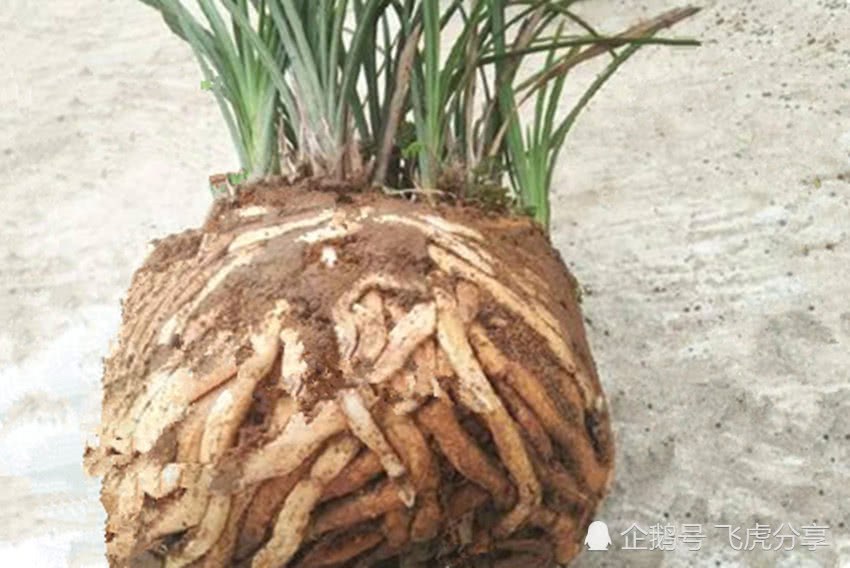
In the end, growing orchids is all about growing roots. If the roots are well grown and thick, there is no way the orchid can fail to grow well. If, in the process of growing orchids, you only pay attention to leaf growth and neglect the root system, then no matter how you grow them, you will never grow them well. A while ago, when the editor was repotting an orchid, I found that the pot was full of orchid roots, and I had no idea where the soil in the pot had gone. Later, after asking around, I learned that it had all been absorbed by the orchid's root system. Strange, isn't it?
As the saying goes: "To grow orchids, first grow the roots; only with good roots will the orchid thrive." But it is not that the more orchid roots the better. Too many orchid roots will also affect the growth of the orchid, because when there are too many orchid roots, the soil in the pot decreases. Once the soil is reduced, there are not enough nutrients to supply the plant's growth, and furthermore, root development will also be hindered. Therefore, when an orchid is in a vigorous state, it should be repotted and given fresh soil every 2--3 years, because a vigorously growing orchid will have basically filled the pot with roots in three years, and the nutrients in the growing medium will also have been basically exhausted. At this time, repotting the orchid and changing the soil is just right.
When repotting an orchid, the first thing to do is prune the excess roots. If the roots have already filled the pot, you should prune away one-half to two-thirds, leaving only a small portion to plant in the pot. But after pruning, you must first disinfect and sterilize with chlorothalonil, carbendazim or other disinfecting and sterilizing agents before you can replant it in the pot. The above are the key points of repotting. Next, let's talk about how to grow orchid roots well, make them thick, and make them strong.
Everyone who grows flowers knows that root growth depends on the soil. Good soil grows good roots. If the soil you use turns into a hard lump as soon as you water it, how are you supposed to let the roots grow? Nowadays, many people use granular growing media for orchids, but if you use granular growing media and only focus on looseness and air permeability while neglecting nutrients, the orchid roots will likewise not grow well. In the past, people grew orchids using only leaf mold, and the orchids still grew with vigorous branches and leaves and bloomed continuously. But now, with granular growing media, many flower lovers still always fail to grow them well. In the end, it is because the nutrients are not comprehensive and cannot satisfy the orchid's growth. Therefore, if you want to grow orchid roots well, whether you buy or mix your own growing medium, in addition to being loose and air-permeable, you must also take nutrients into account.
In the orchid-growing world there is a saying: dry grows roots, wet grows leaves. Orchids are fleshy-rooted flowers, and their root system contains a large amount of water. When growing orchids at home, very few die from dryness, but plenty of people kill them by watering. Therefore, watering less and watering appropriately helps root growth. With watering, it is not the amount you should fear but the frequency. If the growing medium in the pot remains wet for a long time, it will cause the roots to lack oxygen. In mild cases, growth will be poor; in severe cases, the roots will rot and the plant will die. So, when watering orchids normally, you must wait until the growing medium is dry before watering.