This year, wheat production and quality declined in some areas of China, and auctions were restarted to prevent excessive price increases.
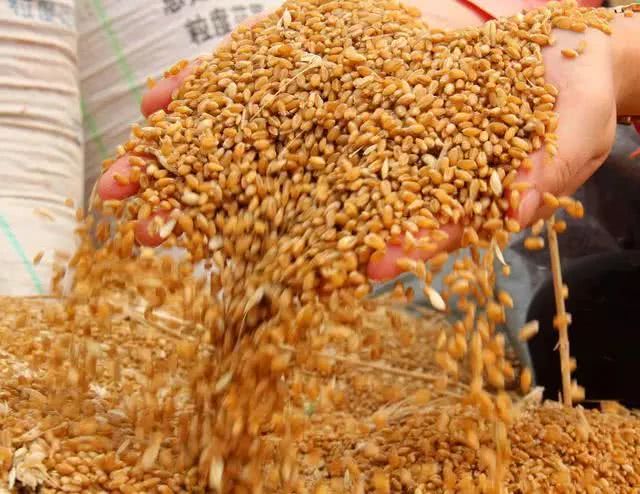
It is once again the autumn sowing season. While farmers sow the new season's wheat, they cannot help but review this year's wheat prices to see whether the returns justify continuing to grow wheat, or whether they should wait until next spring to plant other crops.
The 2018 concentrated wheat purchasing season has ended.
According to the latest news from the National Food and Strategic Reserves Administration, as of September 30, China's main producing areas had purchased a cumulative 50.152 million tonnes of wheat in 2018, a year-on-year decrease of 21.907 million tonnes, or a sharp drop of 30% year on year - this purchase volume also hit a four-year low.
Recently, the National Food and Strategic Reserves Administration also said in an interview with the media that although Hubei, Anhui and other places were hit by disasters this year and wheat production and quality declined somewhat, the impact of the reduced output on overall market supply is very limited.
At the same time, restarting the national wheat bidding transactions at the end of September will help "ensure market supply and prevent excessive price increases."
After the auction restarted, the transaction rate was not high.
Judging from the results of the two most recent national minimum purchase price wheat transactions, 2 million tonnes of wheat were offered each week, but enterprises were not very enthusiastic about participating in the bidding. Weekly transaction volume was only just over 100,000 tonnes, the transaction rate was less than 10%, and the average transaction price was about 2,400 yuan per tonne.
This indicates that after the concentrated wheat purchasing period, current market supply is ample.
Quality commanding a premium price ran through the entire purchasing market.
According to data monitored in the market, during this year's summer harvest, the high purchase price for high-quality strong-gluten wheat at some enterprises reached 1.36 yuan/jin and 1.37 yuan/jin. The market purchase price for ordinary wheat (meeting quality standards) was basically 1.20-1.26 yuan/jin, and high-quality wheat was generally more than 0.1 yuan per jin more expensive than conventional wheat.
But relatively speaking, the price of substandard wheat is still mostly concentrated between 1,800-2,200 yuan per tonne. Compared with high-quality wheat, it is not only lower in price, but also difficult to sell.
Next week the state will add 200,000 tonnes of 2017 wheat to auctions.
It is understood that national temporary storage wheat inventories are still around 73 million tonnes (not including this year's purchases). Among the high policy-driven wheat inventories, ordinary wheat accounts for the absolute majority.
In addition, because wheat quality was relatively low in some areas this year, starting next week the state will hold auctions of 2017 wheat, in quantities of 200,000 tonnes per week, with an auction reserve price of 2,410 yuan per tonne and a price difference of 40 yuan per tonne between adjacent grades.
Import volumes have begun to show a clear decline.
It is worth noting that because domestic production is relatively low, China imports some wheat from Australia, Canada and other countries every year, mainly high-quality varieties for blending use. But in the first eight months of this year, China imported 2.23 million tonnes of wheat, a year-on-year decrease of nearly 1 million tonnes.
Specifically, imports in June fell by 30% year on year, and the decline in wheat import volumes in July and August was around 50%.
Judging from the current market, there is little dispute that the ordinary wheat market trend follows state auctions, but variables remain in the high-quality wheat market.
Next year the state's wheat support price may continue to be lowered.
Because China still has more than 70 million tonnes of wheat in inventory, the market generally expects that next year's wheat minimum purchase price will continue to be lowered.
There are even market rumors that, based on the overall situation of wheat in 2018, the minimum purchase price for wheat produced in 2019 is expected to be lowered by 0.02-0.03 yuan/jin.
This article comes from the internet. If there is any infringement, please contact us for deletion.