The plants at the flower market are thriving, so why do they wilt as soon as you bring them home?
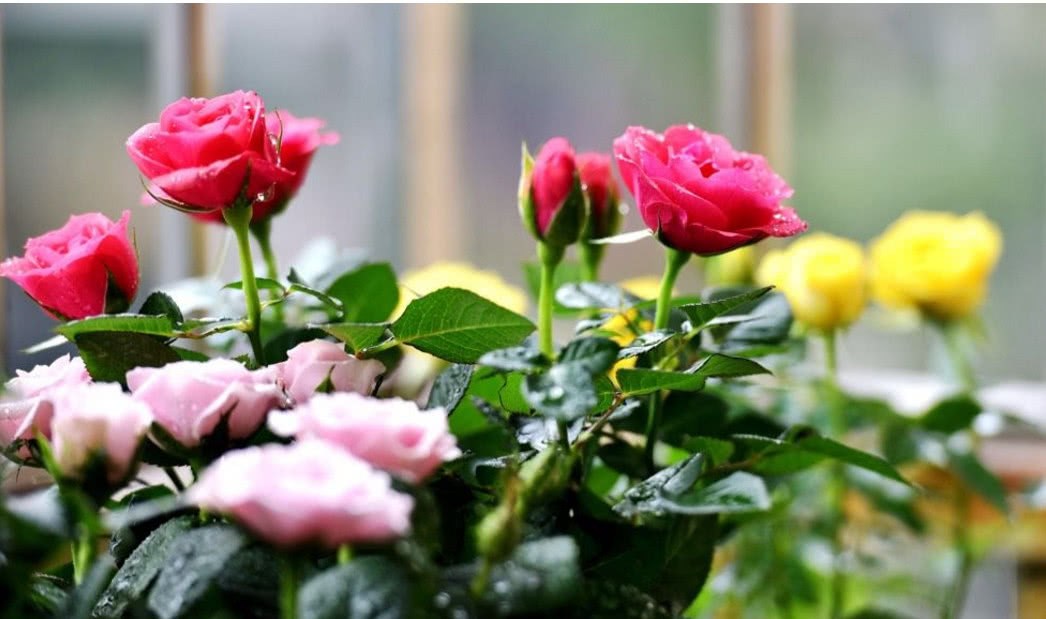
For those of you who can never resist splurging on plants and flowers, you carefully picked and dodged countless traps set by sellers, only for the plants to die at home in the end! Why do flowers at the flower market bloom so well and leaves grow so green, yet they are so hard to keep alive once you buy them? This question deserves a careful answer, and I believe after reading it you will understand a great deal.
There is only one truth: you simply did not choose the right plant! Every orientation is different, and if you choose the wrong flowers and plants, no wonder your balcony looks so empty. Take a quick look at what plants your balcony should have.
East-facing balcony
An east-facing balcony gets half-day sun, with 3~4 hours of direct sunlight in the morning, then shifting into shade in the afternoon. So choose neutral or shade-tolerant plants. Apart from the wind being a bit stronger in winter, an east-facing balcony is quite good in the other three seasons, and in summer it will not cause plant scorching the way a south-facing balcony's blazing sun does.
Clematis: even before its full blooming season, it can open thousands of flowers, vast and magnificent like the ocean.
Christmas cactus (Schlumbergera): patient waiting still pays off with a stunning moment.
Clivia (Clivia miniata): a modest gentleman, with emerald-green leaves, upright flower stalks, and beautiful blooms.
Petunia: counting from sowing, it can be potted up in two months, and from bud formation to a full pot of blooms takes about ten days!
South-facing balcony
A south-facing balcony has very abundant light, with illumination from the east, south and west, making it full sun and very favorable for sun-loving plants. The sunshine duration is long and the temperature is higher. But in summer and autumn, because the midday direct sunlight is too intense, for semi-shade-tolerant and shade-tolerant foliage plants, shading is needed.
Hydrangea: the fun of growing hydrangeas lies in adjusting the color, so after enjoying pink flowers, you get blue ones.
Campanula (bellflower): when a breeze passes, they sway like wind chimes. In late spring and early summer, the flowers are delicate, small and exquisite.
Pansy: very beautiful, easy to grow and quick to fill a pot, and it is an annual whose seeds can be collected and sown again the next year.
Aglaia odorata (Mock Lime): grown outdoors from early summer to late autumn, its fragrance is even richer.
The varieties and colors of Catharanthus roseus (Madagascar periwinkle) can completely overturn your imagination.
West-facing balcony
A west-facing balcony has dry air and afternoon west sun, with high light intensity. There are 4~6 hours of direct sunlight in the afternoon, so the light is abundant. A west-facing balcony is generally called "west sun", and on summer afternoons the temperature on a west-facing balcony rises rapidly and water evaporates very quickly, so when choosing plants, avoid plants with high water demands!
Geranium (Pelargonium): all year round, it is thanks to this plant that a tiny balcony shows vitality.
Honeysuckle (Lonicera japonica): the flowers first open white, then turn yellow after a day or two, with two flowers on one branch, inseparable as shadow and form.
Kalanchoe (Kalanchoe blossfeldiana): a short-day flower; if you want it to bloom earlier, remember to shorten the light exposure time.
Begonia: though named "begonia", you do not grow it for the flowers; its green leaves have a strikingly fresh and unusual painted look.
North-facing balcony
A north-facing balcony has almost no light, with only a little in the morning and evening, then gradually decreasing, and by autumn there is basically no light. With insufficient sunlight, it is suitable for shade-tolerant plants, and in winter the shady side is on the cooler side, so flowers need to be moved indoors; those already indoors need to be moved elsewhere, and cold-protection measures should be taken.
Monstera (Monstera deliciosa): in slightly acidic loam with good water retention, placed on a north-facing balcony it instantly becomes lush and green.
Calathea (Calathea makoyana): this fellow does not like sunbathing, and strong light easily scorches it, so a low-light north-facing balcony is simply perfect!
Syngonium (Syngonium podophyllum): its growth is delightful, and the best part is that it needs hardly any care!
Asparagus fern (Asparagus setaceus): it can tolerate shade, but it absolutely must have ventilation.
Welcome to follow Plant Fanatic; Squirrel Jun chats about flowers and plants with you!