These 4 flowers need to be pruned boldly; 30 days after pruning, they bloom more densely and more vigorously
Growing flowers has become a hobby for many people. Around us, many friends, colleagues, relatives and family members like to grow some flowers and plants, keeping them close by. When there is nothing else to do, watering, fertilizing and loosening the soil can both bring some fun and pass the leisure time. Moreover, growing some flowering potted plants means that during their blooming season they produce beautiful flowers that delight the eye.
When growing flowers, you need to be willing to be decisive. These 4 flowers need a "trim"; trim them once and they bloom in 30 days, more densely and more vigorously
Today I will share 4 common flowering houseplants with you: Christmas cactus, kalanchoe, clivia and bougainvillea. All 4 of these plants bloom very beautifully and brightly. But in daily care, they need proper maintenance to produce beautiful flowers. For these 4 flowers, you need to be willing to "fix" them, pruning them when necessary so they bloom beautifully on schedule.
1. Christmas cactus
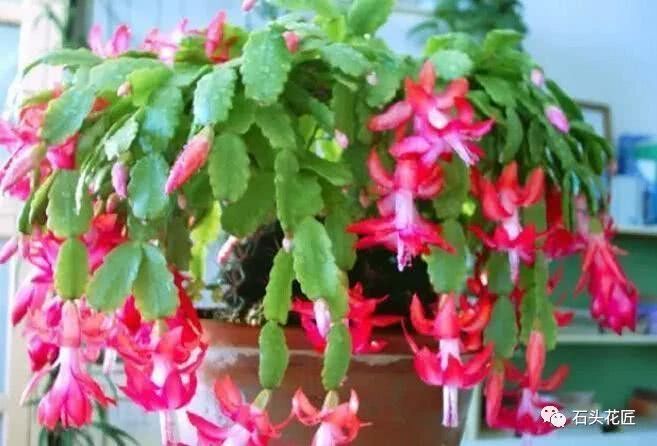
Christmas cactus is very popular among flower lovers. It is now autumn, which is also the period of rapid growth for Christmas cactus. Generally, Christmas cactus goes dormant in summer, grows in autumn and blooms in winter. Right now you can prune the leaves of the Christmas cactus to encourage more new leaf growth, so that more flower buds can grow from the leaves.
When pruning the leaves of Christmas cactus, you do not need scissors or a blade; you can simply pick off the leaves with your hands. Pinch the leaf you want to remove and give it a gentle twist and it will come off. Leggy leaves and dense leaves can all be picked off, then give the plant a supplementary application of compound fertilizer. After winter arrives, spray the leaves with a potassium dihydrogen phosphate solution, which can effectively promote flower bud development and produce beautiful flowers in winter.
2. Kalanchoe
Kalanchoe is also a plant that blooms in winter. Keeping kalanchoe at home not only produces beautiful flowers but also symbolizes health and longevity for the family. For kalanchoe, pruning in autumn is a must, so that the plant produces more flowers in winter.
The principles for pruning kalanchoe: remove leggy branches, and pinch the tops of the other branches, using scissors to cut off 3 cm from the top of the branches, so that new shoots can develop. For some old potted plants, heavy pruning can also be done, cutting off all the branches so the plant regrows new branches and new shoots. After pruning, place the potted plant in a cool indoor spot for care, water normally and supplement with nitrogen fertilizer to promote leaf growth. In late autumn, supplement the kalanchoe with phosphorus and potassium fertilizer to promote flower bud development, and place it on a balcony with good light so the plant produces more flowers.
3. Clivia
Clivia is a common houseplant. Many flower lovers like to place it in the living room or study. Clivia not only has emerald green leaves but also produces beautiful flowers. However, when clivia develops root rot or damage to the base, it can be pruned, which encourages the plant to grow new small offsets.
When clivia develops root rot or damage to the base, you can take it out of its original pot and prune off the rotten roots. If the base has rotted, you can directly use a blade to cut off all the upper leaves. Apply potassium permanganate to the pruned clivia for sterilization and disinfection, let it dry in a cool spot outdoors for one day, then replant it in a pot and place it in a cool place to recover. After 2 weeks the clivia begins to grow side shoots, and with normal care for one month, the clivia can grow many small offsets. In later care, it can be grown as a clustered clivia and produce more flowers.
4. Bougainvillea
Bougainvillea is a very popular houseplant. Its blooming period in a year is relatively long, starting in summer and continuing until the end of autumn. But some flower lovers report that their bougainvillea has been grown for a year and still has not bloomed. In fact, generally before the blooming period of bougainvillea, the plant should be pruned once.
Pruning of bougainvillea is generally done in spring and summer, cutting the tops of the branches and directly removing some crooked branches and leggy branches; then dense branches should also be thinned out and pruned, which increases light penetration and ventilation. Cutting off these branches promotes rapid growth of side shoots. For bougainvillea, the flowers all grow from the new branches produced in the current year.
In fact, growing flowers is like being a person and doing things: you also need to learn to be willing to let go, to know how to add and how to subtract. When a plant grows to a certain point, it needs pruning, which is what promotes its growth. Common houseplants need proper pruning at the right time to grow normally and produce beautiful flowers.
If you find this useful, please like, follow and share it with more friends below!
I am [Stone Gardener], sharing little gardening tips every day. Remember to follow me!