Flowers with root rot and yellow leaves blooming poorly? One cut solves it easily
Everyone says growing flowers is hard, but actually many problems, root rot, yellow leaves, few blooms, can be solved with one cut! I never imagined it, turns out many times it's just not knowing these tricks, and after learning them you realize growing flowers isn't that hard, let's take a look!
“
One cut for growing flowers
- Cut the asparagus fern once and it grows new leaves -
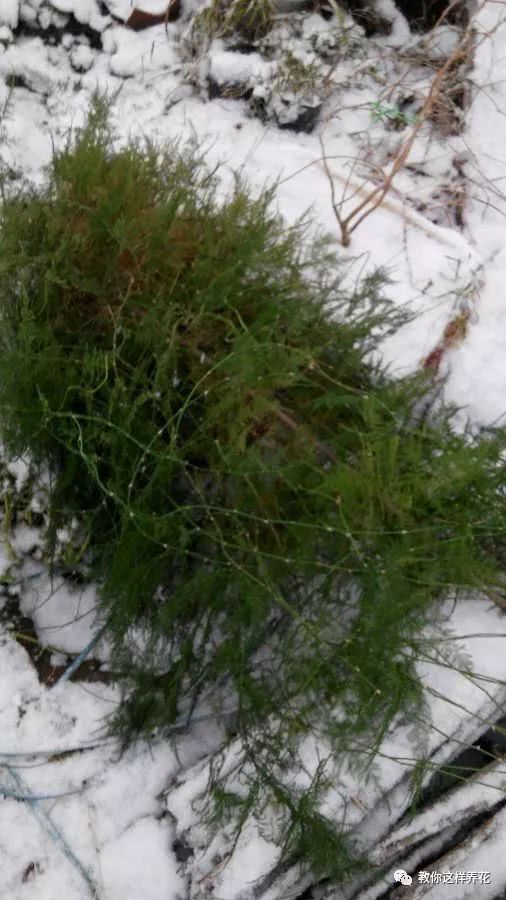
The asparagus fern (Asparagus setaceus) is a rather sensitive plant, often developing yellow leaves due to careless watering, unsuitable light and other problems. In fact, the asparagus fern has fairly strong regenerative ability; as long as you adjust the care method in time and cut off the yellow leaf parts, ensuring the roots are fine, it will quickly grow new leaves.
The asparagus fern grows fast, and with proper care it soon becomes a large pot. After pruning the asparagus fern, water it with white sugar water diluted 100 times, using it once a month, which can promote the growth of the asparagus fern.
- Cut the money tree once to save it from root rot -
The money tree (Pachira aquatica) does not tolerate wet conditions, and root rot easily occurs when there is too much water. Most money trees die from root rot. If root rot occurs, don't throw it away first; cutting the root once might still save it.
When the money tree has root rot, first cut off the rotten roots and withered branches, soak them separately in rooting powder and carbendazim, then dry them and pot them up. Be careful not to bury them too deep, and water thoroughly only when the soil is completely dry. If it survives, new shoots will grow in about 15 days, and leaves in 1 month.
- Cut the bougainvillea once and it becomes a flowering tree -
Bougainvillea blooms beautifully, and many people choose to train it into a flowering tree, which is very special. Choose a thicker bougainvillea seedling, keep the main trunk, and cut off the branches. Once it grows to a satisfactory height, pinch the top, and after several pinchings many branches appear; then just prune it into a ball shape.
When the newly grown small branches have about 8 leaves, remove the terminal bud, leaving 4-6 leaves, and also pinch off the small flower buds. This way it can grow into a small flower ball, especially beautiful.
(Dongguan Shan)
- Cut the bowl lotus seed once to promote germination -
The bowl lotus is elegant, but it is a bit troublesome to grow, especially the seeds; if not treated, the germination rate is not high. Before sowing the bowl lotus, you need to cut the seed once, and the germination rate is almost 100%! The bowl lotus seed shell is hard, so it needs to be manually nicked first. One end of the lotus seed has a small pointed tip, and the other end has a small concave dot. Take the end with the small concave dot and cut a small opening with pliers or garden shears. Be careful not to crush the seed embryo, and do not remove the shell.
Put the nicked bowl lotus seeds into water. A water temperature of 20°C-30°C is suitable for germination, otherwise germination is slower. Place in a cool, ventilated place and change the water once a day. After 2-3 days, the seed coat softens, and you can continue peeling off about 1/3. In about 1 week it can germinate.
- Cut the azalea once and it blooms in multiple colors -
Grafting azaleas is very common. The smooth azalea (Rhododendron mucronatum) has more fuzz on its leaves, larger leaves, and grows especially fast, becoming a large bonsai tree in 2 years. It is also cold-tolerant and widely adaptable, and can be grafted with azalea varieties such as the summer azalea or the east azalea, which have many flower colors and abundant blooms. After surviving, the tree is covered with azalea flowers when it blooms, especially beautiful.
Choose a two-year-old smooth azalea as the rootstock. The thickness of the new shoot and the scion should match. The scion is best a 3-4cm young shoot of the current year, keeping 3-4 leaves and removing the other leaves. Choose a new shoot grown in the current year as the rootstock, cut it off at two or three centimeters, make a vertical cut of about one centimeter, insert the scion, align the cortex and cambium, tie it with plastic film, then seal the opening with a zip-lock bag to ensure a certain temperature and humidity, and place it in a cool, ventilated place. After a week, if it has not wilted, it has survived. After 2 months, the bag can be removed.
- Cut the pennywort once and it fills the pot -
Sometimes the pennywort (Hydrocotyle vulgaris) is in very poor condition, and you can directly prune and renew it entirely. If the temperature is suitable, it will quickly grow into a large pot again!
With sufficient water, fertilizer and sunlight, it easily fills the pot!
- Score the rubber tree once and the buds grow vigorously -
Many flower lovers' rubber trees (Ficus elastica) grow taller and taller, a straight bare pole that looks rather thin and ugly. In fact, there is a little method for the rubber tree that can make it grow more side branches, making it fuller and more beautiful.
The rubber tree can also be made to grow side buds through the method of bud scoring. Bud scoring wounds hinder the transport of nutrients and water, generally inhibiting the growth of the part above the wound and strengthening the growth of the part below the wound. Bud scoring can allow nutrients to flow back, prompting the scored buds to sprout and grow into new branches. Bud scoring can directionally and positionally cultivate scaffold branches, promote the growth of side branches, and build a good tree structure.
- Cut the petunia once and it becomes a flower ball -
To grow petunias into a flower ball, pay attention to pinching the top. Only through several repeated pinchings can the shape emerge. When the seedling grows 6 true leaves, you can pinch off the top two leaves, keeping the four leaves at the base, following the "remove two, keep four" method. This way one becomes four, four become sixteen, sixteen become sixty-four... and thus you get a super good-looking large flower ball.
During this period, fertilizer, water and light must all keep up. At the seedling stage you can choose a general-purpose fertilizer, and before flowering use more fertilizer with relatively high phosphorus and potassium content.
- Cut the succulent once to save it from black rot -
Black rot is fairly common in succulents, especially in high temperatures. If ventilation is slightly poor and it is stuffy and hot, black rot is especially likely. If black rot is found, deal with it promptly. You can use a knife to cut off the black rot part, keep the healthy part, apply carbendazim, dry the wound, and then replant it in slightly moist potting soil. After a period of time, it can re-root.
- Cut the pothos once and it fills the pot with cuttings -
Pothos roots quickly from cuttings and is relatively easy. One segment of vine can be cut into many pots. Cut the pothos once, and 1 pot becomes 10 pots. Cut off a pothos vine of about 10cm, keep 1-2 leaves, make sure there is 1 node, and it is best to have aerial roots. Insert it into loose potting soil, water thoroughly, and just wait for it to root.
- Cut the kalanchoe once after flowering and it blooms twice -
The kalanchoe (Kalanchoe blossfeldiana) has a relatively long flowering period. After the flowers fade, promptly cut off the spent flowers to save nutrients for the next bloom. If most of the flowers have already finished, you can cut them off directly. Along the edge of the pot, poke a few small holes with chopsticks, put a few granules of compound fertilizer in each hole, cover with soil, and with proper care, the kalanchoe will continue to bloom.
So growing flowers has so many little tricks
Many flower-growing problems can be solved with one cut
Have you learned it?
Share it with flower lovers who need it too!