A cactus grown for 10 years reaches 2 storeys high, blooms and bears a whole tree of "immortal fruit"
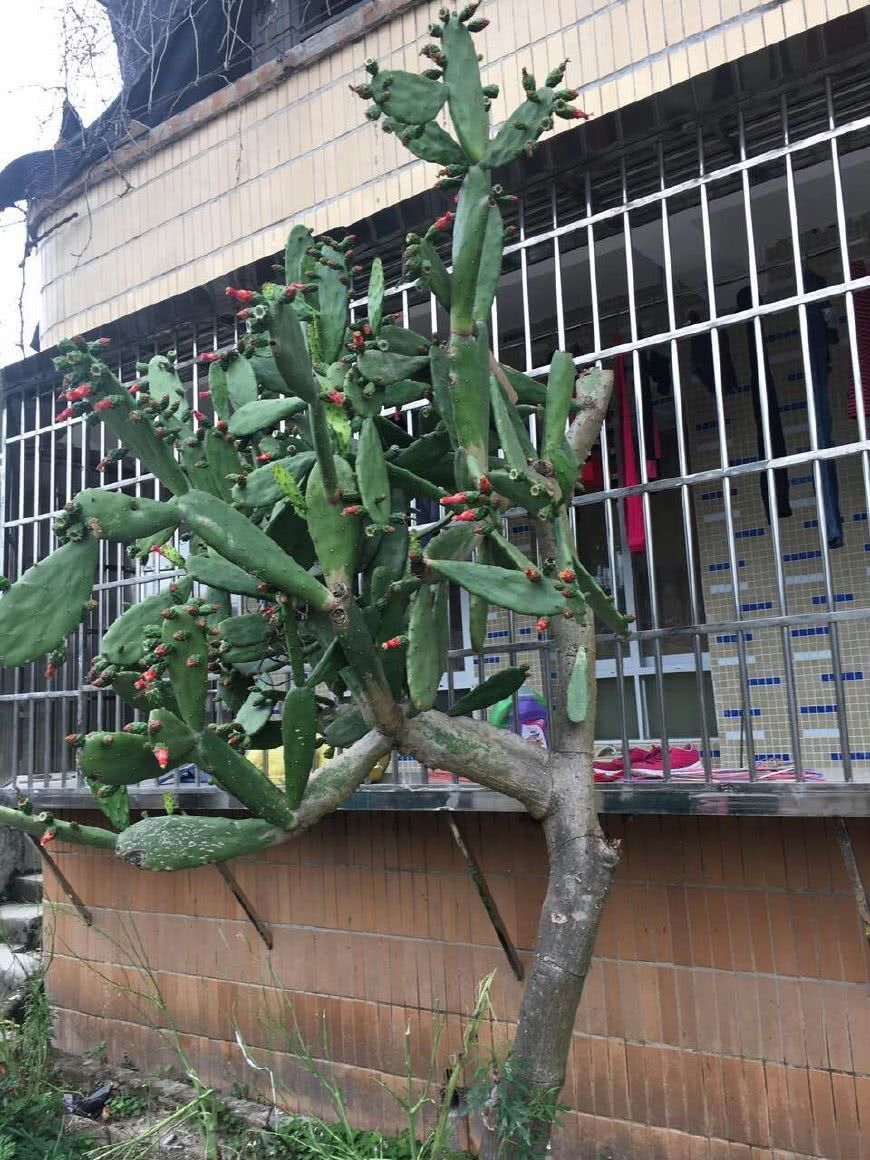
When people grow plants nowadays, they choose plants with a long lifespan that can be kept for a very long time. Trees nurture people, and the longer you keep them, the more collectible value they have. Many flower lovers have kept some plants for several years or even more than ten years. Among these plants, people generally choose to grow trees, and recently I came across a rather special variety: one flower lover was growing a cactus. Apart from in the desert, it is rare to see a cactus kept for so long. A cactus kept for ten years is different from ordinary ones; it can even bloom and bear a whole tree of "immortal fruit".
Everyone is familiar with the cactus. It belongs to the cactus family (Cactaceae), is fairly drought-tolerant, and can grow well even without much care, so it is fair to say it is very easy to keep alive. We usually keep ordinary ones at home to absorb radiation, basically placing them on the balcony. If kept well, they may bloom, but wanting them to bear fruit is still relatively rare.
If you want a cactus to be kept for more than ten years and still bloom and bear fruit, it needs to be grafted.
With ordinary care, too much watering easily causes root rot, while grafting can completely avoid this situation. Cactus grafting is very simple: choose a suitable rootstock, and most people choose Pereskia (leaf cactus). The characteristic of Pereskia is that its branches lignify quickly, its habits are close to those of the cactus, it is drought-tolerant, and it is also somewhat more tolerant of waterlogging than the cactus. We choose a cactus pad of suitable size that is in its growth period, cut it off at a 45-degree slant, then soak it in carbendazim. After soaking to sterilise it, place it in a ventilated spot to dry. Choose a Pereskia plant of suitable size, make a cut at a suitable branch according to the size of the cactus you just cut, insert the dried cactus pad, and find a clip to hold it firmly in place. If the cactus pad does not droop, it proves the grafting succeeded. If the grafting fails, just try again.
After successful grafting, care for it according to the habits of Pereskia. The growth of the cactus cannot be separated from sunlight; do not keep it in a place without sufficient light. When watering, be sure to water thoroughly, and avoid water accumulating in the shed. Fertilise the cactus with a compound fertiliser of nitrogen, potassium and phosphorus; in this way the roots absorb nutrients, the cactus pads can grow even fatter, and the Pereskia plant can also become more and more substantial, growing like a tree.
The cactus the flower lover grew was grafted, and it grew to two storeys tall. The first two or three years were its growth period, and around the fifth year it began to bloom, and recently it even began to bear fruit. As long as you are patient and your care methods are correct, the cactus blooming and bearing fruit is only a matter of time.
When picking the cactus fruit, pay attention: there are small spines on it, so it must be trimmed first. In our area, the cactus fruit has a nickname, "immortal fruit", because its nutritional value is very high. It is rich in vitamins and can boost resistance. If you are curious about the taste of cactus fruit, you can also go to an imported fruit shop and buy some to try.
Putting your heart into growing a plant well until it blooms and bears fruit is a very fulfilling process. When growing a cactus, pay attention to watering and fertilising after grafting, and blooming and fruiting are just around the corner. If you think this is good, you are welcome to like, save, share and follow. I am the Balcony Flower and Plant Craftsman, and I update small tips on growing flowers and green plants every day, hoping to help you.