Clever tips for keeping roses blooming without pests, with bigger and more vivid flowers
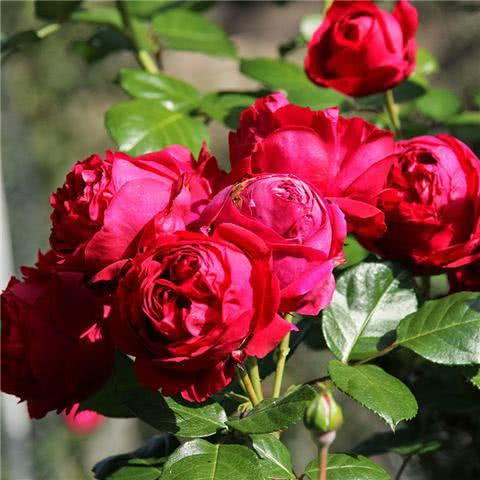
Roses are easy to grow and beautiful, with many varieties and different colors. During care, pests and diseases always intrude, so good prevention and control measures are key. Let's take a look at the prevention and control methods for pests and diseases!
Rose pests
(1). Red spider mite
The red spider mite is a common pest that sucks the sap of leaves, directly affecting photosynthesis. Leaves turn yellow and develop pinprick-sized spots of varying colors. Red, black, or white dots on the underside of leaves indicate red spider mites. Red spider mites reproduce quickly and cause relatively great damage.
Prevention and control methods:
Red spider mites fear water, so once found, they can be wiped off with water. For chemical treatment, acaricides such as pyridaben can be used.
(2). Aphids
The peak period for aphids is in spring and autumn. The tender branches are most easily damaged. This pest reproduces quickly, so timely treatment is needed to avoid more serious infestation.
Prevention and control methods:
For aphid control, imidacloprid can be sprayed once, with very obvious results.
(3). The three major sawflies
The three major sawflies of roses are the stem sawfly, the leaf sawfly, and the leafcutter bee. They cause great damage, and chemical treatment is not very effective. Usually, strong-smelling pesticides are sprayed, but this also affects the living environment. Prevention mainly relies on timely measures and netting.
Stem sawfly
The stem sawfly likes to lay eggs in the tender branches of roses. The larvae gnaw at the inner stem, which easily causes the branches to lose water and wither.
Prevention and control methods: Simply cut off the branch to avoid damage to other branches.
Leaf sawfly
The leaf sawfly mainly harms rose leaves. It lays eggs on rose branches, and the larvae gnaw at the leaves.
Prevention and control methods:
Chemical treatment is unreliable, so you can only catch them by hand. Those who are afraid of bugs should take note. You need to directly kill the insects by hand, but you can also use spray insecticides, though the effect is not as good as manual handling. You can choose the method according to the situation.
Leafcutter bee
The leafcutter bee eats leaves and causes relatively great damage, so once found, it needs to be dealt with promptly. Chemical treatment is not obvious, so the plant needs to be moved to a new environment to avoid the leafcutter bee.
(4). Thrips
Thrips are extremely harmful. They reproduce in spring and peak in summer, easily causing leaf deformity and distortion, with brown streaks on new leaves. They greatly affect plant growth and flowering. Prevention work should be done well in spring.
Prevention and control methods:
For thrips, imidacloprid can be sprayed, usually chosen in the evening, with very good results. In spring, spraying once every 2 weeks can effectively prevent thrips.
Rose diseases
(1). Powdery mildew
When roses develop powdery mildew, the plant looks very unsightly. Leaves have a lot of white powder that directly affects photosynthesis, and it wraps around the flowers, directly affecting flowering. Infected leaves have curled edges, and white powder can be found on the underside of the leaves. It will spread through the plant, resulting in widespread powdery mildew.
Prevention and control methods:
Powdery mildew occurs frequently in spring and autumn, usually caused by poor ventilation, so in daily care the plant should be kept in a well-ventilated environment. For plants found to be affected, promptly clean off the white powder on the leaves, then use mancozeb plus myclobutanil to treat powdery mildew. When spraying the agent, an appropriate amount of sticky agent can be added to enhance the pesticide, such as dish soap or laundry water, which can increase the adhesion of the pesticide on the plant. In severe cases, lime sulfur mixture can be used, with relatively good results.
(2). Black spot disease
Black spot disease occurs in spring, summer, and autumn, with summer being the peak period. At first, small brown spots appear on the leaves. The spots expand into large dark brown patches, and finally the entire leaf of the plant turns yellow and falls off.
Prevention and control methods:
In spring, mancozeb should be sprayed once every 2 weeks to prevent black spot disease. In summer, pay attention to spraying for prevention, especially after rain, when fungicide should be sprayed for prevention. When disease is found, promptly remove the diseased leaves, then spray the plant and potting soil with mancozeb plus myclobutanil, once every 3~5 days. Spraying continuously 2~3 times can cure it.