What are bonsai plants? These thirty-six are the most common
Today we bring you the thirty-six most commonly used bonsai plants, with a brief introduction to their characteristics. We hope this is helpful to everyone. If you like it, share and save it! (Space is limited, so only 36 tree species have been selected; please forgive us.)
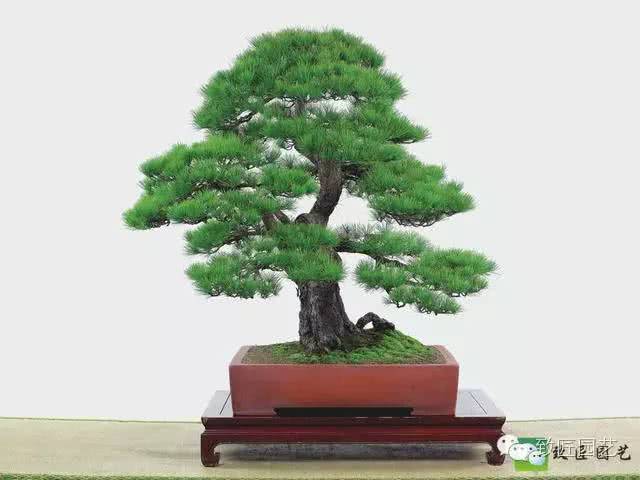
Black pine
The pine tree stays green through all four seasons, lush and verdant, unafraid of severe cold, with a lean and firm spirit. Since ancient times it has been an object depicted and praised by scholars and writers. The great Tang dynasty poet Li Bai wrote: "As a plant, one should be an orchid; as a tree, one should be a pine." The orchid's subtle fragrance drifts far on the wind, while the pine does not change its appearance in the cold. The pine is sturdy and upright, and though the cold is severe it does not change its look, expressing unyielding perseverance.
Huashan pine
Huashan pine likes sunlight. Its name comes from being concentrated near Mount Hua in Shaanxi, hence Huashan pine. The Huashan pine is relatively large in form, but gives a sense of strength and upright elegance. Many flower and plant enthusiasts are especially fond of Huashan pine, hoping to place it in their homes and grow it as a bonsai.
Buddhist pine
The Buddhist pine sprouts new shoots during the growing season, and its tender green new leaves are dotted among the dense green foliage. It is quite beautiful and is a first-rate material for making bonsai, especially the preferred choice for making miniature bonsai.
Five-needle pine
The five-needle pine gets its name from its needles growing in clusters of five. There are many varieties of five-needle pine, among which the Osaka pine, with the shortest needles and tightly packed branches, is the most precious. At present, five-needle pine bonsai are commonly cultivated throughout China.
Juniper
Juniper, also known as prostrate juniper or creeping juniper. Because its trunk is often twisted, its branches are fine and dense, it is highly adaptable, and it is easy to shape, it is deeply loved by the majority of bonsai enthusiasts.
Banyan
The banyan is famous for its strange tree form, luxuriant branches and leaves, and huge crown. Banyan bonsai uses the banyan as material, with the goal of appreciating the unusual forms of the banyan's trunk, roots, stems, and leaves. Through various techniques, its growth and development are controlled, making it a potted banyan bonsai with a unique artistic shape.
Broadleaf lady palm
Broadleaf lady palm is a traditional excellent potted foliage plant in China. Made into a bonsai, it also has high ornamental value. Its emerald green leaves and upright stems and nodes give people a feeling of rustic elegance and novel distinctiveness.
Buddha belly bamboo
Buddha belly bamboo, also called Buddha bamboo, has branches and leaves that stay green all year round. Its internodes are swollen and shaped like a Buddha's belly, with a strange form, hence the name Buddha belly bamboo. Buddha belly bamboo is a specialty of Guangdong in China and is a good material for potting and making bonsai.
Sago palm
The sago palm has a graceful form, and its large terminal feathery leaves are glossy green and lovely, able to present a southern tropical scene. It is a precious foliage tree species and is suitable in all four seasons. Old trunks used to decorate bonsai are covered with traces of fallen leaves, mottled like fish scales, with a distinctive charm. Clustered-planting sago palm bonsai, paired with cleverly arranged stones, is even richer in elegant interest.
Plum blossom
Plum, along with pine and bamboo, is called one of the Three Friends of Winter. Its flowers are both simple and elegant; its branches are mottled and aged, and it does not rot easily, making it one of the few tree species in bonsai material that can be used for deadwood and divine branches. It has extremely high ornamental and collectible value, and is therefore pursued by bonsai masters.
Winter jasmine
Winter jasmine has slender, supple branches, a well-developed root system, strong sprouting ability, and tolerance to pruning. With golden flowers and green calyxes, it is bright and charming, making it a good bonsai material.
Pomegranate
Pomegranate flowers are large and brightly colored, with a long flowering period, blooming from around wheat harvest all the way to October. The pomegranate fruit is brightly colored. Because it can both be enjoyed for its flowers and eaten for its fruit, it is deeply loved by people, and bonsai made from pomegranate are even more favored.
Firethorn
Firethorn, also called firestick fruit, is an evergreen shrub of the rose family. Its tree form is graceful, and in early summer it blooms with numerous small white flowers, like snow covering the branches. After flowering it bears spherical fruits, which turn red in autumn. Thousands upon thousands of red fruits are dazzling and radiant, very spectacular, and they remain on the branches until spring. Old firethorn stumps are rich and rustic, while young trees are vigorous and elegant, steady and dignified, naturally picturesque, with a distinctive charm. Firethorn is one of the excellent tree species for making bonsai.
Snow-in-summer
Snow-in-summer is one of the trees commonly used in Chinese bonsai. It has the characteristics of fine leaves, dense branches, thick trunks, and exposed roots, so it is a fine material for bonsai and is loved by the broad community of gardening enthusiasts.
Nandina
Morphological characteristics: Nandina has clustered branches, upright and straight, with compound leaves spreading flat like feathers, forming an unrestrained tree posture. Its form and style are like bamboo, so it is also called heavenly bamboo.
Bougainvillea
Bougainvillea, also known as paperflower, ninefold vine, and rhododendron. Its shape is unique, its branches and leaves are luxuriant, and its colors are vivid, with high ornamental value. Placing a pot of bougainvillea bonsai at home is very pleasing to the eye.
Cotoneaster
Cotoneaster not only has dense branches and small, thickly packed leaves, with flowers clustered on the branch tips, but its fruit, from setting fruit to ripening after early autumn in September-October, gradually changes from green to yellow and then to bright red, with extremely strong ornamental value. It is also very easy to cultivate and is an excellent plant material for making bonsai in various styles.
Fujian tea
Fujian tea, also known as Carmona, has small, oblong leaves that are deep green and glossy. In spring and summer it blooms with small white flowers, and its drupe is spherical, first green and later red. Its trunk is rugged, twisted and full of variety, and its tree posture is elegant and flowing. It is one of the four major bonsai tree species of Lingnan.
Hackberry
The overall shape of the hackberry is rustic and vivid. Its trunk is crooked but full of a sense of strength. It is an excellent plant for making bonsai.
Small-leaf privet
Small-leaf privet has small leaves, strong sprouting ability, tolerance to pruning, and rapid growth. In pots it can be made into large, medium, and small bonsai.
Orange jasmine
Orange jasmine has a graceful tree form, sturdy and powerful branches, stays green all year round, and blooms with pure white flowers with a rich fragrance. It is an excellent bonsai material. Orange jasmine bonsai has an elegant posture and can be appreciated in all four seasons.
Vitex
Vitex can be made into many forms of stump bonsai. Some are aged and curved, some have suspended roots and exposed claws, some form stump knobs, and some, though the wood has already rotted, still have living bark and send out new branches and green leaves, giving people a sense of beauty like returning to youth and being vigorous in old age.
Elm
Elm: some have gnarled roots and twisted joints, sturdy and rustic; some turn decay into wonder, with withered roots and new leaves, opening up a distinctive world of their own. It is an excellent material for making bonsai.
Tamarisk
Tamarisk has fine branches and small leaves, with drooping branches, graceful and varied, shaped like a weeping willow; its trunk is like iron, aged and strange, with the quality of pine and cypress; it blooms 3 times each year, with a relatively long flowering period, and pink flowers hang all over the branches, making it look even more charming; its roots are like roaming dragons, with wonderful forms. Whether viewing the roots, trunk, leaves, or flowers, it has advantages that other tree species cannot compare with, and it is a good tree species for making bonsai.
Ginkgo
Ginkgo is a tree species that has survived for a relatively long time. Since ancient times in China, it has been regarded as a good choice of material for bonsai. Ginkgo bonsai types can be divided into three kinds: foliage-viewing, fruit-viewing, and stump-viewing.
Maple
Maple's new branches are relatively long and soft, and can be trained into many styles of bonsai. Common ones include straight-trunk style, slanting-trunk style, curved-trunk style, double-trunk style, waterside style, and forest style. After frost, the maple leaves turn red, dazzling and lovely.
Smoke tree
When smoke tree is used to make bonsai, it has the characteristics of being rustic and vigorous and full of variation. In spring the young buds first sprout, delightfully emerald green; in midsummer the branches and leaves flourish; in golden autumn the red leaves first begin to color; after frost the whole tree is covered with red leaves, standing proudly against the frost, dazzling and brilliant, adding a touch of autumn color, with endless charm and breathtaking beauty.
Hornbeam
Hornbeam mostly grows on relatively high hillsides. Its plant is not tall, its branches naturally curve, and its roots are exposed and knotted. Hornbeam is cold-resistant, drought-resistant, and highly adaptable. Its new branches are soft and can be trained into many shapes, making it a good tree species for making bonsai.
Sageretia
Since ancient times, sageretia has been an important material for making bonsai, and has long been praised as one of the bonsai "Seven Sages." In the coastal areas of Jiangsu and Zhejiang in China, sageretia is extremely popular among the broad community of bonsai enthusiasts and is a major bonsai tree species.
Honeysuckle
Honeysuckle has twining vines and does not wither through the winter, with winter leaves slightly red; in spring and summer it blooms continuously, first white and then yellow, with yellow and white setting each other off, possessing both color and fragrance and beauty in both flower and leaf. When old stumps and old vines are made into bonsai, with vines drawn downward, the posture is antique and elegant, uniquely distinctive, and of high ornamental value.
Wisteria
Wisteria has a very long lifespan and is a long-lived tree species. It is extremely popular for planting among the people. A mature wisteria has winding and twisting stems and vines and blooms abundantly. Since ancient times, scholars have loved using it as a subject for poetry and painting. Wisteria bonsai has a graceful shape and posture. Placed on a stand or on top of a bookcase, with flowers all over the tree and the old stump slanting across, it has a distinctive charm.
Orchid
People often say that a room is "not elegant without an orchid." This is praise for the elegant, quiet charm that orchids give people. Indeed, the charm of orchids is endless, giving people a feeling of breathtaking beauty.
Chrysanthemum
Chrysanthemum bonsai has been deeply loved by people from ancient times to the present. The chrysanthemum is different from other flowers: it blooms proudly in late autumn, conquering the hearts of many with its noble and quietly elegant flowers.
Narcissus
Viewing narcissus bonsai has become an elegant enjoyment of winter leisure. Those artworks such as the golden rooster announcing dawn, the red phoenix facing the sun, the peacock spreading its tail, the jade pot producing saliva, crabs playing in water, fish leaping over the dragon gate, the divine turtle offering longevity, flowers flying outside the basket, a single branch standing out, and Biluochun spring scenery construct artistic conceptions of elegance, quietness, immortality, renown, excellence, brilliance, clarity, distinctiveness, and Zen, leaving people with lingering thoughts and reveries.
Wonderful content