Haworthia Enclosed Cultivation Guide: Tips for Growing Succulents in Northeast China
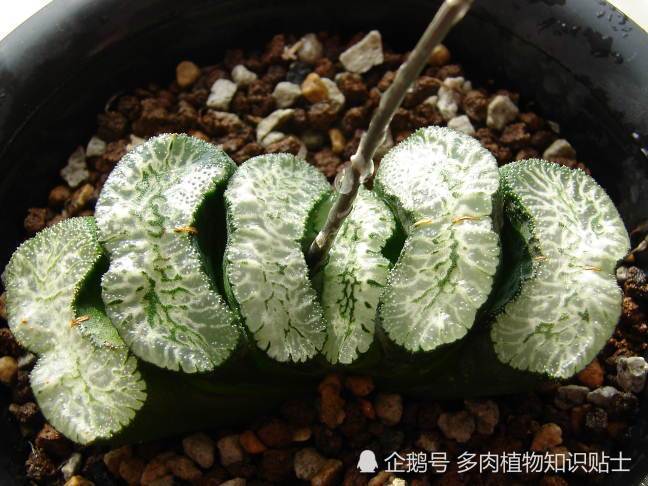
Don't laugh, everyone - I'm going to talk theory too~ Those with greenhouses and flower rooms can ignore this; big growers like that can cultivate however they want, and whatever they do makes sense. This is mainly aimed at balcony growers cramped in tiny spaces, especially those of us here in Northeast China, who want our plants to grow faster and achieve good condition and appearance - that takes some brainpower. (Thanks to ywymhyh for the material)
There are quite a few posts on this subject, some enclosing during the day and ventilating at night, others enclosing at night and ventilating during the day - each has its own reasoning. Things like stomata closing and opening, the coordination of light and humidity - I don't understand such deep stuff. I just muddle through on my own, using the enclosed cultivation method from a different angle. Before getting to the main point, let me first explain the climate characteristics of Northeast China, so you can see whether this method suits your area - blindly copying it will cause problems. Northeast China is a bitterly cold land with four distinct seasons, strong wind and sand, and a dry climate. But in reality, spring and autumn are very short - it goes almost directly from deep winter into high summer. Winter is cold and dry; because of heating, indoors is at a nearly constant 25°C (the balcony is also around 20°C at night). Summer is hot; due to the urban heat island effect, the day-night temperature difference is less than 5°C.
What enclosed cultivation aims to achieve is humidity and temperature difference. Combined with the fact that Haworthia is a winter-growing type that prefers a cool environment, my specific approach is as follows:
1. In summer, use the cooling enclosed cultivation method: enclose at night, ventilate during the day. When enclosing, use ice blocks for cooling. The so-called ice blocks are mineral water bottles filled with water and frozen in the refrigerator; at night I put them in the enclosed pot. To slow down the melting speed, I wrapped a small towel around the bottle.
Figure 1 shows two thermo-hygrometers - I don't know which one is accurate (I think neither is). This is the reading on the north windowsill at around 21:40 at night. Figure 2 is right after putting the bottle in the pot. Figure 3 was taken at 02:00 at night, and Figure 4 at around 04:50 in the morning. (I really went all out.) The cooling and humidifying effect is decent.
2. In winter, use the warming enclosed cultivation method: enclose during the day, open for ventilation at night. This is relatively simple, and I don't have photos saved.
Also, I only enclose small seedlings and unrooted ones; mature and sub-mature plants generally aren't enclosed. Of course, no matter how you mess around, it's just for fun - enjoying it is what matters. If anything is inappropriate, fellow growers are welcome to correct me, and you can laugh at how childish I am - as long as there's no personal attack, I'll accept it. I've been growing plants for over 20 years, but I've only been into Haworthia for a full year. For any mistakes, I take no responsibility.
PS: The purpose of enclosing is not just to increase humidity - it's mainly to widen the temperature difference. The so-called temperature difference is the gap between the highest and lowest temperatures. In winter, the lower temperature limit stays fixed and you raise the upper limit; in summer it's the opposite - the upper limit stays fixed and you lower the lower limit.