The pomegranate that Zhang Qian brought back from the Western Regions was regarded as an auspicious symbol, and even its peel was highly valued.
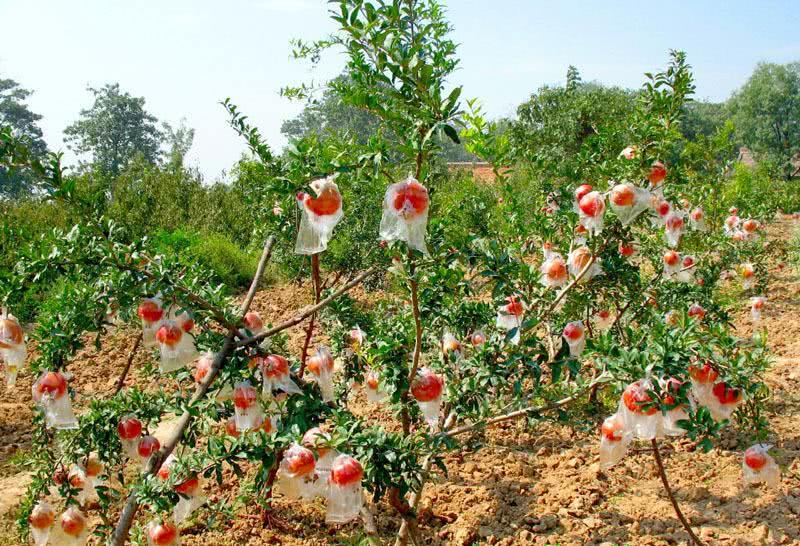
For farmers, autumn is a season of joy. In this season, there is not only the harvest of crops, but also the harvest of all kinds of autumn fruits. Speaking of fruit, there are simply too many autumn fruits. Pears, hawthorn, pomegranates, persimmons, citrus, pomelo, plantain, sugarcane, kiwi, chestnuts and other fruits are all abundant in autumn, but if you ask which autumn fruit is the most distinctive, this author thinks it is none other than the pomegranate.
Many friends may not know that the common pomegranate is not a native fruit of our country, but an introduced one. According to records, when Zhang Qian was sent on a mission to the Western Regions during the Han Dynasty, he not only brought back many vegetables that our country did not have, but also brought back some fruits distinctive to the Western Regions, and the pomegranate was one of them.
Ever since the pomegranate was brought back from the Western Regions by Zhang Qian, it has blossomed in every part of our country, and today it has become a fruit found in both the south and the north.
Because the pomegranate is full of seeds, since ancient times it has always been regarded as an auspicious symbol in our country's traditional culture, implying "many sons and much blessing."
I remember that when I was a child, a pomegranate tree was planted in my grandmother's yard. Every year at this season, the pomegranates on the tree would bend its branches low, hanging heavily on the tips.
When I was a child, I disliked eating pomegranates the most. I thought pomegranates had no real flesh and were very troublesome to eat. But every year when I saw the pomegranate tree bloom, I was always very happy, thinking that the pomegranate tree's blossoms were the most beautiful.
In fact, many people do not know that a pomegranate tree can bloom three times a year and bear fruit three times as well. The pomegranate's flowering period is relatively long, so the blossoms open in succession. Many people think it blooms only once, but in fact it blooms three times.
When it comes to pomegranates, everyone is familiar with them. Peel open the pomegranate skin, and the inside is full of pomegranate seeds. When eating, you have to eat the pomegranate seeds, chew them a bit, and then spit out the seeds. Do not underestimate it and think you are not eating anything; in fact, the nutritional value you take in is very high.
The anthocyanins uniquely contained in pomegranates are a special substance that protects the eyes, so eating pomegranates can protect the eyes. The sweet juice of the pomegranate is rich in vitamin C, and its vitamin C content is more than double that of apples and pears.
Moreover, eating more pomegranates also has the effects of beautifying the face, preventing anemia, and resisting aging. For women who love beauty, this is truly a magical fruit that can both satisfy the appetite and beautify the face.
Many friends throw away the pomegranate peel when eating pomegranates, not realizing that the peel's value is also very precious. According to records, pomegranate peel is a kind of Chinese herbal medicine with multiple effects such as astringing the intestines to stop diarrhea, stopping bleeding, and expelling parasites. So if you do not know this, throwing it away is truly a bit wasteful.
Besides the peel, the flowers, roots, and leaves of the pomegranate tree are all treasures and all have certain medicinal value. Generally, only older farmer friends in rural areas know these values of the pomegranate.
Dear friends, I wonder whether you like eating pomegranates? Do you know these values of the pomegranate? You are welcome to leave a message and share your thoughts!