Learn these few tricks from old flower growers and your plants will grow vigorously with flowers filling the pot
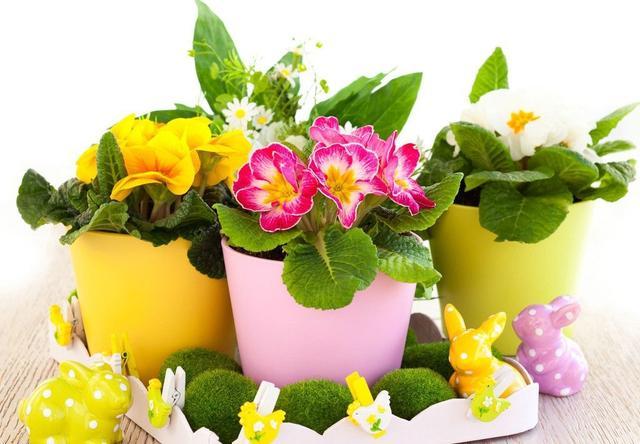
The primrose has a relatively compact plant shape, with emerald green leaves and rather showy flowers in a wide range of colors, and it has a strong flowering period. Growing it at home adds a lot of vitality to the room. Seeing many people's primroses with flowers covering the branches, and then looking at your own with only sparse blooms, how can you make the primrose bloom continuously? In fact, if you want the primrose to bloom continuously, you just need to pay attention to the following points in daily care.
Temperature
The primrose is naturally suited to growing in a warm environment, so the suitable growing temperature for the primrose is 15°C. It is not cold-tolerant, and the winter overwintering temperature must not be lower than 10°C, otherwise it is prone to frost damage. As long as the temperature is kept well, you can see its showy flowers in early spring. It is also not heat-tolerant in summer, so the care temperature must not be higher than 30°C, and you can spray some clean water around the plant, which can not only lower the temperature but also increase air humidity, otherwise it will also affect the growth of the primrose.
Light
The primrose naturally likes sufficient light, but in summer it needs to be grown in a scattered-light environment, as it does not like direct strong light, otherwise it is prone to sunburn. Wait until around October and then place it in a spot with plenty of sunlight, so that it can promote the growth of the primrose and the differentiation of flower buds.
Fertilizing
After entering autumn, the primrose enters its peak growing period, and it needs some appropriate fertilizer supplementation. You can apply some diluted, well-rotted cake fertilizer liquid every 10 days, and in the early stage you can apply some nitrogen fertilizer, then gradually increase some phosphorus fertilizer. After fertilizing, apply some foliar fertilizer at an interval of half a month. This can effectively promote the primrose to form buds and bloom more flowers. Once the flowers have faded, you need to stop fertilizing.
Pruning
When the primrose is blooming, choose plants that have just set seed, remove part of the flowers first, and then appropriately apply some diluted fertilizer liquid, so that the seeds can be fuller. After the flowers fade, they need to be pruned off in time, and then apply some thin fertilizer, which can effectively promote the growth of new branches of the primrose, so that it can continue to bloom.