A Detailed Guide to Succulent Plant Care and Management
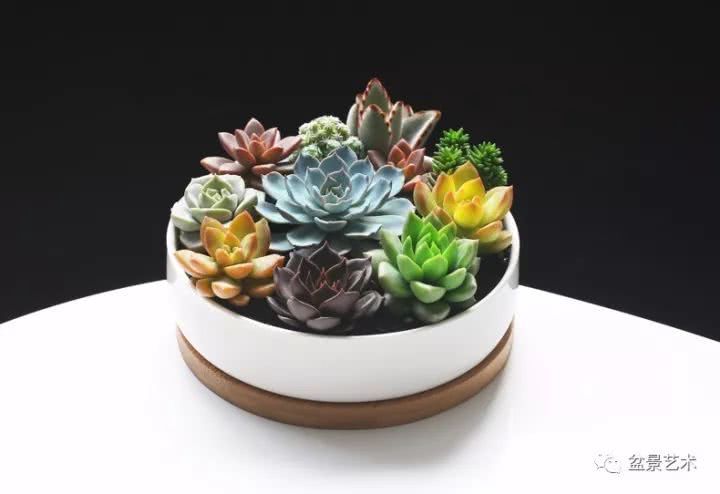
I. Potting soil requirements: The soil should be loose, breathable and well-draining, yet with a certain water-holding capacity, and neutral or slightly acidic. For highland cacti (the genera Aztekium, Obregonia and Strombocactus) and the genus Ariocarpus, a little more rice-hull ash and small grains of weathered rock can be added. For tall columnar species, coarse quartz sand may be mixed in to anchor the plant.
II. Transplanting and planting: This should generally be done during the recovery period just after the plant's dormancy ends. Before planting, trim the roots. After root trimming, let the plant dry for a few days, then plant it in moist potting soil. After planting, provide appropriate shade and do not rush to water; do not fertilize within one month.
III. Regulation of temperature and light: Cacti and succulents generally prefer warmth and a large day-night temperature difference. Except for epiphytic cacti and species of the genus Haworthia, light should be abundant but soft. For this reason, apart from a few species with flat stem segments, tall columnar species and certain Agave species, they should generally be grown in a greenhouse year-round.
Epiphytic species should be shaded except in winter; in summer, combined with cooling, the shade level should be 50-70%. Although Epiphyllum oxypetalum and Epiphyllum hybridum have a certain cold tolerance, keeping them warm in winter favors blooming the following year. Hylocereus undatus, grown in large quantities for use as rootstock, is not cold-tolerant; in winter it must be kept at at least 5°C and given full sunlight.
Most terrestrial cacti grow most vigorously at 28-35°C during the day and 10-15°C at night. When indoor temperatures are often above 35-38°C, growth stalls, and some species of highland cacti and the woolly columnar types are also very prone to rot. Therefore, cooling is necessary, but not at the cost of reducing light as much as one would for epiphytic types.
Most terrestrial species, kept with dry potting soil in winter, can withstand low temperatures of 2°C or even 0°C, but must not be directly exposed to frost or snow. Species of the genus Melocactus native to the Caribbean region and globe-shaped species that bloom in winter require higher temperatures.
For succulents that grow in summer, temperature regulation can basically follow that for terrestrial cacti. Their light requirements are relatively lower, and some species with enlarged stem bases are not cold-tolerant and should be kept at higher temperatures in winter.
For succulents that grow in winter, during the summer dormancy period they need ventilation and cooling to stay cool, and in winter they require ample sunlight, with the minimum temperature kept above 7°C.
IV. Watering and fertilizing: Watering should be done according to the plant's growth state. Whether a species is dormant in winter or in summer, watering into the pot must stop during the dormancy period. However, species dormant in summer must have water sprinkled in walkways and other areas to maintain a certain air humidity. Plants in the vigorous growth period should have their water needs fully met. Seedlings should be watered more, large globular plants less (referring to frequency); terrestrial types watered less, epiphytic types more; more watering during bud formation and blooming, less after flowers fade and fruit drops; plants with many thin leaves watered more, those with thick few leaves watered less.