Want your flowers to grow vigorously? Pick up a little of this in autumn and toss it in the pot, and they will thrive
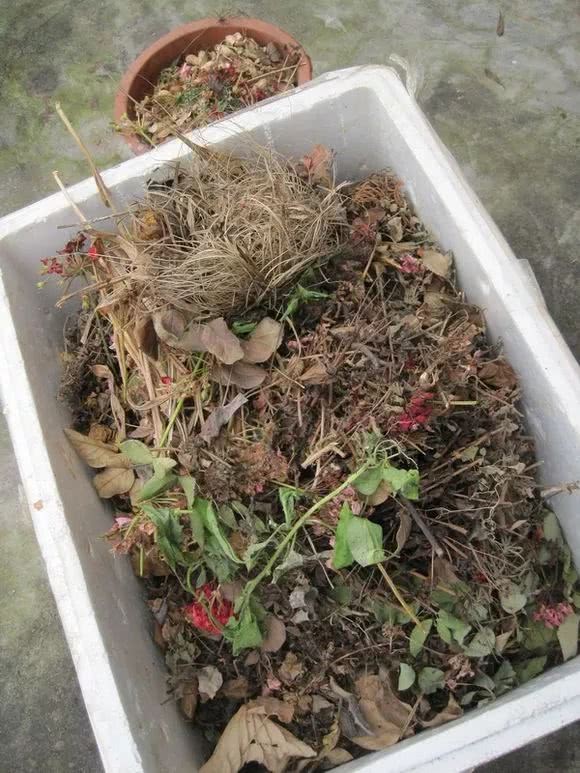
These days more and more people grow flowers, and the costs keep adding up, with many things to buy: flower pots, seedlings, fertilizer and so on. In autumn the temperature gradually drops, and there are lots of dead leaves outside. These make excellent flower fertilizer, and using them to grow flowers is really great. Many flower lovers pick up some leaves in autumn to grow flowers. How is it done? Let's take a look!
“
Autumn flower fertilizer
- Fallen leaves as flower fertilizer -
There are lots of fallen leaves in autumn. In residential compounds, parks and along roadsides you can often see piles of fallen leaves swept up by the cleaning ladies. After fallen leaves decompose, they turn into loose-textured leaf mold. Leaf mold is loose in texture, has good drainage and air permeability, and can serve as the main growing medium for flowers. It is also rich in nutrients, making it a great material for growing flowers. In autumn, we can collect some fallen leaves to make leaf mold soil. It is fantastic for growing any kind of flower!
The simplest way is to collect them, put them in a container, press them down, pour on some water, and then cover the surface with a thin layer of soil. Once the leaves have rotted, it is ready to use.
You can also use a foam box. Poke a few holes in the bottom of the foam box, cover them with gauze or burlap, put in various fallen leaves, dry grass and chicken or duck manure, pour on some water to moisten it, cover the box, and after a few months it becomes leaf mold soil. The process is very simple.
Mix 5 parts homemade leaf mold soil, 3 parts garden soil and 2 parts coarse sand. For some flowers that like fertilizer, you can also add a small amount of organic fertilizer. This makes a great flower-growing soil, and any flower you grow will be especially vigorous.
- Tree bark as flower fertilizer -
Tree bark is also an easily obtained material for growing flowers in autumn, and it is very practical in flower growing. Tree bark has a large number of micropores and has good water-absorbing and water-retaining functions, making it a great growing medium for flowers that like moisture.
Flower lovers who grow orchids should be very familiar with pine bark. Pine bark is simple and easy to get and is used by many flower lovers. Pine bark is loose and breathable, and after fermentation it can also provide nutrients for orchids. The antibacterial substances it contains also make orchids less prone to disease.
If it is pine bark that has been dried out for a long time, it can be used directly, but if it is relatively fresh pine bark with residual pine resin, it must be treated before use!
Break the collected bark into small pieces, add water to soak them through, boil for about half an hour to remove the resin, then seal in a plastic bag and expose to high temperature in the sun. After about 15-20 days it can be used. Drying it again allows long-term storage. When you want to use it, take some out and mix it into the soil as a growing medium or use it as a top dressing, both work very well!
Orchid roots grown with pine bark have very good growth.
- Pine needles as flower fertilizer -
Pine needle soil is a very good soil for growing flowers. Pine needle soil has good permeability and strong water infiltration, contains a large amount of organic matter, and also has a certain effect in preventing insects and disease. Pine needle soil is acidic or weakly acidic, very suitable for growing orchids, camellias, amaryllis and other flowers and plants that like an acidic environment.
When out in the mountains, if you see lots of pine needles, bring a little home. You can spread them on the bottom of the pot; not only do they drain well, they also serve as long-term base fertilizer!
(Weibo: Xiaoxi Shui Lan Lan Lan)
The pine needle soil under the pine forests in the mountains is also a very good growing soil! Don't dig too much, don't be too greedy; bringing a little home is still great!
Using pine needles to grow clivia means not only do they grow well, they are also less prone to disease and root rot. It is a very good flower soil.
- Nut shells as pot-bottom drainage -
In autumn you can also find lots of pine cones, which can be used for pot-bottom drainage. Pine cones have many gaps and do not rot easily. Placed at the bottom of the pot, they drain very well and make the flower roots white and strong.
Soak the collected pine cones in hot water for 10 minutes, take them out and dry them in the sun for a few days before use. For small pots, you can crush the pine cones and place them at the bottom of the pot. For large pots, you can put whole pine cones in directly. The effect is very good.
Besides pine cones, in autumn you can also find many hard nut shells to place at the bottom of pots. In the wild you can often see the seeds produced by Chinese arborvitae (Platycladus orientalis). Their shells used for growing flowers, buried at the bottom of the pot, will not breed insects or go moldy. The effect is very good.
In southern regions there are camellia seed shells, which are excellent material for growing flowers. Not only do they have strong air permeability, the camellia seed shells contain a relatively large amount of tea saponin, which can inhibit bacteria and control pests, and they are also very abundant in source.
There really is so much material for growing flowers in autumn
Just find a little, toss it in the pot
And the flowers all grow vigorously
You should give it a try too
Share it with flower lovers who need it!