How often should you spray foliar fertilizer on orchids for better growth?
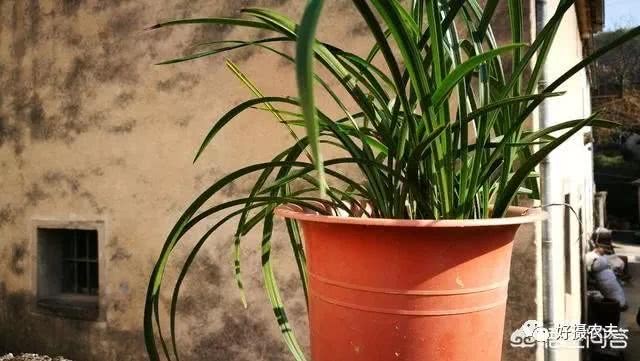
Foliar fertilizer is indispensable in orchid care. It is efficient and safe, and can quickly replenish the nutrient elements that orchids lack. Generally, foliar fertilizer is best sprayed when the temperature is above 20°C and below 30°C, so we do not spray foliar fertilizer in midsummer or deep winter.
When spraying foliar fertilizer, it can be combined with disease prevention and pest control. Most foliar fertilizers do not conflict with these insecticides and fungicides and can be mixed and used together. What Haoshe Farmer himself commonly uses is: urea, monopotassium phosphate, carbendazim, mancozeb, and fenvalerate mixed in one spray tank, and there have never been any adverse reactions.
The interval between foliar fertilizer sprays is generally half a month, but when Haoshe Jun uses it himself, it is always more than 20 days, and sometimes the interval exceeds one month. Because I think that if foliar fertilizer is applied too much, the nutrients the orchid plant needs can be obtained from the leaves, and the orchid roots will become lazy. Once the orchid roots become lazy, a whole vicious cycle will form, and in the end the orchid roots will become weaker and weaker and rely completely on foliar fertilizer, which will inevitably cause the orchid plant to degenerate.
Monopotassium phosphate is generally not recommended for root application; spraying it as a foliar fertilizer gives better results. When the temperature is above 15°C and below 30°C, it is the best season to spray monopotassium phosphate. Dilute it with water at 800 times, and urea, fungicides, and insecticides can be added together.
Monopotassium phosphate is generally sprayed once every 15 days. If the seedlings are not weak, it can be done once every 25 days. Before bud formation in autumn, spraying monopotassium phosphate is even more necessary, as it can better differentiate flower buds.