How much investment is needed to raise 20 calves, and how many years until the operation takes off?
Summary: How much investment is needed to raise 20 calves, and how many years until the operation takes off?
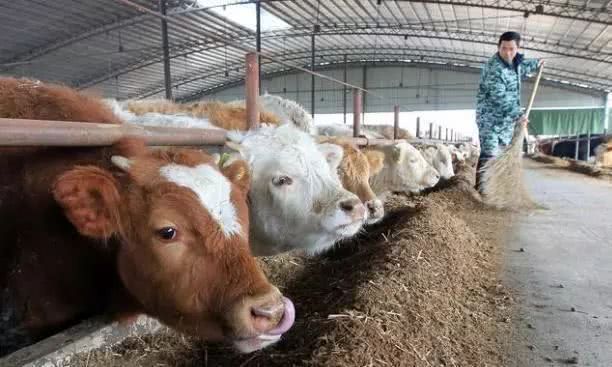
A friend said he wants to raise cattle, buy about 20 yellow cattle calves, graze them at home, and grow some grass himself, and asked how many years it would take for the operation to take off. The idea is quite good, but in practice it is very difficult. The risks in the livestock industry should be said to be very high, especially for relatively large-scale farming like cattle raising. Judging from the question, the person asking probably does not understand the cattle-raising industry very well. Here, Science Xingnong will analyze this issue.
How much investment is needed for 20 cattle under a self-breeding and self-raising system?
Twenty cattle is not a lot to call many, and not exactly few to call few either. To be honest, the risk of the self-breeding and self-raising model is much greater than that of simply fattening beef cattle, especially if your techniques are poor, in which case the risk is even greater. My second uncle also raises cattle. A few years ago he also tried this self-breeding and self-raising model, but he persisted for about four years and could not keep going, because first, his techniques were poor, and his own cattle reproduced very slowly. The best case was two calves in three years, which cannot compare with professional farms.
Another issue is the limitation of the site, because my hometown area is a plain region, with relatively little mountainous or forest land, so grazing cattle is impossible and they can only be kept in pens. A major problem with pen-raising is forage. A single adult cow, weighing about 1,300 jin, has to eat 40 to 50 jin of forage a day, and that figure is still quite large. Another reason is that it earns little money, and this is also the most critical reason. The first few years are a stage of relatively large investment, so spending a lot is natural, but if the funds in hand are not sufficient, it is naturally very hard to keep going.
Now, although my second uncle no longer runs this self-breeding and self-raising model, he still has not left cattle raising. Now it is purely fattening: he raises them himself, slaughters them himself, and sells the beef himself. This earns more than selling to cattle dealers, especially in spring, when the income is quite good.
Now let us look at the investment issue for these 20 cattle. For 20 cattle under self-breeding and self-raising, in the early stage you need to buy 18 cow calves and two bull calves of relatively good breed. However, I personally think buying calves takes far too long. A cow has to wait at least two years from calf to giving birth before you see the calf it produces, and that is not the end of it. You still have to raise the calf, and the calf also needs time to be fattened. So in the early stage, the time before capital is recovered is relatively long. If you directly buy adult cows, then generally you can see calves the next year, but the price of adult cows is also quite a bit more expensive.
If the farm operates normally, then calculating by the frequency of two calves in three years, it will take at least about 5 years to make the operation large-scale, but the premise is that your funds are sufficient and your techniques pass muster, so that you can keep going.
Judging by current market calf prices, generally for a calf of relatively ordinary quality, one around 400 jin costs over 6,500, and better ones are around 8,000. Seen this way, 20 calves would cost about 150,000. In addition, if you want large-scale development, you need a cattle shed. Right now it is 20 cattle, and later the scale will keep expanding, so the construction of the cattle shed also has to take the later scale into account. Therefore, at minimum you have to build a cattle shed that can hold 50 cattle, and this again requires no small investment, at least around 200,000. Next is the feed issue. For the feed issue of 20 cattle, if grazing, it is somewhat better: graze the cattle during the day and supplement some feed at night. But if kept in pens, then you need to cut grass and feed them feed.
Twenty cattle need several hundred jin of feed every day. If you grow grass, the scale has to keep up, so the area planted with grass cannot be too small; otherwise the feed cannot keep up. It is best to also feed the cattle some distillers' grains, tofu residue, and the like. Then there are also labor costs, site rent, water and electricity, and other expenses. Calculated this way, the early-stage investment for these 20 cattle needs about 350,000. If the cattle shed is relatively simple, then at minimum you still need to invest about 250,000.
This is Science Xingnong. You are welcome to add a follow, and let us grow knowledge together.