What Is the Night Parade of One Hundred Demons? A Detailed Explanation of Japanese Ghost and Monster Legends
By DaDa
Konoha, also known as tree spirit, refers to a tree inhabited by a soul. It looks much like an ordinary large tree, but it is said that if someone intends to cut it down or damage it, that person and even the whole village will suffer great disasters.
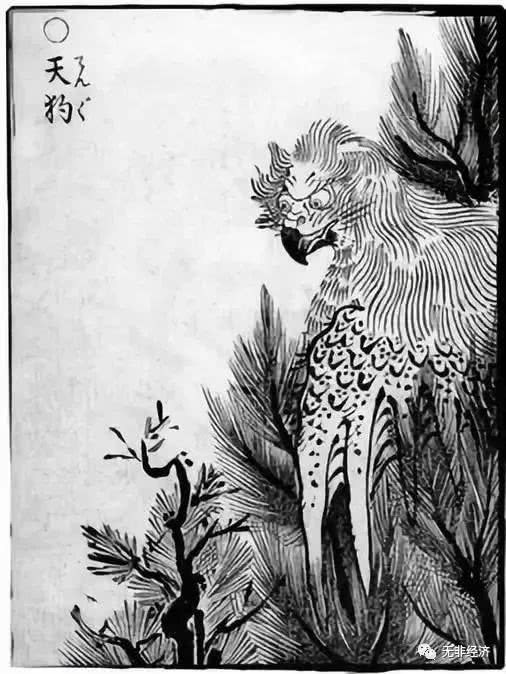
Tengu is one of the most widely known yokai in Japan. It is said that tengu will abduct people who get lost in the forest, so in ancient times abducted children were called "kamikakushi," which literally means hidden by the gods. The legend of the tengu later became integrated into the religions of mountain worship (the Tendai and Shingon esoteric Buddhist sects). The Kamakura-period picture scroll "Zegaibo Emaki" depicts a great battle between tengu and Tendai Buddhist monks, in which the tengu are ultimately defeated; the scene is vividly drawn and quite interesting. It is said that in this story, a legion of tengu from China came to ask the Japanese tengu for help, but the Japanese tengu put on an arrogant attitude, what in Japanese is called "jiman," or "nose high." Therefore, the tengu, whose main image in ancient times was that of an eagle, changed into the "long-nosed tengu" in the late medieval period, and it was contrived that mountain monks who had not yet attained a high level of practice and were arrogant would become tengu after death.
Because the terrain in the mountains causes sound to refract, a great echo is produced, and this is the origin of the "Vale Echo" yokai. Some legends say that on the shady side of a mountain there is a mountain god's "yobuko," an animal like the "yobuko bird," making strange sounds. There are also accounts of "mountain man," "tengu," and "amanjaku" making sounds, but these accounts share one point in common: the vale echo is something that occurs only after the mountain god appears.
Yamawaro, as the name suggests, is a mountain yokai, appearing in deep mountains and old forests, and it appears especially frequently in the Kyushu region (not only on the borders of Kyushu, but also in other places in autumn and winter). Because yamawaro have many connections with kappa, some places also say that yamawaro are kappa, and the more common view is that kappa become yamawaro after entering the mountains in autumn. Legend says that after kappa enter the mountains, not only does their name change, but their bodily form and nature also change greatly, so yamawaro and kappa can be considered two completely different yokai. Because when spring comes, yamawaro must come down from the mountains and once again dive into the water to begin life in the water and return to their identity as kappa, yamawaro are considered yokai that exist only during the period from autumn to spring. Moreover, it is said that people who witness the process of a kappa turning into a yamawaro, or a yamawaro turning into a kappa, will suffer great disasters, contract serious illnesses, and ultimately die because they cannot be cured.
Inugami itself refers to the ghost of a dog, and there are many theories about the origin of this "inugami." Legend says that if you place delicious food in front of a dog that has been tightly bound in advance, but do not untie the rope to let it eat, the more desperately it struggles, the more its desire to eat the food will concentrate, and then you suddenly cut off the dog's head and throw it far away; or first make an offering to the dog's head, then throw it onto rocks in the sea or other distant places, and the dog's dead spirit will then haunt, and it can be used as an inugami. Shiro is a yokai that serves the inugami and looks like a child; it is said to be the souls of children bitten to death by dogs. In China, Japan, and other places, in ancient times there were many cases of large dogs injuring children or even taking children's lives. Because they were bitten to death by dogs, it seems that after death their wronged souls should serve the dog's spirit, and this is probably the source from which Shiro arose.
When everyone is asleep, in the silent middle of the night, a yokai slips into the bathroom from who knows where, specifically licking up and eating the grime left after people bathe. The bathroom it has licked does not become cleaner, but dirtier.
Recorded in the "Meiji Yokai Records," these are the resentments of some infatuated women. Because they loved others obsessively but could not be with their beloved, they jumped from bridges into the water and killed themselves. If a man crosses the bridge at night, they will appear and lead him into the water to drown; if a woman crosses the bridge, they will forcibly drag her into the water. It is said that in Japan women could not easily commit suicide and could only drown themselves in rivers, so this kind of yokai is considered a relatively pitiable yokai.
If a fisherman going out to sea is suddenly trapped by fog and cannot tell front from back or left from right, sometimes a human figure will be reflected in the fog ahead. Looking closer, it is a lute-playing musician. When the fisherman, under his guidance, safely reaches the shore, the musician is still standing far out on the sea gazing toward him. It is one of the benevolent kinds of yokai.