Artistic bonsai comes in diverse varieties with high ornamental value, and its value should be viewed correctly
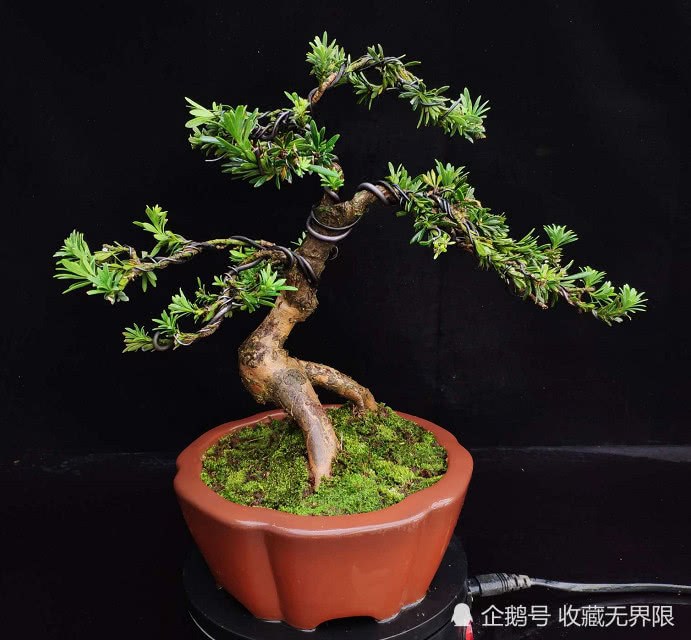
Product name: Fine-leaf Buddhist Pine (Podocarpus macrophyllus 'Maki'). Introduction: In traditional Chinese culture, the Buddhist pine symbolizes longevity and the preservation of wealth, carrying auspicious connotations, and has long been admired by people. In some regions, there is a saying that "a Buddhist pine at home brings prosperity and smooth fortune." The fine-leaf Buddhist pine is an evergreen small tree of the Podocarpaceae family, a variety that has mutated through prolonged container cultivation. It stays green all year round, with needle-like leaves resembling pearls. Glossy and green, with rugged branches and a long lifespan, it is a commonly used tree species for making bonsai. With its exquisite tree form, it is a precious species for bonsai creation. Bark-cracked old stock, with clearly defined layers, branches full of charm, and imposing root claws, old pot rim
Product name: Satsuki Azalea - Summer Azalea. Introduction: Azaleas have luxuriant branches and leaves, are colorful and varied, have strong sprouting ability, tolerate pruning, and have peculiar root stumps, making them excellent bonsai material. The root base is rugged and robust, the branches are short, twisted and aged, the roots are exposed and gnarled, bizarre and quaint, and the branches and leaves are clearly layered, possessing quite high ornamental value.
Product name: Boxwood (Buxus sinica var. parvifolia). Introduction: Native old stump. A thousand-year pine and cypress, a ten-thousand-year boxwood. Boxwood has long been known as the aristocrat among tree species. It takes shape slowly and grows slowly, making it even more precious as bonsai material. Boxwood bonsai has a graceful tree posture, with small leaves like broad bean petals, thick and glossy, evergreen all year round, and can be appreciated throughout the year.
Product name: Chinese Elm (Ulmus parvifolia). Introduction: The elm has been a feng shui tree since ancient times. Among the people, having an elm at home is considered a lucky thing, meaning descendants will have surplus grain. There is even a saying that with an elm at home, a hundred ghosts cannot intrude. Therefore, the elm has also become a must-choose tree species for bonsai collectors. The root base is steady and imposing, with a posture like a humble gentleman. Removing leaves reveals the skeletal structure, ancient and vigorous, yet not overbearing, presenting an alternative kind of beauty
Product name: Red Plum - Two-color Plum. Introduction: Grafted with 'Bone-red' plum and green plum, with a rugged old root base, blooming during the Spring Festival, with gorgeous flowers that are very festive
Product name: Boxwood (Buxus sinica). Introduction: A boxwood at home, pillars for generations; plant a boxwood at home, wealth and auspiciousness. Native old stump. A thousand-year pine and cypress, a ten-thousand-year boxwood. Boxwood has long been known as the aristocrat among tree species. It takes shape slowly and grows slowly, making it even more precious as bonsai material. Boxwood bonsai has a graceful tree posture, thick and glossy leaves, evergreen all year round, and can be appreciated throughout the year.
Product name: Root-bursting Fragrant Wood (Pistacia weinmannifolia). Introduction: It emits a fresh fragrance all over, with a unique shape and gnarled, intertwined roots. Quaint and weathered, with dense branches and leaves, emerald-green foliage, and a tree age of over fifteen years. Ones like this are very rare
Product name: Red-bud Small-leaf Syzygium (Syzygium buxifolium). Introduction: The root base is naturally beautiful, full of aged flavor, fully showing years of cultivation and having endured many vicissitudes. The old stump is stable, thick and rugged.