Among the ten flowers and plants unsuitable for indoor placement, the fifth and sixth ones, or the tenth one I never thought of, leave me torn
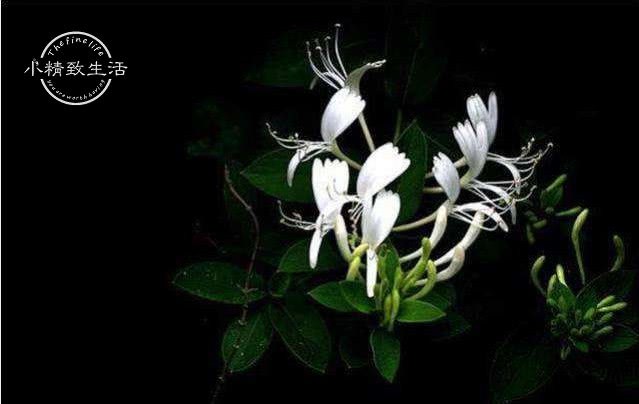
I believe most flower-loving friends, just like Xiaojingzhi Life, have filled their balconies, living rooms, bedrooms and other places with flowers and plants. Coming home to see the lush green foliage and smell the refreshing floral fragrance makes you feel incredibly comfortable. But did you know? Some flowers and plants are actually harmful rather than beneficial to the human body when placed indoors. Below, Xiaojingzhi will learn together with you which flowers and plants are not suitable for indoor placement.
1. Night-blooming jasmine (Cestrum nocturnum)
"I love this vast night, and I love the nightingale's song, and even more that flower-like dream, embracing the night-blooming jasmine, kissing the night-blooming jasmine, night-blooming jasmine, I sing for you, night-blooming jasmine, I ponder for you..." The well-known song "Night-blooming Jasmine" is a household name. Night-blooming jasmine blooms at night, and its fragrance is very intense. But it is precisely because of this unusually intense floral fragrance that night-blooming jasmine is not suitable for indoor placement. If the fragrance of night-blooming jasmine is inhaled for too long, it can cause discomfort such as chest tightness, shortness of breath, dizziness and insomnia, and patients with high blood pressure and heart disease are especially sensitive. So, if you like night-blooming jasmine, try to place it on a balcony far away from the bedroom.
2. Sensitive plant (Mimosa pudica)
"A tiny sensitive plant, self-pitying and self-troubling" - there is also a very sorrowful song about the sensitive plant. Because if you touch the sensitive plant just slightly, it will, like a shy little girl, magically roll up its leaves right away, so it got the name "sensitive plant." But the sensitive plant produces a mildly toxic substance called "mimosine," and long-term contact can turn a person's hair yellow or even cause hair loss. So, please keep the sensitive plant outdoors and try to minimize direct contact with it.
3. Hyacinth (Hyacinthus orientalis)
Hyacinth is also one of the flowers people like to grow in autumn and winter. Hyacinths have colorful, varied blooms and a captivating fragrance. But the bulbs of hyacinth are toxic, and accidental ingestion can cause symptoms such as abdominal pain and dizziness. Its pollen also contains a small amount of toxin, which can cause allergic reactions in people with sensitive constitutions and can also cause insomnia. So, hyacinth is also not suitable for growing indoors.
4. Tulip (Tulipa)
Tulips are colorful, beautiful and elegant, and are a world-famous flower, as well as the national flower of countries such as Turkey, Hungary and the Netherlands. However, not only are tulip bulbs toxic and must not be eaten by mistake, but touching its leaves can also cause some allergic symptoms. Its flowers also contain a toxic alkaloid that can cause dizziness, and prolonged contact can also cause hair loss in humans.
5. Lily (Lilium)
You might think you have misread - doesn't lily have a calming effect? Indeed, lily has a calming effect, but its flowers release toxic substances that stimulate the human nervous system, causing excitement and symptoms such as chest tightness, shortness of breath, dizziness and insomnia.
6. Chinese rose (Rosa chinensis)
Although the Chinese rose is not toxic, its fragrance is very strong. If placed indoors without ventilation, it will stimulate the human olfactory nerves and cause symptoms such as chest tightness and insomnia. In addition, the Chinese rose itself greatly loves a well-ventilated environment, and if kept indoors, it will soon droop its head and wither, or even die.
7. Geranium (Pelargonium)
Geranium is also a common household flower, but geranium emits a scent similar to that of pine and cypress. If there is a pregnant woman or infant at home, it can cause discomfort such as vomiting in the pregnant woman or infant. In addition, geranium pollen can also cause allergic symptoms in people with sensitive constitutions.
8. Pine and cypress (Pinus and Cupressus)
Generally, pine and cypress made into bonsai are very elegant, but as mentioned earlier, the smell of pine and cypress can cause discomfort in pregnant women or infants and worsen the feeling of vomiting.
9. Adenium (Adenium obesum)
Many friends may be relatively unfamiliar with the name "Tianbao flower," but its other name is thunderous - desert rose. Adenium belongs to the Apocynaceae family, and plants in the Apocynaceae family generally have relatively strong toxicity. It is said that in ancient times, after the roots of the adenium were damaged, the sap that flowed out would be smeared onto arrowheads by hunters for hunting, which shows how toxic it is. Fortunately, its toxicity does not spread through the air, so if you must keep it indoors, be careful to place it somewhere children or pets cannot reach, so as to avoid breaking the plant and accidentally coming into contact with the toxic sap. Moreover, adenium does not easily bloom when grown indoors.
10. Alocasia (Alocasia macrorrhizos)
Including Alocasia in the list, Xiaojingzhi is actually quite torn. On one hand, Alocasia has a graceful form and a very strong air-purifying ability, making it suitable for indoor placement; on the other hand, the branches and leaves of Alocasia and the water droplets dripping from its leaves are indeed toxic, so Alocasia is placed in tenth position. Xiaojingzhi does keep Alocasia indoors, but Xiaojingzhi has no pets at home and strictly forbids the child from touching the Alocasia. However, households with pets or children must be careful!
The above are the 10 kinds of flowers and plants unsuitable for growing indoors, compiled by Xiaojingzhi Life. I hope it is helpful to everyone.