What is widescreen bonsai? Presenting the richest scenery in the smallest growing space
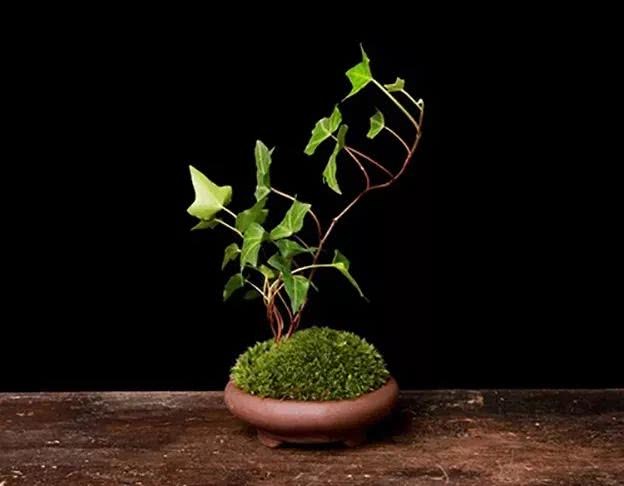
The viewing focus of bonsai is to present the largest picture and scenery within the smallest growing space.
This visual tension of seeing the large in the small is the charming appeal of bonsai and the refined delight pursued by bonsai growers.
The beauty of bonsai lies in a plant that condenses natural scenery and human artistry into a single pot, and it has its conventionally established viewing angles.
The form of a tree growing in nature is composed of many elements; environment, terrain, climate and local conditions create individual differences.
Bonsai cultivation cannot contain all these elements within a single pot. It can only use symbolism, resemblance in form or resemblance in spirit to simplify the beauty of an old tree's posture and move it into the pot. Taking the form of a natural tree as the basis, artificial shaping is then applied, eliminating the coarse and keeping the essence, to display the most beautiful side of the tree.
In the process of creating bonsai form, the root spread, trunk and branches are the three major elements that constitute bonsai form. Then, according to the tree's body shape, a pot that complements and matches it is chosen, and an independent work of bonsai is thus produced.
Therefore, how to make bonsai must first be built upon how to view bonsai, and on understanding the basis for the expression of bonsai form.
The essence of bonsai form
One: Root spread
In viewing bonsai, the root spread comes first
The root spread is the lifeblood of a tree; trees growing in the natural environment all have a sound root system.
In bonsai cultivation, the presentation of the root spread is the foremost lesson. For plants, the root system is the most important part, determining the plant's growth, and bonsai viewing also places the root spread first. Good rooting allows the plant to be stable within the pot.
Besides representing the tree's vigorous vitality, the more solid and steady the root spread, the more it can express the ancient, profound feeling of bonsai, giving the bonsai a more vigorous and towering visual beauty.
Eight-direction roots
With the trunk as the center, the root system extends horizontally and evenly in all four directions, closely combining with the soil. This gives the tree stability, and a good root spread can also reveal the tree's sturdiness.
Exposed roots
Rainwash causes the soil to decrease, leaving the root system exposed. In order to support the entire tree growing suspended downward or at an incline, the root system gradually forms strong, powerful gripping roots.
Roots attached to rock
The root system coils and extends along stone crevices, or the root system penetrates into the stone crevices, and eventually embraces the rock, growing mutually with the rock to become one, highlighting the strong vitality under harsh conditions.
Coiled roots
As a tree grows over years and months, its root system also becomes twisted and interwoven, ultimately forming a plate-like shape, bearing witness to the long historical traces of time.
Two: Trunk
Presenting a posture of symbiosis with or resistance against nature
The form and appearance of the trunk is like a person's figure and bearing; tall or short, fat or thin, each is different, and it is from this that the most direct impression is given to the viewer.
Trees in nature are endlessly varied and ingenious; every type of tree form has its own unique posture. The trunk form during bonsai cultivation determines the basic appearance of the tree form. Whether the trunk is plump or withered, steady or upright, rigid or graceful, all present the ecological process of the tree's symbiotic dependence on, or mutual resistance against, the natural environment.
Lean and lofty, noble and elegant in character
A moderate and unforced curvature of the trunk gives the tree a smooth, nimble natural form, expressing a freehand charm of elegance and grace.
Ancient, vigorous and powerful
Growing under harsh and bitter conditions, the trunk must be winding and undulating, with clear pauses and turns and forceful transitions; only thus can it express a severe, vigorous vitality.
Coiling, turning and twisting
An extreme and powerful twisting of the trunk, a way of growing that reverses against the trend, shows the harshness and peril of the growing environment, and the plant develops a style of its own in form in order to adapt to the environment.
Weathered deadwood and divine branches
A trunk severely eroded by wind and frost; touching its lines and texture, one sees the vicissitudes of time in the subtle details and solemnity in the withered and decayed, revealing a sense of vast loneliness between heaven and earth.
Three: Branches
Determining tree forms of different charms
The form of the branches completes the formal beauty of the bonsai. The number and thickness of the branches also reveal the bonsai's soft beauty and simplicity, or its majesty and robustness.
Oh, right, a bonsai work is composed of two basic elements: the trunk and the branches.
The body style of the trunk establishes the basic prototype of the bonsai; the stylistic expression of the branches is very diverse, with pruning and shaping done according to the growth state of different tree species. The distance between the various emerging branches and the distribution of the branches determine the appearance of tree forms with different charms.
Withered and freehand
With only a few emerging branches, though just a few branches adorn the trunk, they have the effect of adding the finishing touch, with meaning beyond the words, possessing the most leisurely and unrestrained beauty of imagery.
Well-spaced density
The branches can be elegant, can be delicate and pretty; a simple and neat layout gives the space a sense of penetration, presenting the most natural and fresh charm.
Distinct layers
With a sense of coordinated spatial feeling, the closer to the tips of the treetop, the smaller the distance between branches, and the more concentrated the layers appear, creating a stable and peaceful tree posture.
Lush and dense
The emerging branches are even and symmetrical, dense and slender, rounded and full, meant to express the plant's vigorous and robust abundant vitality.
Four: Pot
A representation of the tree's native environment
The form of a tree is determined by the environmental terrain, and the pot is the representation of the environmental terrain; only a reasonable pairing of tree form and pot can produce a coordinated scenery.
Bonsai is a landscaping art with the tree as the main subject and the pot as the auxiliary. The pot's form is the representation of the tree's native environment, and the tree and pot are closely related. When matching a pot, the tree's body shape is closely linked to the pot's shape, size and glaze color. Therefore, by choosing a suitable pot, the bonsai as a whole can achieve the effect of complementing each other and enhancing each other's beauty.
Shallow pot
It can reveal a distant, extending landform; the color is best when clear, beautiful and elegantly clean. Round, oval or rectangular are all acceptable. A shallow pot can bring out the tall, distant tree appearance of formal upright, curved trunk, literati or multiple-trunk tree forms.
Tall pot
It expresses the harsh environment of steep ridges and mountain rocks; it is best when the shape is antique and elegant and the glaze color is plain and unadorned. Round, square or polygonal are all acceptable. Deep tall pots are mostly used for cascade tree forms, and can bring out the tree's momentum of hanging over a cliff in midair, lonely, steep and towering.
Square pot
Steady, it can reveal the tree's rough vigor and its being old yet ever stronger. The pot should mainly have a thick, solid and steady body with a calm, restrained glaze color, bringing out the tree's sturdy, vigorous old-tree appearance. It is most often used for pines and cypresses and old banyan trees.
Variant pot
Different planting containers can produce diverse visual effects. Variant pots are not limited by form, color or material; ceramic pots, mountain stones or rotten wood can all be used, mainly to highlight the planted scenery and express the interest of natural mountains and wilds.
Mastering the above four little tips can greatly help Taiwan friends improve their skills in making and viewing bonsai! However, making and caring for bonsai is truly a devout process, and those who try it personally need to slowly experience it.
Grow on the balcony
Alright, that is all for today. If Taiwan friends still have any questions they hope the chief editor will answer, leave a message in the comment section below.
Growing on the balcony, learning knows no bounds.