Wild orchids need no fertiliser; once you understand their habits, you can grow orchids well even with fine potting medium
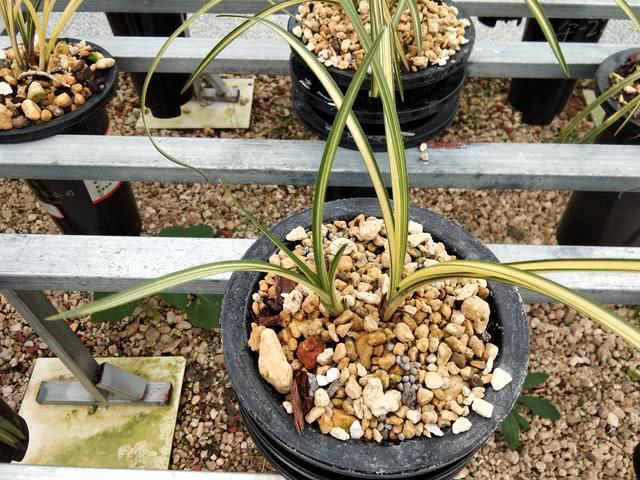
Orchids in the wild mountains and fields take root, bloom and reproduce in environments suited to their own growth, and much of what they have is all the living conditions nature provides. But they do not all grow well; some are in a terrible state, barely hanging on, especially 4-5 year old old growth, which is in the later stage of life. Once an orchid enters a home to be kept, it no longer has its former environment, and to grow it well in a tiny space you must create conditions artificially, just as with all plant bonsai.
So growing orchids requires extra care! We must let orchids slowly adapt to a domestic environment; being too impatient, or careless, is harmful. In the wild, orchid roots grow radially, but once in a pot they must turn when they hit the side, finding a way along the pot wall, so when watering, be careful to water along the pot wall; wild orchids grow among the loose leaf mould on the surface layer, and rain easily dissolves and drips water droplets into the leaf heart of the orchid leaves, letting them quickly enter a living state of dry surface and moist bottom, while with orchid pots, when spraying and watering you must be careful not to let water accumulate in the leaf heart for a long time, otherwise the heart will rot.
Wild orchids need no fertiliser, but orchids growing in pots, because they cannot get the nutrients nature frequently provides, need appropriate artificial supplementation. The growth of all plants depends not only on fertiliser, but more importantly on the plant's own physiological mechanisms, maintaining life by absorbing water and carbon dioxide and using chlorophyll for photosynthesis to produce enzyme sugars and plant proteins, while releasing oxygen and purifying the air; because the potting medium in the pot cannot supply the trace elements orchids need over the long term, artificial supplementation is required. Fine medium and coarse medium differ only in how long they supply nutrients.
If you can grasp the habits of orchids, you can grow orchids well even with fine medium; it is simply a matter of how to manage water control. Coarse medium itself has the advantage of ventilation and air permeability, so management can be relatively more extensive, with no need to worry; with fine medium you must constantly observe the moisture and dryness, preventing the medium from becoming too wet or compacted. Growing orchids with fine medium such as leaf mould easily breeds mould, so you must disinfect and sterilise often, which is more troublesome than coarse medium, and care in management must be even greater.
This article comes from an original submission by Yumi Orchids; for reprinting, please contact the Yumi Orchids official account!