How to cultivate dawn redwood? A detailed explanation of the key points of dawn redwood cultivation techniques
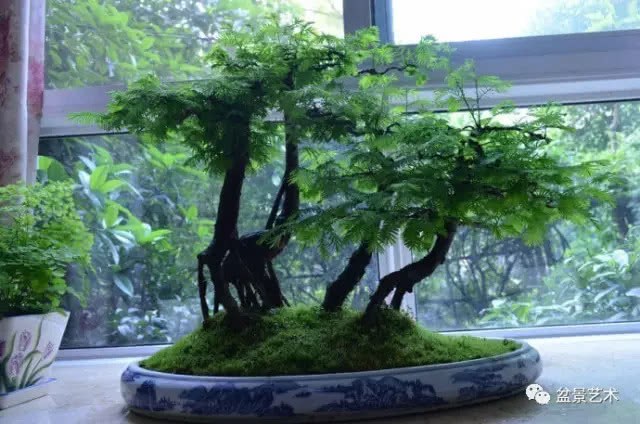
1. Ecological habits:
Dawn redwood is a large deciduous tree of the genus Metasequoia in the family Cupressaceae (Taxodiaceae). It is native to China and is an ancient relict plant and living fossil, and one of the country's key protected trees. Dawn redwood likes sunlight, is relatively cold-tolerant, and is not shade-tolerant; it has strong adaptability and grows best in deep, fertile, moist acidic soil; it can withstand 40-degree high temperatures and severe cold of minus 30 degrees, is not tolerant of drought and poor soil, and is not afraid of waterlogging.
2. Propagation methods:
Seed sowing and cutting propagation. Dawn redwood seeds are mostly shriveled, and seeds from dawn redwoods under 30 years old are especially prone to shriveling, so cutting propagation is mostly used. In cutting propagation, both hardwood and softwood cuttings can be used. For spring cuttings, it is advisable to use side branches of one-year-old seedlings as cuttings, and the cuttings should be taken before the trees sprout. Softwood cuttings are carried out from June to July. The cutting site should be kept as moist and well-ventilated as possible.
3. Cultivation management:
When planting, dig up and plant immediately. If long-distance transportation is needed, before planting the seedling roots should be soaked in water so they absorb enough water and the survival rate is improved. Before planting, dig large holes, apply base fertilizer, and do not damage the roots. After planting, water thoroughly and sufficiently. Topdressing can be applied during the growing period. Proper pruning can be done at the seedling stage, but after 4-5 years do not prune, so as not to ruin the tree shape. Small seedlings are planted with mud slurry, and large seedlings need to be planted with a soil ball. Planting in spring gives a high survival rate. It is tolerant of pruning and can be pruned into a spherical shape and used as a hedge. Bigleaf boxwood (Euonymus japonicus) stays evergreen in all four seasons, is tolerant of pruning and wiring, grows rapidly, and is easy to keep alive; it is a good material for pruning, shaping, and hedges, and can also be used for ornamental purposes.
4. Garden uses:
The trunk of dawn redwood is straight and upright, the tree form is magnificent, the leaves are emerald green, and after autumn the leaf color turns golden yellow, making it a famous ornamental tree for courtyards. Dawn redwood can be planted as a solitary specimen, in rows, or in groups in parks, courtyards, lawns, and green spaces. It can also be planted in large patches to create scenic forests, and matched with evergreen ground cover plants; it can also be planted in front of buildings or used as a street tree, with good results in all cases. Dawn redwood has a certain resistance to sulfur dioxide and is a good tree species for greening industrial and mining areas.