How to graft a Christmas cactus? Detailed grafting methods and step-by-step instructions
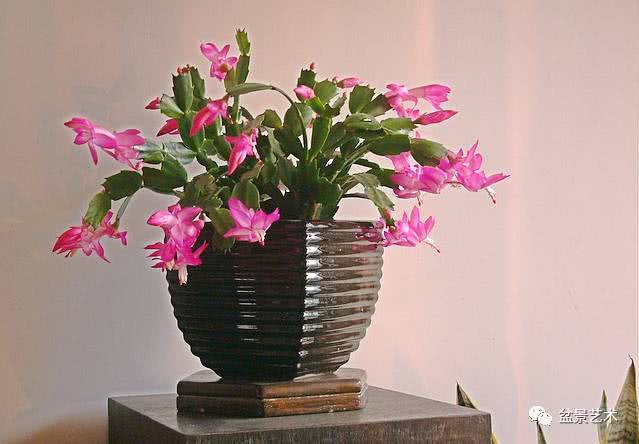
The Christmas cactus (Schlumbergera) is native to Brazil and belongs to the cactus family. Its stems are pendulous and branching, flat and multi-jointed, with joints obovate to oblong, connected in the shape of crab claws. The Christmas cactus generally blooms from January to March, with a long blooming period, and when in bloom it is exquisitely beautiful and much loved.
The Christmas cactus is fairly easy to propagate. Propagation by cuttings grows slowly and blooms late, so grafting is mostly used for propagation. The grafting time is generally from April to August, but based on the author's experience, it is best to do it before the end of June, which can increase the amount of stem and leaf growth and the number of flowers in the same year after grafting.
For the rootstock used in grafting, prickly pear cactus (Opuntia) or three-angled cactus (some call it "Haiwang") are often chosen. The rootstock should be more than 20 cm above the pot surface to facilitate later pendulous growth. If the rootstock is about 100 cm tall, it can be grafted in 4-5 layers, forming a multi-layered umbrella-shaped pendulous plant shape, which is even more beautiful. The scion should not be too tender; use 4-5 stem joints as one segment, and with a sterilized sharp knife or blade, make a slanted cut on each of the two sides of the lower end of the scion, shaped like a duck bill; the cut should not exceed half of one stem joint. Then make a slightly slanted vertical cut in the rootstock, with the cut slightly longer than the xylem of the scion and rootstock, then immediately insert it into the rootstock cut until it reaches the xylem. After the two are joined, pinch the joint with your hand, clamp it with a wooden clip, or secure it with a pin or thorn to prevent the scion from slipping out.
After grafting, place it in a cool, ventilated place, do not water it for a week, and the interface must not get wet. After 10 days, if the scion remains fresh green and firm, it proves that it has survived, and normal care can begin.