Don't swear by bark for growing orchids; try this kind of stone instead, and the orchid roots will be thick and strong and the orchid plants will stand tall and elegant
Growing orchids is actually a process of continuous learning, and orchid owners who are good at keeping "little notes" can basically grow them well very quickly. Let's take a look at the orchid-growing experience of this older forum friend called "Jiang Xiaobu", learning constantly and improving constantly. From initially being "obsessed" with bark potting medium to now using "stone" potting medium, it is all a witness to his continuous progress in caring for orchids.
1. A forum friend grows orchids, from "bark" to "Isolite"
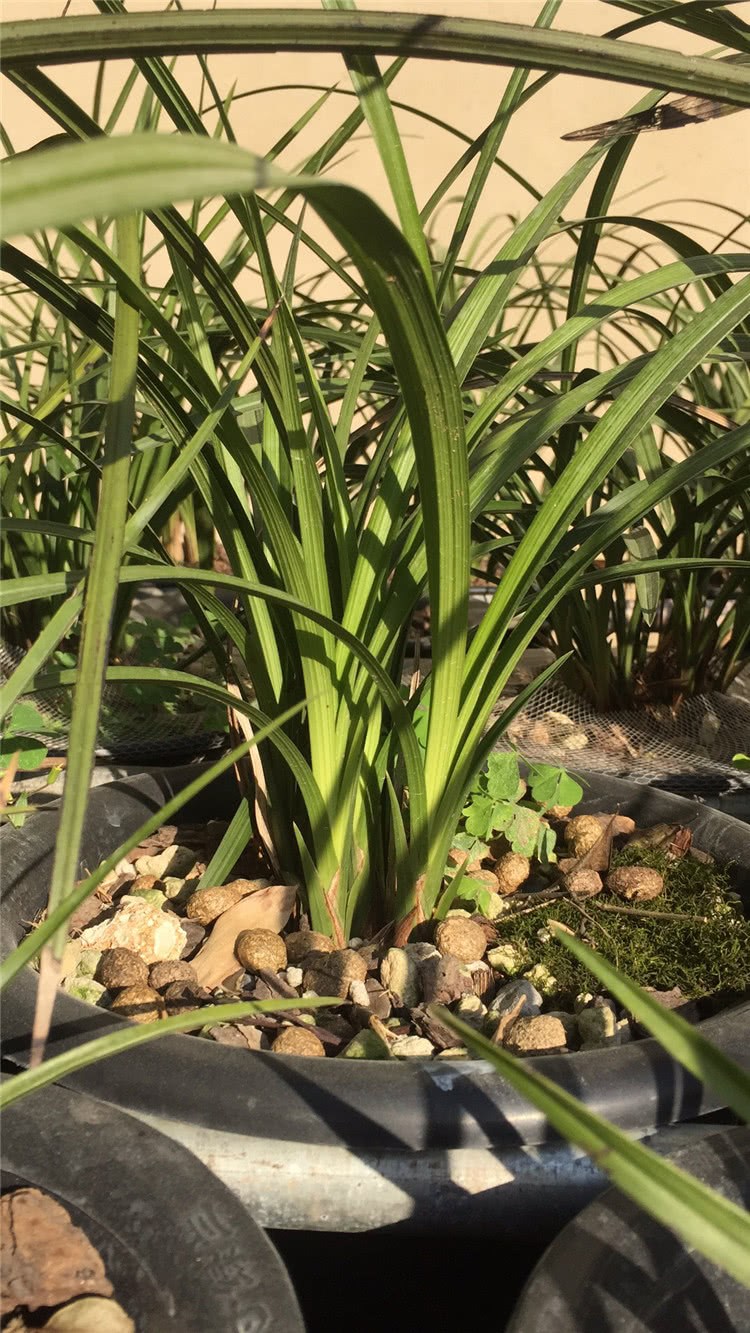
The picture above shows one of the orchids cared for by this orchid owner. The orchid plants are growing well. According to him, he said that he had previously seen other orchid owners often using bark potting medium to grow orchids, so he tried it himself, but the effect was not very ideal, so now he has come to love "Isolite" alone as a potting medium. Basically, when growing orchids himself, he mainly uses Isolite (as in the soil mix shown below), and the orchid plants are in a much better state than when he previously used bark.
2. Using Isolite to grow orchids has great "magical uses"
In the gardener's view, Isolite is indeed one of the good things for growing orchids. First, it is a relatively large granule, so the drainage and breathability of the orchid pot are naturally guaranteed; second, its drainage is extremely good, so watering is no longer a problem. In fact, bark potting medium also has these benefits, but bark potting medium often has a flaw: it is not completely decomposed, and this can be a very dangerous thing for orchid plants.
3. Using large potting medium to grow orchids, pair it with "special fertilizer"
Look at the picture above. This orchid owner's soil mixing method is roughly: 5 parts Isolite, 2 parts bark, 1 bit of fine soil, 1 bit of small granules, 1 bit of slow-release fertilizer. Beginner orchid owners can learn from this formula. For orchid potting medium mainly based on large potting medium, special attention must be paid to supplementing fertilizer during care. During the growth period, organic fertilizer that strengthens and nourishes roots should be used for care, and when it reaches the bud period, switch to phosphorus and potassium fertilizer that promotes flowering and protects flowers. By working along both lines, root growth and flower promotion are both taken care of.
4. Do not be "superstitious" about orchid soil mixing; adapting to local conditions is the truth
Of course, beginner orchid owners should not be "superstitious" about Isolite as a potting medium either. You can choose the potting medium according to your own orchid-growing environment. For example, if you want the orchid pot soil to dry slowly as much as possible because you do not have that much time to water, you can use more fine soil such as humus soil and peat soil; if your orchid-growing environment is relatively humid and you water relatively freely, then you are not wrong to use large potting media such as Isolite and bark. It is enough to analyze specific problems specifically.
The picture shows the "steamed bun mound" that this orchid owner called "Jiang Xiaobu" made for his orchids. The orchid plants are bathing in the setting sun. When mixing soil for orchids, everyone should analyze the environment and then slowly decide the ratio of the soil mix. I hope everyone can grow the orchids at home strong, with fragrance filling the house~