A roadside wild vegetable nobody wants is highly nutritious, every part is a treasure, and it can even treat anal fistula
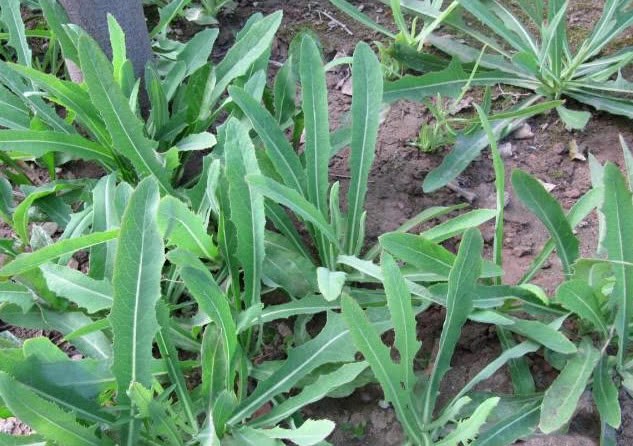
We call this plant bitter vegetable, a wild vegetable that is both food and medicine. It often grows in wild fields and along roadsides, in front of and behind houses, and occasionally can be seen growing in patches. It is generally removed as a weed, but its medicinal value is actually very great, so pulling it out directly is a bit of a pity.
Why do we call it bitter vegetable? Mainly because it tastes a little bitter when eaten, somewhat like the taste of dandelion. Generally in April and May, when it grows vigorously and is at its most tender and plump, the whole plant can be picked, the old leaves removed, and then used in cold dishes or boiled in soup. It has a refreshing fragrance amid the bitterness, with a rather unique taste.
In fact, the scientific name of bitter vegetable is Patrinia villosa, and it is a green vegetable whose every part is a treasure. As a vegetable, it is very rich in nutrients, containing multiple vitamins and various trace elements such as calcium, iron, and potassium, as well as more than 10 kinds of amino acids; in addition, as a traditional Chinese medicine, it has the effect of clearing heat and detoxifying, and has a relatively notable effect especially on chronic appendicitis, anal fistula, and other conditions.
Wild bitter vegetable is a perennial herbaceous plant. It likes light and cool climates and tends to grow in places with ample water and moist soil, but it is actually quite drought-tolerant, so it tolerates both drought and waterlogging, and is not picky about soil. It is very easy to grow.
For cultivated bitter vegetable, seed sowing is generally chosen for propagation. After sowing, it sprouts quickly. At a temperature of 18-25 degrees, with a bit more light, after about 45 days, when the leaves grow to about 5 cm, they can be picked and eaten.
As a wild vegetable, bitter vegetable has an extremely strong ability to adapt to the environment, so we can also plant this wild vegetable in our flower pots and place it on a balcony at home. It can be enjoyed as a green plant and also eaten as a vegetable, achieving two things at once, and there is no worry at all that it will not survive.