Get these 25 flowers propagated by cuttings within the next month, any later and it will be too late
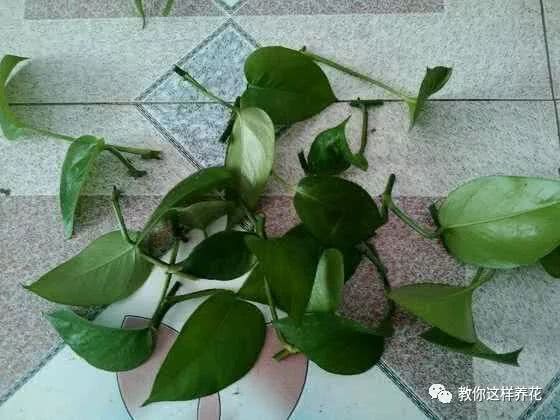
The temperature is suitable right now; wait a little longer and it will be a bit cold, and cuttings will grow roots more slowly. Generally speaking, the suitable temperature for cuttings is 20-25°C. Most places are still fairly cool at the moment, making it a good time for cuttings. Here are some cutting methods for common flowers and plants. If you have branches on hand, get them stuck in the soil right away, turn 1 pot into 10 pots, and hardly spend any money!
“
Flower cuttings
”
- Pothos -
Pothos cuttings root quickly, and one length of stem can be propagated into many pots. Whether you root them in soil or in water, it is very simple. Cut a pothos stem about 10cm long, keep 1-2 leaves, and make sure it has 1 node; aerial roots are best. Insert it into loose potting soil, water thoroughly, and wait for it to root.
You can also put it in a water bottle to grow in water, and it will root very quickly.
- Spider Plant -
Spider plant cuttings are very simple. Just cut off the little spider plantlets that grow out and place them on the potting soil; do not bury them too deep, or the center is more likely to rot.
You can also just put them in a water bottle; rooting and surviving is very easy.
- Peperomia -
Cut off a peperomia stem or leaf, insert it into vermiculite at a 45° angle, keep the potting soil moist, and it will root in about 2 weeks.
- Succulent leaf cuttings -
Choose healthy succulent leaves; do not use leaves that have turned to mush or dried up and died. You can withhold water from the succulent for 4-5 days first, which makes the leaves easier to twist off. Never yank the leaves off roughly, and make sure the growth point stays intact. Damaged leaves can hardly grow roots and sprout, so pay attention during the twisting process.
(intact growth point)
(torn growth point)
Lay them flat on the soil. When watering, be careful not to water on the surface of the succulents; you can water in the gaps between the leaves. If there is water on the leaves, you can blot it dry with a paper towel. Just place them in a cool environment without direct sunlight and wait for them to root.
- Kalanchoe -
Kalanchoe cuttings are also fairly simple. Choose some fairly mature fleshy stems and let them dry. Insert them into plain sand or nutrient soil, water, and place in a semi-shaded spot at 15-20°C; generally they will root in about 3 weeks. Some fallen leaves can also root and sprout when stuck into soil, and small shoots can grow out from the leaf base.
(Kalanchoe Tieba, Mengsiyuan)
- Ivy -
Cut an ivy stem about 10cm long; one with aerial roots is best. Remove the lower leaves, insert it into loose, breathable potting soil, place it in a semi-shaded spot for care, and water thoroughly. Generally, 20-30 days after sticking, it will root and survive.
- Camellia -
Generally choose healthy, plump semi-ripened branches of the current year as cuttings, 8-10 cm long, keeping 2 leaves at the tip. When cutting, keep a bit of old branch at the base if possible; after sticking, callus tissue forms easily and roots develop quickly. Cut and stick immediately, inserting about 3 cm into the medium. When sticking, the leaves should overlap each other, and after sticking press the soil firm with your fingers. Shallow insertion is better, as this allows air in and speeds up healing and rooting.
For the medium, generally use plain sand or perlite. Note that before use it should be sterilized by sun exposure, or sterilized by pouring boiling water over it.
The cutting bed needs shade and plastic film covering, with daily misting of the leaf surface to keep it moist, and the temperature maintained at 20-25°C. When sticking, dip the base of the cuttings in rooting powder for 2-5 seconds; this has a clear effect in promoting rooting.
About 3 weeks after sticking, healing begins, and roots form after 6 weeks. When the roots are 3-4 cm long, transplant them into pots.
(China Camellia Tieba, Huang Jinzhai)
- Snake Plant -
For cuttings, choose robust and fairly thick leaves, cut them into lengths of about 5-6 cm. When cutting, make the cut flat; do not cut at an angle or in a curved way.
After cutting the cuttings, do not rush to stick them; leave them in a cool place to dry for a while. Sticking them after the wounds have dried can avoid root rot.
Insert the dried cuttings into sandy soil or vermiculite, leaving generally about half exposed above the soil surface, keep the soil moist, and they will root in about a month.
- Christmas Cactus -
Choose robust Christmas cactus with thick segments as material, take 1-2 mature stem segments, and let them dry. For potting soil, choose breathable, well-draining, nutrient-rich soil. You can add some perlite or vermiculite to it.
Insert the prepared cuttings into the potting soil, and water only after the potting soil dries. They will root in about 1-2 weeks.
- Chinese Trumpet Creeper -
Late autumn and early winter are very suitable for soil cuttings of Chinese trumpet creeper, and the survival rate of Chinese trumpet creeper cuttings is extremely high. Select robust branches of Chinese trumpet creeper that have grown for more than two years, cut them into cuttings 10-15 cm long. Note that the upper cut should be made flat, and the lower cut is best made at an angle.
After cutting the cuttings, do not rush to stick them; leave them in a cool, airy place for about half a day, and the results will be better. Once the cuttings are ready, you can stick them. The insertion depth is about 1/5 of their length, keep the soil moist, and they will root in about 20 days.
- Hydrangea -
Choose sturdy branches, prune the branch so that only one node remains, and remove half of the leaves as well to prevent water loss too quickly. Cut the upper cut of the cutting flat, and cut the lower cut at an angle.
Water the prepared potting soil thoroughly, and disinfect the cuttings with fungicide. Insert the part below the node into the soil, then place the pot in a tray, add an appropriate amount of water to the tray, and the water will move upward through the soil, keeping the soil moist the whole time.
- Bougainvillea -
From the bougainvillea plant, select vigorous and somewhat thicker branches as cuttings; generally they should be woody branches (hard to the touch, not soft), as this gives a higher sprouting rate and makes survival easier.
After selecting the branches, cut them into cuttings about 15-20 cm long, with the upper end cut flat and the lower end cut at an angle. First use a chopstick to make a hole in the potting soil, then insert the prepared cutting into it, about 4-6 cm deep, and it will root in about 30 days.
- Mint -
Mint cuttings are fairly simple. Cut off a slightly older stem about 10 cm long, remove the lower leaves, and put it in water; it will grow roots in a few days. You can also stick it directly into loose soil, first place it in a cool spot for care, and after 1 week care for it normally.
- Rose -
For rose cuttings, generally keep 3 nodes and 2 small leaves. Cut the lower end at an angle and the upper end flat, leaving 1cm from the first node.
For the cutting medium, you can use vermiculite; do not use too fine a grade, medium granules are best.
Put the vermiculite in a plastic cup, poke a few small holes in the bottom, place the plastic cup in a tray, add water, and put it in a spot with some light. When the tray runs out of water, add more, and wait for it to root.
- Gardenia -
Gardenia cuttings are also fairly simple. Each year in May-June, choose semi-lignified, well-developed young branches, cut them into 10-15 cm lengths, and keep two leaves. Soak the base in rooting powder, then stick it into acidic soil with strong water- and fertilizer-holding capacity. About 1 month after sticking, it can root, and after 50 days it can be transplanted.
- Rieger Begonia -
In late autumn and early winter, when pruning and shaping the plant, the new shoots cut off can be used as cuttings. Rieger begonia can be propagated by stem cuttings or leaf cuttings. For stem cuttings, the length of the stem should be moderate, and use a blade to cut the lower part of the stem into a horseshoe shape; for leaf cuttings, choose vigorous leaves that are about 60% mature, and cut the lower end of the leaf stalk at an angle with a blade. You can also root them in water first, then insert them into a medium to survive. The medium can be perlite, vermiculite, or plain sand. After surviving, adventitious buds can grow from the lower part of the leaf stalk and gradually emerge from the soil.
- Lucky Bamboo -
Lucky bamboo roots quickly when the temperature is relatively high. The cutting should have a slanted cut surface, which can increase the area for water absorption and help lucky bamboo root faster. Remove the leaves inside the bottle to prevent them from rotting over a long period without air and affecting plant growth.
The water level is generally controlled at about 3-4 nodes above the cut, about 1/3 of the water. If it is tap water, it is generally better to let it sit for a day before use.
Place it in a cool spot with scattered light; it must not be exposed to the sun. Do not move its position, change the water once every 2-3 days, and generally new roots can grow in about 20 days. After new roots grow, a small amount of nutrient solution can be applied. During this period, it may look a little listless and have yellow leaves; this is because it is rooting and adapting to the new environment, which is normal, and you can remove a few of the lower yellow leaves.
- Rubber Plant -
For the cutting potting soil, you can use plain sandy soil or vermiculite. For the cutting, it is best to choose biennial semi-lignified middle branches; the survival rate can reach more than 90%. To prevent too much milky sap from flowing out of the cut and affecting survival, immediately seal the cut with clay or plant ash after cutting. The length of the cutting should be based on keeping 3 nodes; cut off one lower leaf, bring the upper two leaves together, and tie them with thin plastic string to reduce leaf evaporation.
The suitable temperature for rooting is 18-25°C. Often sprinkle water on the ground to increase air humidity, and do a good job of shading and ventilation. It will root in about 2-3 weeks. After potting, place it in a slightly shaded spot, and gradually increase light after new buds sprout.
(Rubber Plant Tieba, Jingtinging Huakai)
- Honeysuckle -
Honeysuckle grows easily, has low requirements for the soil environment, and roots fairly quickly. Propagation is mainly by cuttings, and it can be propagated by cuttings at any time except winter.
Choose robust branches of the current year. For each cutting, keep 2-3 nodes, leaving only the two leaves on the upper node, and cut off the other leaves. Insert the cut branch diagonally into the soil, with the depth being 1/2 of the branch, and press it slightly firm. After sticking, water thoroughly, then keep the soil moist, and place it in a ventilated, bright spot. It can root in about half a month.
(Sina Blog, Qingcaoji)
- Banyan -
Banyan is a plant that roots very quickly, and it can survive from cuttings in spring, summer, and autumn. Cut 1-2 year old branches, cut them into lengths of about 10 cm, each section including 3-4 small nodes. Remove the lower leaves, keeping only one leaf at the top; if the leaf is relatively large, you can tie it into a tube shape with fine string.
Insert the cutting about 1/3 into the soil. After sticking, cover with plastic film to keep it moist (do not cover with film when the temperature is high). It will root and sprout in 30-45 days, and after rooting it can be potted.
(Hua Tieba, SDWFCYWZ123)
- Jasmine -
Jasmine cuttings can be done from April to October. Choose mature 1-year-old branches, cut them into cuttings with more than two nodes, remove the lower leaves, stick them in a cutting bed of half mud and half sand, cover with plastic film, maintain relatively high air humidity, and they will root after about 40-60 days.
It is enough for the cutting to have 3 nodes. The lower cut is best 0.5 cm from the leaf node, which makes rooting easy. To reduce evaporation, keep 2 leaves on the whole cutting, then cut off half of them.
After about 21 days, they have basically all rooted; after transplanting, water thoroughly
(The above jasmine images are from Tahua Xing, Yisheng Ailan)
- Gloxinia -
Gloxinia can be propagated by leaf cuttings. After gloxinia finishes blooming, choose leaves from robust plants, keep 1 cm of leaf stalk, and insert at a 45 degree angle into clean river sand, vermiculite, or perlite. Insert 1/3 of the leaf surface into the river sand and leave 2/3 on the surface. Provide appropriate shade, maintain a certain humidity, and at a temperature of about 22°C, it can root in 15 days. After small seedlings form, transplant them into small pots.
- Azalea -
The best times for azalea cuttings are spring (May) and autumn (October), when the temperature is between 20-25°C, most suitable for cuttings. When sticking, choose semi-lignified, well-developed, robust shoots of the current year as cuttings, cut 6-10 cm with nodes, make the cut smooth and neat, cut off the lower leaves, and keep only 3-4 small leaves at the top. The insertion depth is 3-4 cm. After sticking, water thoroughly once. Cover with a plastic bag, tie the bag opening firmly with a string, open it again when watering is needed, and tie it firmly again after watering thoroughly.
Place it in a spot without direct sunlight. Mist the potting soil once a day to keep it moist. After 10 days, you can mist once every 2-3 days. Generally it takes about 2 months to root.
- African Violet -
After African violets bloom, you can cut off old leaves for leaf cuttings, keeping about 2 cm of leaf stalk. Let them dry slightly, insert them into river sand or vermiculite, and cover with a plastic bag or plastic wrap to increase humidity. They will root in about 20 days, grow seedlings in 1 month, and be moved to pots in 2 months.
Friends who want to propagate should hurry up!
Show this to flower lovers who need it!