Tired of plain pothos? This potted plant gives 3 colors per flower, tolerates -15°C, and is easy to grow and beautiful
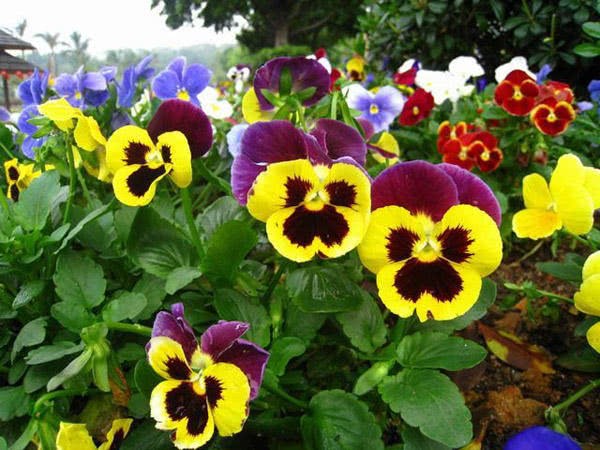
Pothos, spider plant, jade plant, aloe... looking around, the home really is a sea of green. Well then! If, like me, you've recently wanted to add some bright flowers to your home, you might try growing this flower!
This flower is called the butterfly flower, because when it blooms it looks like butterflies dancing in flight, hence the name. Of course, it also has a name we are more familiar with, namely pansy (Viola tricolor var. hortensis). When it blooms, a single flower usually has 3 colors: purple, white and yellow, making it very bright and unusual, and it also has quite a few varieties.
In fact, pansies are recommended not only because they are beautiful, but also because they are easy to grow. The pansy was originally a fairly common wildflower in Europe, which shows how vigorous its habits are. Nowadays it is generally planted in gardens, parks and green belts as a decorative flower, and can also be grown in flower pots for indoor viewing.
The pansy has one very important characteristic: it likes cool conditions and is fairly cold-tolerant. Its optimum growing temperature is 12-20°C, and its roots can tolerate low temperatures of -15°C. When the temperature is suitable, you can sow seeds in early October, and it generally flowers about 2 months after sowing. Barring accidents, you can enjoy the flowers around December.
Of course, you don't have to grow it yourself; you can just buy a potted pansy and take it home to care for, which is also very simple, and it will immediately add bright color to your home.
Pansies like sunlight, and flowering is greatly affected by light: with enough sun they bloom abundantly, but in high temperatures they need appropriate shading. Pansies do not need much water; when watering, you can use a fine-spouted watering can to water slowly, watering when dry and letting them dry out between waterings, keeping the potting soil slightly moist, and avoiding waterlogging.