Detailed Explanation of the Key Cultivation Techniques for He Shou Wu (Fallopia multiflora) Bonsai
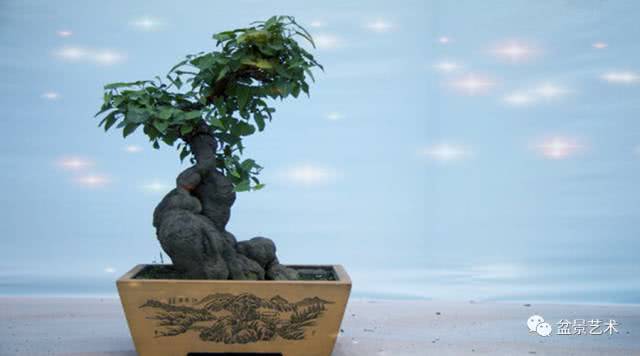
Perennial herbaceous plant. Prefers sun, tolerates partial shade, likes moisture, fears waterlogging, requires well-drained soil. Root tubers thick and fleshy, long elliptical, dark brown.Stems twining, 2-4 m long, much branched, with longitudinal ridges, hairless, slightly rough, lower part woody. Leaves ovate or long ovate, 3-7 cm long, 2-5 cm wide, apex acuminate, base cordate or nearly cordate, both surfaces rough, margin entire; petiole 1.5-3 cm long; stipular sheath membranous, oblique, hairless, 3-5 mm long. Inflorescence paniculate, terminal or axillary, 10-20 cm long, branches spreading, with fine longitudinal ridges, densely covered with small protuberances along the ridges; bracts triangular-ovate, with small protuberances, apex acute, each bract contains 2-4 flowers; pedicels slender and weak, 2-3 mm long, with a joint at the lower part, elongating in fruit; perianth 5-parted, white or pale green, perianth segments elliptical, unequal in size, the outer 3 larger with wings on the back, enlarged in fruit, perianth nearly circular in outline in fruit, 6-7 mm in diameter; stamens 8, filaments broader at the lower part; styles 3, very short, stigma capitate. Achene ovate (Click "He Shou Wu Traditional Chinese Medicine Special Effects" for everyone to take a look)
(1) Site Selection and Land Preparation
1. Seedling nursery land: Choose gently sloping hilly terrain with convenient irrigation and loose, fertile sandy loam soil for raising seedlings. Deep plow 30 cm in winter; after a winter of weathering, carry out multiple plowings and harrowings the following spring, pick out grass roots, branches and stones, level and harrow fine, and make beds 100 cm wide and 10-20 cm high. Apply 2000 kg per mu of mixed fertilizer such as decomposed barnyard manure and plant ash, spread evenly on the beds, then shallow-plow into the soil.
2. Planting land: Choose plots at the edge of mountain forests or in front of and behind houses, with deep soil, fertile and loose, and good drainage. Deep plow more than 30 cm in winter, remove grass roots and stones. The following spring, plow 1-2 times to loosen the soil. Apply 3000 kg per mu of mixed fertilizer of barnyard manure and plant ash as base fertilizer. After application, harrow once to mix the fertilizer evenly with the topsoil, then make beds for planting, with beds 50 cm wide and 25 cm high. You can also dig pits in front of and behind houses for planting.
(2) Seedling Raising and Propagation
1. Seed sowing and seedling raising: Each year in October-November, when He Shou Wu seeds mature, gently cut off the entire fruit spike and dry it in the sun, rub out the seeds, remove impurities, put them in cloth bags or cardboard boxes, and store in a cool, dry place. In March of the following year, when the temperature rises above 20°C, sow the seeds. On the prepared seedling nursery beds, open shallow furrows at a row spacing of 10-15 cm, evenly scatter the seeds into the furrows, cover with about 1.5 cm of soil, cover with grass, and water thoroughly. Generally, the seeding rate is 1.5-2 kg per mu. About 10 days after sowing, the seedlings will emerge completely. At this time, promptly remove the covering grass, water, keep the bed soil moist, and at the same time pay attention to pulling out weeds. 10-20 days after emergence, thin and fill in the seedlings, setting the plants at a spacing of 4-5 cm. In early April, apply 2% urea once to promote seedling growth. After about 90 days, when the seedlings are 30 cm tall, they can be transplanted to the field for planting. Seedlings propagated by this method grow relatively slowly and have a long growth cycle.
2. Cutting propagation: Each year in March or November, choose 1-year-old robust, mature vines, preferably the robust old vines growing from the root crown that were cut after October, cut them into cuttings with 2-3 nodes and about 15 cm long, tie every 50 into a small bundle, dip the lower ends in yellow mud slurry, and place in a cool place until planting. On the prepared nursery beds, open horizontal furrows at a row spacing of 15-18 cm, with a furrow depth of 10 cm, place the cuttings against the furrow wall, at a plant spacing of about 1 cm, cover with soil and press firm, so that the upper cut end is slightly exposed above the ground, then cover with a layer of rice straw. Be careful not to plant them upside down. After cutting, keep the bed soil moist frequently, and water during drought to facilitate rooting and sprouting of the cuttings. In the rainy season, pay attention to drainage to prevent rot of the cuttings caused by water accumulation in the seedbed. If the weather is warm, new shoots can grow 10-15 days after cutting, and new roots grow after 1 month. After about 100 days of cultivation, when the seedlings are more than 15 cm tall and have several roots, they can be transplanted to the field for planting.
3. Field planting: He Shou Wu can be planted in spring or summer. Spring planting roots quickly and has a high survival rate, but has many fibrous roots, low yield and poor quality. Summer planting (May-July) has high soil temperature and sufficient sunlight; after planting, new roots are easy to expand, tubers form quickly, and yield is high. When lifting seedlings from the nursery, keep only about 20 cm of the base section of the seedling and cut off the rest, and remove the adventitious roots together with the tuber pieces; this is the key to high yield. When planting, first open planting holes on the beds at a row and plant spacing of 20 cm*20 cm, plant 1 plant per hole, after planting cover with soil and press firm, and water thoroughly to settle the roots and keep the soil moist. You can dig pits in front of and behind houses for planting, with 4 seedlings planted per pit.