Should you water flowers with warm or cold water in winter? An old gardener reminds you to stop watering the wrong way
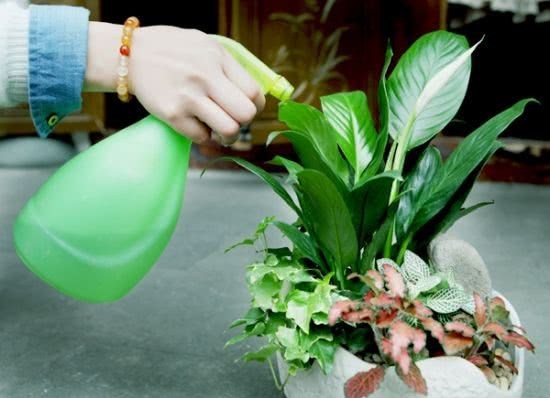
The weather is getting colder and colder. Late autumn is already here, and the depths of winter will soon arrive. At this time, when growing potted flowers, gardening friends need to pay more attention and be more attentive. After all, most flowering plants cannot withstand low temperatures. After all, the peak growing season for flowers is in spring and autumn each year; summer and winter are both unfavorable for growth. Next, let us talk about some knowledge for growing flowers in winter. When it comes to growing flowers in winter, there is only one point that needs extra attention, and that is "watering." Why say that? Because growing flowers depends three parts on fertilizer and seven parts on water. In winter, flowers are in a slow-growth season, so fertilizer definitely cannot be applied anymore; stopping fertilization is a must. Watering then becomes the key. Only if you water well will the flowers get through winter safely.
When watering flowers in winter, should you use warm water or "cold water"? Old gardener: You are watering wrong this way
Let us first talk about the first topic. Regarding watering, in winter should we water flowers with tap water, that is, cold water, or is warm water better? An old gardener who has grown flowers for more than ten years, based on his many years of flower-growing experience, summed it up for me like this: for watering flowers, both cold water and warm water can be used, but you must water according to the specific situation. You cannot just use only cold water or only warm water across the board; otherwise, sooner or later the flowers will have root rot and die. The correct way to water is like this. It should be determined according to the outside environmental temperature and the temperature of the flower pot soil. Generally, in the early morning and in the evening, you can water with cold water. At these times you cannot use warm water, because the temperatures in the morning and evening are low, and the pot soil cannot tolerate water that is warmer than itself; otherwise, root rot easily occurs. At noon, however, it is suitable to water with warm water, and not suitable to water with cold water. This is the trick to watering flowers!
What do "see dry, see wet" and "do not water if not dry; if you water, water thoroughly" mean in watering flowers?
Whether you grow flowers well or not, your skill all lies in watering. As the saying goes, it takes three years to master watering. If someone knows how to water, then his flowers will surely grow very vigorously. In fact, in the process of watering flowers, there are still some techniques you can use. For example, the commonly said "see dry, see wet," "do not water if not dry; if you water, water thoroughly," "water thoroughly when completely dry," and so on. From the literal meaning, they are not hard to understand. See dry, see wet means that as soon as you see the soil in the flower pot is dry, then it is time to water. If the flower pot soil is moist, then there is no need to water again. And do not water if not dry; if you water, water thoroughly means that if the pot soil is not dry, you cannot water; when it is dry, if you water, you must water thoroughly, and you cannot give only half a watering. If you water flowers according to these few techniques, generally there will not be any problem.
When watering flowers, everyone uses rice-washing water and vegetable-washing water. What benefits do these have?
Whether it is rice-washing water or vegetable-washing water, both belong to the category of domestic wastewater. Using them to water flowers can be said to achieve the effect of reusing waste and can also save water resources. Of course, if using them to water flowers had no effect, then probably no one would use them. Facts have proven that rice-washing water and vegetable-washing water are both very good for watering flowers. Especially rice-washing water, which contains rich trace substances. Among them, the potassium element on the surface of the rice will remain in the rice-washing water. Once this element is poured into the flower pot, it will promote the vigorous growth of the flower's stems and leaves. However, remember this: rice-washing water needs to be sealed in a container and fermented before it can be used.
The last point, let me remind gardening friends again: when watering flowers in winter, do not pour water onto the plant's leaves or flowers. Because the outside temperature is low, if water remains on the leaves, it can easily cause leaf rot. The above is some shared knowledge about growing flowers and watering them in winter. Gardening friends can save it. Thank you for reading!
Remember to like and share~