Encounter these 8 poisonous plants when out and about during the National Day holiday - don't touch them, just steer clear
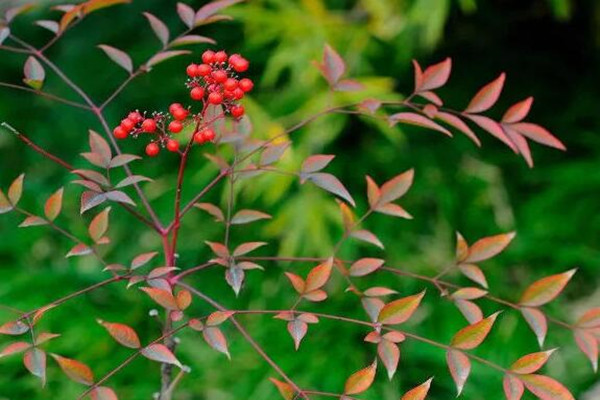
Nandina (Nandina domestica), the whole plant is poisonous, stay away!
Poisoning symptoms: The entire plant is toxic. If the leaves or berries are eaten by mistake, symptoms include nerve excitement, muscle spasms, body paralysis and coma.
Nandina is common in the countryside and mountainous areas. In autumn its leaves and berries turn red, a bit like maple leaves. It is also planted in parks and landscaping, and quite a few people buy it for bonsai and flower arrangements. If you have children at home, never let them pick it carelessly, to avoid poisoning by accidental ingestion.
Antiaris toxicaria, it really can seal the throat at the sight of blood!
Poisoning symptoms: The sap is toxic. Once people or livestock come into contact with it, in mild cases there is paralysis, and in severe cases the blood coagulates and the victim suffocates to death. It has already been listed as a national third-class protected plant.
Antiaris toxicaria is mainly distributed in southern and southwestern China. Friends going to Hainan, Fujian, Guangdong, Yunnan and Guangxi must stay away from it. In autumn some fruits fall, so never pick them up out of curiosity.
Wild lacquer tree (Toxicodendron vernicifluum), can trigger severe allergic symptoms
Poisoning symptoms: The sap contains urushiol poison. If it gets on the human body it causes allergies, diarrhea and kidney poisoning.
The lacquer tree is quite widely distributed, found almost everywhere north and south of the Yangtze. Be careful when out and about. Some friends with sensitive skin will have an allergic reaction from just a touch; some allergic symptoms only appear after lying dormant for quite a few days. Once allergic, seek medical attention promptly.
Croton (Codiaeum variegatum), the colorful "killer"
Poisoning symptoms: The sap is toxic. Getting it on you when picking may cause allergies, abdominal pain and diarrhea.
Because the croton's leaves are colorful, it is found in many gardens and green belts, and quite a few flower lovers keep it at home. Huahua reminds you: never pick the leaves, and if you grow it, it is best kept in the yard, not brought into the house.
Rosary pea (Abrus precatorius), this thing is more poisonous than love
Poisoning symptoms: The seeds contain a toxic protein; eating them by mistake or soaking them in water causes poisoning, and in severe cases can be fatal.
The rosary pea and the love bean (Adenanthera pavonina) are "relatives", and some are even made into ornaments. People still don't understand its toxicity, so you must be careful when you see it out and about!
Nettle (Urtica), even the leaves can bite
Poisoning symptoms: The leaves secrete a toxin. Once it touches the skin there is unbearable pain and itching, redness and a rash.
Nettle, also called huoma, is a childhood "nightmare" for many people. It looks fairly ordinary and is rather hard to identify. When adults take children out, they must take good care of them, so they don't get stung by nettle leaves.
Poppy (Papaver somniferum), the illegal poisonous flower
Poisoning symptoms: The sap of the fruit excites the nerves and causes addiction.
Many flower lovers can't tell poppy from corn poppy. In fact, the easiest way to tell them apart is to look at whether they have fuzz: the corn poppy has fuzz all over the plant, while the poppy has no fuzz. Growing poppies is illegal in our country, so everyone must be sure to tell them apart!
Red spider lily (Lycoris radiata), truly a flower of the underworld
Poisoning symptoms: The bulb is toxic. If eaten by mistake, mild cases involve diarrhea and vomiting, and severe cases involve paralysis of the central nervous system and even danger to life.
The red spider lily is also known as the equinox flower and the flower of the underworld. In recent years it has attracted a lot of attention from young people. Besides its beautiful appearance, everyone should also understand its toxicity, and must be careful when encountering it in daily life.