Are the medicinal diets in "Ruyi's Royal Love in the Palace" truth or fiction?
"Ruyi's Royal Love in the Palace,"
has everyone been watching it lately?
While watching the drama,
Huashao also fully tapped into her diligent and studious nature,
raising questions about some of the miraculous dishes in the show,
Are these actually effective, or complete nonsense?
Anxiang Soup
Nearly all palace intrigue dramas nowadays cannot do without the aid of traditional Chinese medicine,
It could be said that traditional Chinese medicine has become the strongest product placement in lavish ancient palace intrigue dramas,
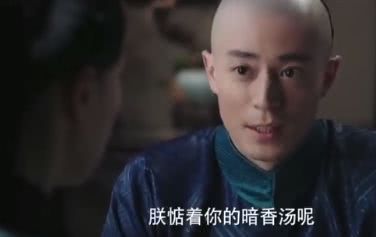
In "Ruyi's Royal Love in the Palace," to soothe Consort Xian after she was reprimanded, Qianlong brought up the Anxiang Soup they had once loved most. After all, Consort Xian had always liked green plums, so did using plum blossoms as a cooking ingredient truly have medicinal value?
Traditional Chinese medicine review:Plum blossom - neutral in nature, slightly sour in taste. Enters the liver meridian, stomach meridian, and lung meridian.
Relieves depression and harmonises the middle, soothes the liver and benefits the gallbladder. It belongs to the qi-regulating medicines. Its effects are similar to jasmine tea and rose tea. Generally, when you are in a bad mood, steeping a cup can ease your emotions, dissolve stagnant qi, and have a calming effect.
Almond Drink
After the late emperor passed away, Qianlong ascended the throne and presided over state affairs, with all kinds of matters intertwined, so Qianlong inevitably felt somewhat busy and restless. Just then, the attentive Consort Xian sent over a bowl of almond drink to relieve his dry lips and irritability, and to moisten the emperor's lungs.Does this almond drink really have the effect of removing dryness and reducing internal heat?
Traditional Chinese medicine review:Almond drink indeed has effects such as relieving cough and resolving phlegm, moistening the lungs and directing qi downward. It seems the bowl of almond drink Consort Xian sent came at just the right time!
But it should be notedBitter apricot kernelis slightly toxic (recalling An Xiaoniao, who once committed suicide by eating bitter apricot kernels). Generally, it is bitter apricot kernel that is used as medicine, while sweet apricot kernel is used as food. It is neutral in nature, sweet in taste, and non-toxic. In addition, apricot kernels are rich in fat and have a moisturising nature. Taken internally, they have a mild laxative effect and also a nourishing effect.
Wormwood
In many palace intrigue dramas, wormwood is the most common traditional Chinese medicinal herb, and there was even a scene in one drama where moxa burning was used to prevent miscarriage. In episode 8 of "Ruyi's Royal Love in the Palace," Consort Xian personally selected wormwood and brought it to Consort Hai, who had suffered from wind-cold and especially had serious injuries to the Yongquan acupoints on both feet, saying, "Her injuries can use this."
Traditional Chinese medicine review:The whole plant is used as medicine. It has effects such as warming the meridians, removing dampness, dispersing cold, stopping bleeding, reducing inflammation, and preventing miscarriage. It is especially good for treating gynaecological disorders of the deficiency-cold type.
Boiling water with wormwood and giving it to Consort Hai, who had suffered from wind-cold, is a good suggestion. However, in the drama, the imperial physician said that Consort Hai had injured the Yongquan acupoints on the soles of her feet. This statement is somewhat inappropriate, as one generally would not say that a particular acupoint is injured.
Plumbago
In "Ruyi's Royal Love in the Palace," Consort Mei's face was slapped swollen, and after using a stasis-dissolving ointment, the swelling did not subside but instead became red, rotten, and ulcerated. When the imperial physician checked, it turned out that someone had added plumbago powder to the stasis-dissolving ointment. Is plumbago really toxic? Can it make wounds ulcerate?
Traditional Chinese medicine review:Plumbago is indeed toxic, but only mildly so. It has the effects of opening up dampness and cold obstructions, clearing the voice, soothing the throat and relieving pain, promoting digestion, supporting yang, and treating skin. Among the people, it is used for dysmenorrhoea and activating collaterals, rheumatism and bone pain, bone hyperplasia, traumatic injuries, carbuncles and swellings, and hepatosplenomegaly, and to treat skin itching, psoriasis, and so on. It generally needs to be decocted for more than 3 hours.
So drama and life should still be kept separate,
After all, the blame that musk and safflower carried back then is still deeply engraved in our memories,
Everyone should just watch the drama in peace.
——END——
All the excitement, only at Huayipai Youzan Mall
Flowers and love | Huayipai