Potted figs not fruiting? Try this method, and the branches will still be full of fruit in October
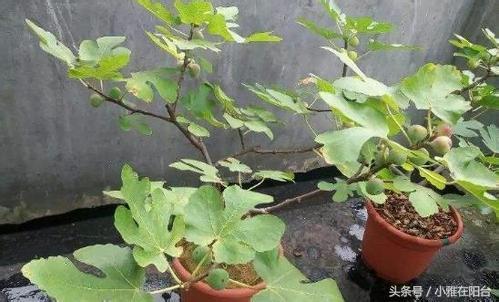
Potted figs are one of the easier potted fruits to grow. Figs are very rich in nutrients, and children, the elderly, and even pregnant women can eat them. They are sweet and delicious. Grow one on a balcony or terrace, and it grows fairly fast, produces a good amount of fruit, and is very easy to care for. Some friends say that the potted figs they grow do not fruit, or the fruit is rather small. What should be done?
When growing potted figs, use a little trick, and the fruit will be large and plentiful, one after another!
Fig trees can grow very well outdoors or in a greenhouse. In fact, they can also grow very well at home in pots on a balcony or terrace, with fat branches and strong leaves. A single branch can be used for cuttings to propagate a small fig seedling.
If the seedling is cared for well, it can bear fruit in the first or second year.Pay attention to these few little tips, and the fruit will be especially plentiful, with every fig very large:
The flower pot is large enough. Fig seedlings grow quickly. Only when the pot has enough space and there is enough soil will the fig grow branches and leaves quickly, and only then will the fruit be large and plentiful.
The potting soil is fertile enough. If the potting soil is especially compacted, barren, and not fertile at all, the fig's root system will grow very slowly, which will affect fruiting, and the fruit will be few and small. So use fertile soil, preferably peat soil or the dark, especially fertile leaf mold brought back from the woods, and add a small amount of large-grained sand or vermiculite to increase air permeability and drainage. Fertile and airy, and the fig's branches and leaves will grow rapidly.
Watering appropriately. Potted figs are different from those planted in the ground. They cannot be overwatered. If the pot is soaked in water for a long time, the fruit easily drops, and they also cannot go without watering for a long time, otherwise the leaves easily dry out. When the potting soil is dry, water thoroughly. Watering is actually quite simple.
Fertilizing in time. Fertilize at least three or four times a year. Apply fertilizer twice in spring and twice in autumn. Especially when sprouting and when fruit begins to set, the amount of fertilizer can be increased. It must be decomposed fertilizer, which can be cake fertilizer, pig manure fertilizer, sheep manure fertilizer, chicken manure fertilizer, and so on.
Enough light. It is also fairly tough. In fact, it can grow in summer without shade, and it can also grow in a place where the light is not very abundant, but it cannot go without light for a long time. Only with enough light can it grow more luxuriantly and robustly.
Figs generally change color and ripen successively in June, July, and August, changing from green to greenish-yellow or purple. Figs in the north ripen later, and there are still fruits in October, gradually ripening. Xiaoya grew one on the terrace, and in October, even now, it still hangs with many fruits.
In short, when growing potted figs, use a slightly larger flower pot, and repot once every two or three years, adding some fertile soil to replenish nutrients. Only in this way can there be more fruit and larger fruit.