What to do if your money tree won't turn green? A spoonful of vinegar can solve it
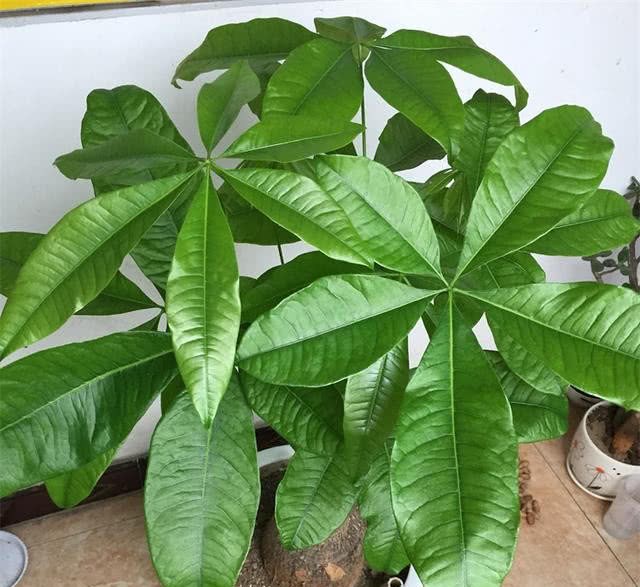
As a foliage plant, the money tree (Pachira aquatica) is one many people love to keep at home: first, it decorates the home with its foliage; second, it helps purify the air; third, it carries the meaning of wealth flowing in. Many people grow a money tree with that last point in mind, and the more lush and glossy green you can grow it, the better.
But many gardening enthusiasts have found that no matter how they grow their money tree, it is never green enough. And it is autumn now, so it should be growing even more vigorously, yet their own money tree has shown no sign of growth at all since autumn began, which is worrying to look at. So what exactly should be done? Actually, don't worry: if your money tree isn't green, all you need is a spoonful of vinegar. Is it really that effective? Let's read on.
The effect of vinegar on money trees
Vinegar itself is a kitchen seasoning, mainly fermented from grains such as rice and corn, so it naturally contains a great many nutrients, such as amino acids and some trace elements. Don't underestimate these elements; they are great helpers in turning a money tree green.
It can effectively promote the growth of money tree leaves and raise the efficiency of photosynthesis. Rice vinegar also contains acetic acid, so using it to water the roots can also adjust the soil pH, making the money tree's root system more developed. Rice vinegar also has good antibacterial and sterilizing effects, and can effectively protect the money tree's root system.
How to use rice vinegar on money trees
Because rice vinegar is acidic, you must dilute it with water before use. If you are using it to water the roots, dilute it 10 times with water, then pour it into a spray bottle to water the roots. When watering the roots, water thoroughly; do not give half-measure watering, as this easily leads to the roots drying out. If you are using it to spray the leaves, it is recommended to dilute it 50 times with water before spraying the leaves, and when spraying the leaves you should also pay attention to these points.
Move it to a cool, ventilated, shaded spot before spraying the leaves, to prevent the water from evaporating and the acetic acid concentration becoming too high and burning the leaves. When spraying the leaves, spray the undersides of the leaves, because the undersides contain many tiny pores; these are absorption pores that can absorb the acetic acid solution more effectively, and only then can it take effect faster.
Of course, although acetic acid is very powerful, you still have to keep up with fertilizer. Because although acetic acid also has nutrients, the content is relatively low, so it is recommended to also apply organic fertilizer with a relatively high nitrogen and potassium content, which can be rotted manure or a general-purpose organic liquid fertilizer fermented from sugarcane. Both have fairly complete fertilizer effects and also promote root and leaf growth, effectively making up for acetic acid's shortcomings in this respect, so the money tree grows stronger.
Besides using acetic acid on money trees, you should also pay attention to some routine care, especially light and ventilation. Light can also make a money tree more emerald green, because light lets the money tree synthesize more chlorophyll, so the leaves become greener. Of course, ventilation is mainly to keep the money tree from stifling and getting sick, because harmful bacteria easily breed in an environment with poor air circulation, so ventilation can reduce the reproduction of harmful bacteria, which effectively protects the money tree from being infected by pathogens and getting sick.
Alright, that is the method for when your money tree isn't emerald green: a spoonful of vinegar can solve it. Everyone, give it a try!