What are the methods for collecting and cultivating elm stumps?
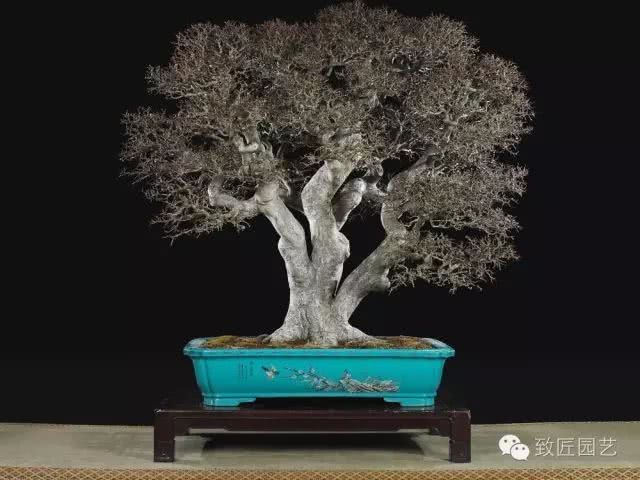
How are elm stumps collected and cultivated?
Elm is a conventional tree species for stump bonsai in China, with a wide distribution of growing areas, and it is suitable for making various forms of bonsai. Elm is a deciduous tree species, with small leaves, many buds, and dense branches, and strong sprouting ability of branches and buds; the wood is tough, the root system is well developed, and it is not choosy about soil and climate. Old stumps are ancient and peculiar, with a thousand postures and forms, beautiful tree shapes, and vigorous trunks.
Ancient elm stumps are mostly dug from the wild, and ordinary stumps are also cultivated by cuttings of elm roots and air layering propagation.Wild stumps are natural, simple and varied in form, and rich in charm; as long as they are dug properly, they survive very easily.
(1) Master the digging period well. Elm stumps are mainly collected during their dormant period. In northern regions, they are dug after the soil thaws in early spring, while in southern regions they can be dug throughout the entire dormant period. They can also be dug when new leaves appear, but at this time the temperature rises, and the evaporation of water from the leaves and trunk is too great, so when digging, the branches and trunk should be cut back, more fibrous roots should be retained, and more native soil should be retained, or a soil ball should be kept. Exposed roots can be wrapped with plastic sheeting, and after being transported back in time, excess branches and leaves should be cut off to minimize water evaporation from the stump. On sunny days, shade and moisture should be provided. It is best to choose cloudy or overcast weather for digging.
The found stump, first examine its tree shape. For a stump with cultivation value, first cut off excess branches and leaves, saw off useless trunks, and then dig, keeping the retained root length at 5?6 times the length of the tree base trunk.
(2) Master water management well. Dug-up stumps must not be soaked in water or sprayed with water, so as to avoid excessive moisture in the branches, trunk, and roots, and the loss of sap seepage, the so-called "degumming," which affects the survival of the stump. After the stump is cut, trimmed, and potted, as long as the pot soil is kept moist, there is no need to spray water on the trunk, reducing sap seepage from the wounds. Generally, elm stumps will sprout, and dark green buds and leaves are a sign of new root growth; at this time, excess buds can be appropriately removed. If the buds and leaves are pale green or grayish, it indicates that the new buds have not yet grown well; at this time, the stump should be shaded, and the pot soil must not be too wet, so as not to affect root development.
When growing stumps in pots, attention should be paid to shading, and they must not be exposed to the scorching sun. When the weather is cool in autumn, the shading can be removed to receive sunlight. A thin liquid fertilizer can be applied 1?2 times to make the branches and trunk grow robustly. Elm stumps are generally pruned and wired for shaping during the dormant period after autumn.
Elms are susceptible to aphid damage and can be sprayed with a 50% dichlorvos 1000 solution to kill them. Spraying dimethoate on elms will cause leaf drop and affect growth, so special attention should be paid to this.
Wonderful content