Learn 2 methods for succulent leaf propagation and they will quickly grow roots
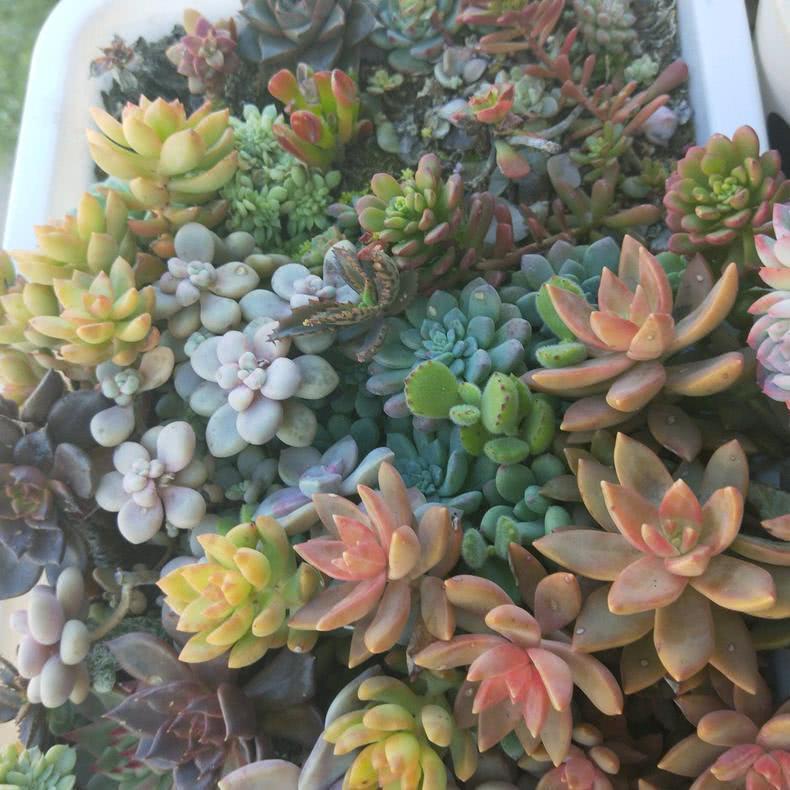
If there is one statement in the succulent world that needs the least explanation, it must be the importance of the root system. After all, it holds a place in the plant like the heart does in the human body, especially for leaf propagation leaves like these that inherently lack roots. For them, the task of building roots becomes arduous. After all, a good root system is the most basic condition for a succulent to be in good condition. So what is the foundation of a good root system?
1. Before leaf propagation
Do not overlook any of the small details before leaf propagation. First is the selection of the leaves. You must choose qualified leaves with complete growth. This requires that we remove the leaves with some skill, otherwise some defective ones simply cannot be used. Next is drying the wounds. The location is also very important. It must be a ventilated window with faint light. Once dried, they can be used for leaf propagation. It is also best to choose small leaves for leaf propagation; the root system emerges faster and more stably.
2. After leaf propagation
After placing the leaves on the selected soil (the soil must be sterilized), note that before roots grow and buds sprout, absolutely do not let them see water, as it is harmful and not beneficial at all to root cultivation. This is exactly the time that tests them. If you give them a little water all at once and they rot or turn to water, what then? In fact, what is most critical for leaf rooting is not soil and moisture, but air humidity.
Below, Gu Niang introduces two root cultivation methods for everyone.
1. The water-induced rooting method
In fact, as long as the air humidity is sufficient, roots can form without anything else, and even without water. Roots arise spontaneously right there in the air, very pleasing. The water-induced rooting method also uses this principle. It relies on water vapor from evaporation in the lower layer to provide the leaves with the most suitable humidity. The water surface does not even need to be touched. Just rest the leaves directly on the mouth of a bottle with water in it. Simple and convenient.
2. The miraculous transparent film rooting method
This method was only recently heard from a friend. I tried it and the effect was good, so I specially recommend it to everyone. What you need to prepare includes a flower pot, granular soil, large peat, akadama soil, and plastic wrap. The process is first to prepare the pot soil, using large granular soil as the bottom layer, trying not to block the drainage holes at the bottom of the pot. The middle medium can use garden soil, etc., mixed together, mainly depending on your usual soil mixing method. Gu Niang uses a large proportion of peat mixed with a small amount of granular soil, and finally covers the surface with akadama soil.
Next, place the flower pot in a water basin. The water level is best when it just covers the large granular part. Place the leaves directly on the upper layer of akadama soil, cover with a layer of plastic wrap, and that is it. Then just wait patiently. After they sprout and take root, simply pot them up according to the normal procedure. Finally, the most important point we summarize is that air humidity is very important, oh so important. If you master it, any leaf you casually give it can sprout.