Make your own seedling propagator at home with 1 plastic bottle, and the white roots grow like crazy in 7 days of growing flowers
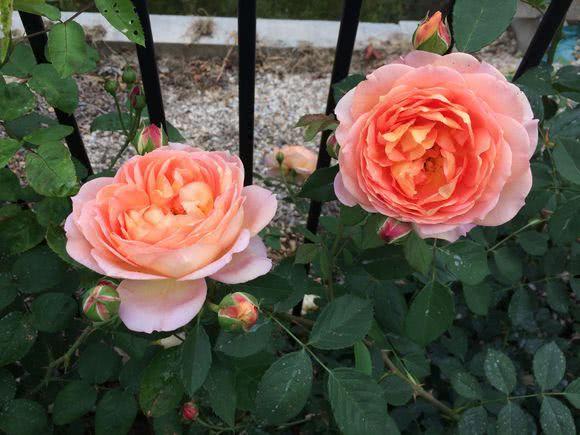
Entering October, the weather slowly turns cooler, and many flowering potted plants have reached their growing season, and they can also be propagated by cuttings, like the common rose, bougainvillea, pothos, osmanthus and other plants all work. Cuttings are an important method of plant propagation: using part of a plant's stem, root or leaf, inserted into well-drained loam, sandy soil or a growing medium, it grows adventitious roots and adventitious buds, thereby growing into a complete, independent new plant. Below I will teach you a method, suitable for taking cuttings of flowers; you can make a "propagator" at home, needing only 1 plastic bottle, and in 7 days of growing flowers the "white roots" grow like crazy!
For the common potted rose, when taking cuttings there may be a problem of not rooting, or else the roots rot and it cannot grow normally. We only need to simulate a seedling-growing environment when taking cuttings, and it will easily root and sprout. First let's talk about the function: the propagator is an auxiliary tool that uses water to help roses root.
At this point we need to prepare 1 plastic bottle and fill it with water 1 cm deep. First disinfect the cuttings, why do this? Because it can reduce the breeding of bacteria. Then put the prepared rose cuttings into the bottle, and make sure the bottom of the rose cuttings is submerged in the water, like in the picture below; this can increase the rose's sprouting rate.
The cuttings can be put into the bottle, but do not put the lid on, as that is not good. Then place it in a spot with bright, indirect light and good ventilation and wait for roots to grow. Doing this can create an environment with relatively high humidity, and the water bottle has a heat-preserving effect, so the results are still quite good. Many flower friends ask me how long it takes to root this way? For roses it is about 7 days. After the rose has rooted, it can be transplanted into soil.
As for the timing of rose cuttings, it can be done in both spring and autumn. In spring, from late April to the end of May, when the climate is mild and the cuttings are vigorous, they can root one month after insertion, with a high survival rate. Autumn cuttings are done from late August to the end of October; at this time the cuttings are affected by the large temperature difference between day and night, so rooting is relatively slower, taking about 40 to 50 days to root, and the survival rate is slightly lower than for spring cuttings.
This cutting experiment mainly uses the rose as an example. Now let's talk about the care of roses. For the soil, generally choose loose soil with good drainage and good air permeability. It is usually sandy soil rich in organic matter; do not use clayey soil. When taking cuttings in autumn, the more suitable time is the period from Cold Dew to Frost's Descent, specifically the middle to late part of October.
This is a gathering place for flower lovers, sharing flower and potted plant care tips. You are welcome to follow and exchange ideas.