Don't panic if your kumquat drops its leaves - first check whether these are the reasons
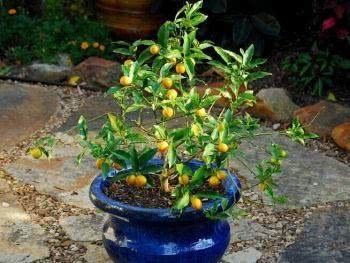
Autumn is the season for eating oranges! At the market by Huahua's doorstep, there are really a lot of people selling oranges, and every time I pass by I always buy some. The oranges at this time of year are truly delicious! But Huahua also wants to remind everyone that although oranges are tasty, eating too many of them will make you get "heaty" too.
Friends who love eating oranges have also turned their attention to growing them at home - although it's not a fruit tree, growing a pot of kumquat as a potted plant works just fine! Huahua heard from the flower seller that kumquat carries the wonderful meaning of good fortune and wishes coming true! If you're interested, you can try growing one yourself.
But recently, many flower friends have sent Huahua private messages saying that the kumquats they grow at home are dropping their leaves, and they don't know why, so they hurried over to ask Huahua. Alright, today Huahua will explain to everyone why kumquat leaves drop and what to do about it.
Based on experience, a large part of the reason kumquats drop their leaves is temperature. Flower friends in the south may never have experienced the problem of kumquat leaves dropping; on the contrary, this situation often occurs in the north. Winters in the north are relatively cold, and leaf drop in winter is a fairly normal phenomenon, so generally speaking there's no need to worry - by spring new shoots and buds will grow.
In winter, be sure to take good insulation measures for the kumquat; it's best not to let it go below 0°C. Watering must be controlled, since winter light is not as strong as summer light, and evaporation won't be too strong.
If the temperature factor is ruled out - for example, if leaf drop occurs outside of times like winter - then it's very likely not a natural phenomenon, but rather that the kumquat has developed a problem. The causes of problems in kumquats are nothing more than factors in the surrounding environment and factors in the root system.
We need to judge where exactly the problem lies based on the kumquat's growth habits. Kumquat is a shade-tolerant plant, but at the same time it also needs a certain amount of light, otherwise yellowing leaves will appear, which is not good. Furthermore, kumquat is not tolerant of waterlogging, so when watering you must pay attention to the amount, and don't let the soil of the kumquat tree become too wet and cause root rot.
Friends in the south especially should pay even more attention to the amount of watering. If you water too much, plus the relatively humid air in the south, it's very easy for problems to arise in the plant's roots, so everyone should be careful.
After identifying the cause, observe the leaf drop. If it's only slight dropping, we'd best appropriately change our plant care methods. If you don't know exactly where the problem lies, we can try placing the kumquat in a spot with bright, indirect light and good ventilation for a period of time.
If the leaves are dropping very severely, then whether the cause is the roots or the environment will also become fairly obvious. If the branches have already dried up, then it's basically dead.
That's Huahua's summary of why kumquats drop their leaves - did you get it?