Why can potted boxwood reign for generations?
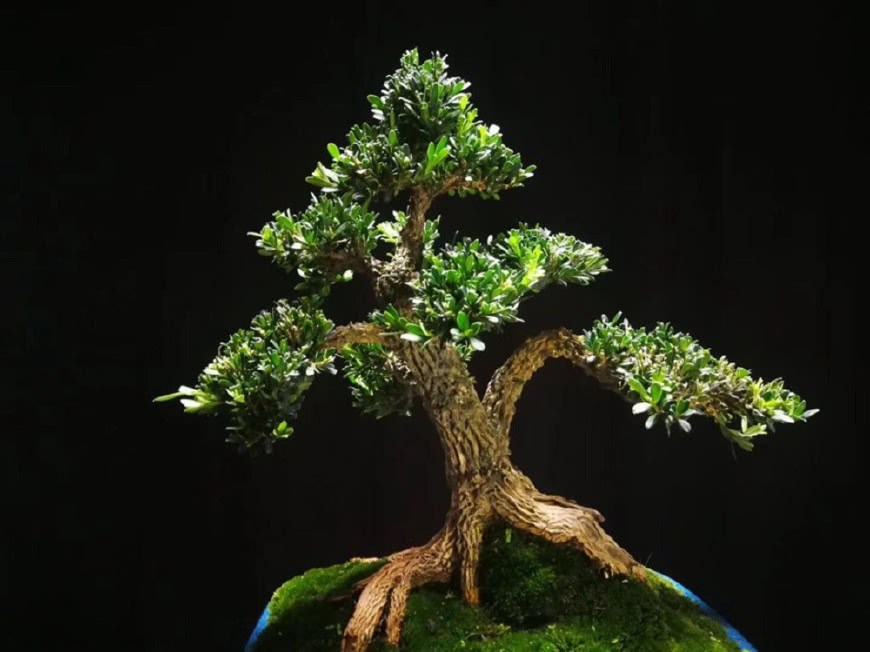
As a bonsai tree species, boxwood can be traced back as far as the Hemudu Neolithic period, when our ancestors had already learned to plant boxwood in stone tools, which can be considered the earliest boxwood bonsai. Boxwood bonsai has developed to this day to a peak of its prosperity, with boxwood bonsai worth ten thousand yuan and even one million yuan causing a sensation in the bonsai world from time to time and tugging at our heartstrings. Not only that, boxwood has also formed its own unique boxwood bonsai culture. People all believe that boxwood has the power to protect the home and ward off evil, and "gentleman among trees" is the greatest praise the world gives to boxwood. In the bonsai world, there is even the saying "potted boxwood, king for generations."
The saying that potted boxwood is king for generations makes sense. From ancient times to the present, most people who have the inclination, time, energy and money to grow potted boxwood are families with abundant material means; ordinary people do not have the inclination to spend money on a good flowerpot to plant a tree. In ancient times, boxwood was once a potted plant for high officials, nobles and imperial relatives. Over time, people passed down the saying "potted boxwood, king for generations."
How to shape potted boxwood. Boxwood grows slowly, which leaves us enough time and space for shaping. According to the aesthetic standards of the bonsai industry, boxwood can be shaped into styles such as the formal upright style, cascade style, slanting style, exposed-root style, rock-clinging style and forest style. No matter which shaping method is used, attention must be paid to a thick and broad root base with a strong grip on the ground, and above all avoid being top-heavy.
Boxwood bonsai shaping techniques. A good boxwood bonsai has mottled, rugged bark full of fish-scale patterns, looking full of energy and quaintly vigorous. Boxwood bonsai shaping techniques include wiring, binding, pulling, artificial deadwood, trunk chopping with branch cultivation, and branch chopping with trunk cultivation. In addition, regularly using a brush to clean dust and soil from the boxwood trunk can not only enhance the beauty of the boxwood bonsai, but also prevent pest damage to the boxwood bonsai; a cleaned boxwood bonsai looks even more spirited.
Boxwood bonsai wins gold awards at bonsai exhibitions year after year. At the 2018 International Bonsai Association Chinese Members Bonsai Masterpiece Exhibition, the boxwood bonsai below lived up to expectations and won the gold award.
How do you care for boxwood bonsai? Boxwood is not strict about water and fertilizer, can take heavy watering and heavy fertilizing, and can also grow in poor soil. Boxwood is shade-tolerant, but grows best in a half-shade, half-sun environment, and above all must not be exposed to the scorching sun for long periods. Boxwood has strong sprouting ability and will produce many lateral buds, so excess lateral buds should be removed in time.