What to Do About Kiwifruit Freeze Damage? Cause Analysis and Preventive Measures
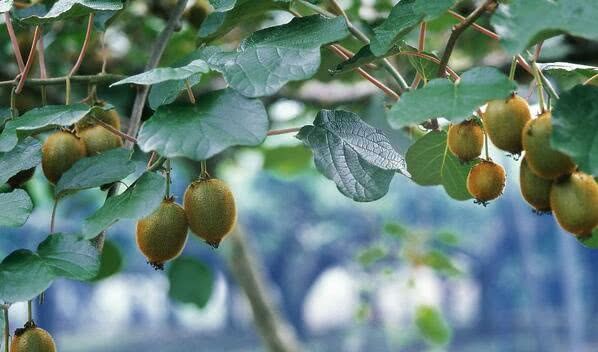
Kiwifruit is a very popular fruit with high edible and nutritional value, and it is planted on a large area in China. However, the differences between northern and southern China are great, and low winter temperatures can easily cause freeze damage to kiwifruit. If prevention and control are not timely, it will seriously affect orchard yield. Below is an analysis of the causes of kiwifruit freeze damage and preventive measures, for growers' reference.
1 The harm of freeze damage to orchard production
After kiwifruit freeze damage occurs, in mild cases it causes reduced yield and a poor harvest the following year and leads to a large outbreak of canker disease; in severe cases it kills all the trees in the orchard, resulting in total crop loss. In freeze prevention measures, most fruit growers generally only pay attention to protecting the main trunk and neglect protection of the fruiting canes (fruiting cane groups). In production, attention should be paid to protecting kiwifruit fruiting canes (fruiting cane groups) to reduce the occurrence of freeze damage and improve the quality of spring budbreak in the tree.
2 Types of freeze damage
The types of freeze damage include: frost damage and cold freeze damage. Frost damage is further divided into early (autumn) frost and late (next spring) frost. Early frost refers to when the autumn temperature is around 10 °C and suddenly drops to around 0 °C.
Cold freeze damage refers to the freeze damage caused after heavy snow and temperature drop in winter, when the extreme temperature is below -15 °C, or when the extreme low temperature lasts for more than 1 week.
3 Factors affecting the occurrence of freeze damage
3.1 Sudden changes in climatic conditions
(1) Timing of temperature drop. Low temperatures appearing too early in autumn or frost in spring, for example when leaves have not naturally fallen in autumn (such as the sudden early heavy snowfall on November 23, 2016), or after leaf expansion in spring (such as the snowfall on April 12, 2010). These abnormal low temperatures occurring when the tree is not dormant cause great stress and harm to the tree.
(2) Extreme low temperature. The so-called extreme low temperature mainly refers to a temperature value significantly lower than the relatively stable temperature in normal years in the region. For example, winter low temperatures in the Guanzhong area are mostly around -10 °C. If it is below -15 °C or even close to -20 °C, that is an extreme low temperature, and such extreme low temperatures very easily cause freeze damage (for example, the winter low temperature in 2015 was -20 to -15 °C).
(3) Duration. It may be a normal low temperature, or slightly lower than the year-round low temperature of the region, but the low temperature lasts a long time. For example, in the winter of 2003, the relatively low temperature of -13 °C lasted for more than 7 days, causing large-scale freeze damage in the Guanzhong kiwifruit production area.
3.2 Terrain and landforms of orchard establishment
Low-lying areas are prone to freeze damage.
3.3 Variety differences
Hardy kiwifruit (Actinidia arguta) has strong cold and freeze tolerance, delicious kiwifruit (Actinidia deliciosa) is relatively cold and freeze tolerant, and Chinese kiwifruit (Actinidia chinensis) has poor cold and freeze tolerance.
3.4 Differences in growth vigor and tree age
For the same variety, trees with strong growth vigor have strong cold and freeze resistance; for the same variety, mature trees have stronger cold and freeze resistance than young trees.
4 Preventive measures for freeze damage
4.1 Prevention principles
Main trunk freeze prevention is the focus, and cane freeze prevention is the key.
4.2 Key points of prevention
The graft union of old, weak, diseased, and disabled trees and young trees is 60 cm or less from the ground.
4.3 Prevention methods
Choose varieties with strong disease resistance and freeze resistance. Establish orchards in high-terrain locations; in the northern foothills of the Qinling Mountains, do not establish orchards north of the Xi'an-Baoji North Line. Apply more organic fertilizer, strengthen summer management, enhance tree vigor, and improve tree freeze resistance. Whitewash the tree or brush on antifreeze agent to "clothe" the tree for warmth. Use wheat straw, antifreeze belts, etc. to bind and wrap the main trunk of the tree for protection against freezing. Mound soil around the root crown of the tree. Strengthen pruning and leave more canes to prevent the occurrence of freeze damage from affecting the next year's yield. In some places, winter irrigation can also be carried out. Chinese kiwifruit should be cultivated under protected conditions (greenhouses).
4.4 Preventive measures for freeze damage in heavy snow and low-temperature weather
Timely shake off the snow accumulated on the canes in the orchard to prevent the snow from breaking the canes and to reduce the occurrence of freeze damage. The grafted parts of young trees should be wrapped and covered well with insulation bags to prevent freeze damage and ensure survival rate. Therefore, promptly clear the snow from the root crown of the trunk; where the root crown has not been mounded with soil, timely mound soil for freeze prevention. After pruning canes broken by orchard pressure, promptly apply pruning sealant to seal the cuts, which helps wound healing. For protected fruit trees, promptly clean snow from the shed roof, and adopt low-temperature freeze prevention management measures such as increasing nighttime coverings and heating inside the shed.
5 Repair of freeze damage and tree management measures
5.1 Mild and moderate freeze damage
For kiwifruit trees with mild freeze damage, basal fertilizer can be applied and irrigation carried out shortly before thawing in early spring to help restore tree vigor. Before budbreak, scrape off freeze-damaged bark or spray
5 degrees Baumé lime sulfur mixture to prevent pathogen infection and insect egg parasitism. At the same time, leave as few flowers and as little fruit as possible.
5.2 Severe freeze damage
For trees with relatively severe freeze damage, the damaged canes should be pruned off, and after pruning the cuts should be sealed with pruning sealant. Fruit-bearing trees should also have all flowers removed and no fruit retained, to reduce nutrient consumption by the tree.
5.3 Serious freeze damage
When budding is about to begin, or in July-August, perform upper and lower bridge grafting on the freeze-damaged part of the main cane. There are the following 2 methods.
(1) Two-end grafting method. Cut vigorous canes into stem sections 10 cm longer than the freeze-damaged part, use a knife to cut both ends of the stem section into 3 cm long slanted surfaces (the cut surfaces on the same side), then at 5 cm above and below the freeze-damaged part of the main cane, use a knife to cut "T" shapes deep to the xylem, then insert the two ends of the prepared stem section into the cuts respectively, and wrap them well with plastic strips.
(2) One-end grafting method. That is, use basal root suckers for bridge grafting. If the root sucker is relatively short, graft after it has grown to a certain height, which can promote the root sucker to sprout and then be bridge grafted.
5.4 Especially serious freeze damage
For kiwifruit trees with especially serious freeze damage, if they cannot be restored despite various measures, the method of cutting back to the base should be adopted, cutting back at about 15 cm from the base of the main trunk; after sprouting, pinch off the growing tips to promote branching.
For kiwifruit plants with relatively severe freeze damage, because the balance between aboveground and underground water and nutrients has been disrupted, spray a 0.2% urea solution or foliar fertilizer on the leaves before or after flowering to supplement tree nutrition. After the tree gradually recovers, apply additional fertilizer during the fruit expansion period after fruit set to promote growth. Freeze damage often causes the main bud to lose vitality, and sometimes the secondary bud sprouts. If 2 sprouts emerge from the same bud eye, the weaker one can be pruned off, and when the retained branch grows to about 70 cm, pinch off the growing tip to promote early branching and shaping.
6 Prevention of frost damage
Pay attention to listening to weather forecasts. If a sudden temperature drop is found, first carry out prevention in the orchard. Measures include: spraying antifreeze solution in the orchard in advance; applying effective agents such as Zhijinbai for wound coating; and on the night before the frost arrives, burning wheat chaff or sawdust in the orchard to produce smoke for freeze prevention.
Freeze damage is a common phenomenon in the kiwifruit planting process, and its harm is great. If prevention and control are not timely, it will seriously affect the quality and yield of kiwifruit. Below is an analysis of the causes of kiwifruit freeze damage and preventive measures, which growers can refer to.